Apparel Manufacturing Guide
Clothing Sample Development: From Design to Approved Production Sample
Learn how a clothing design becomes a physical garment through fabric sourcing, pattern development, decoration testing, fit revisions and pre-production approval.
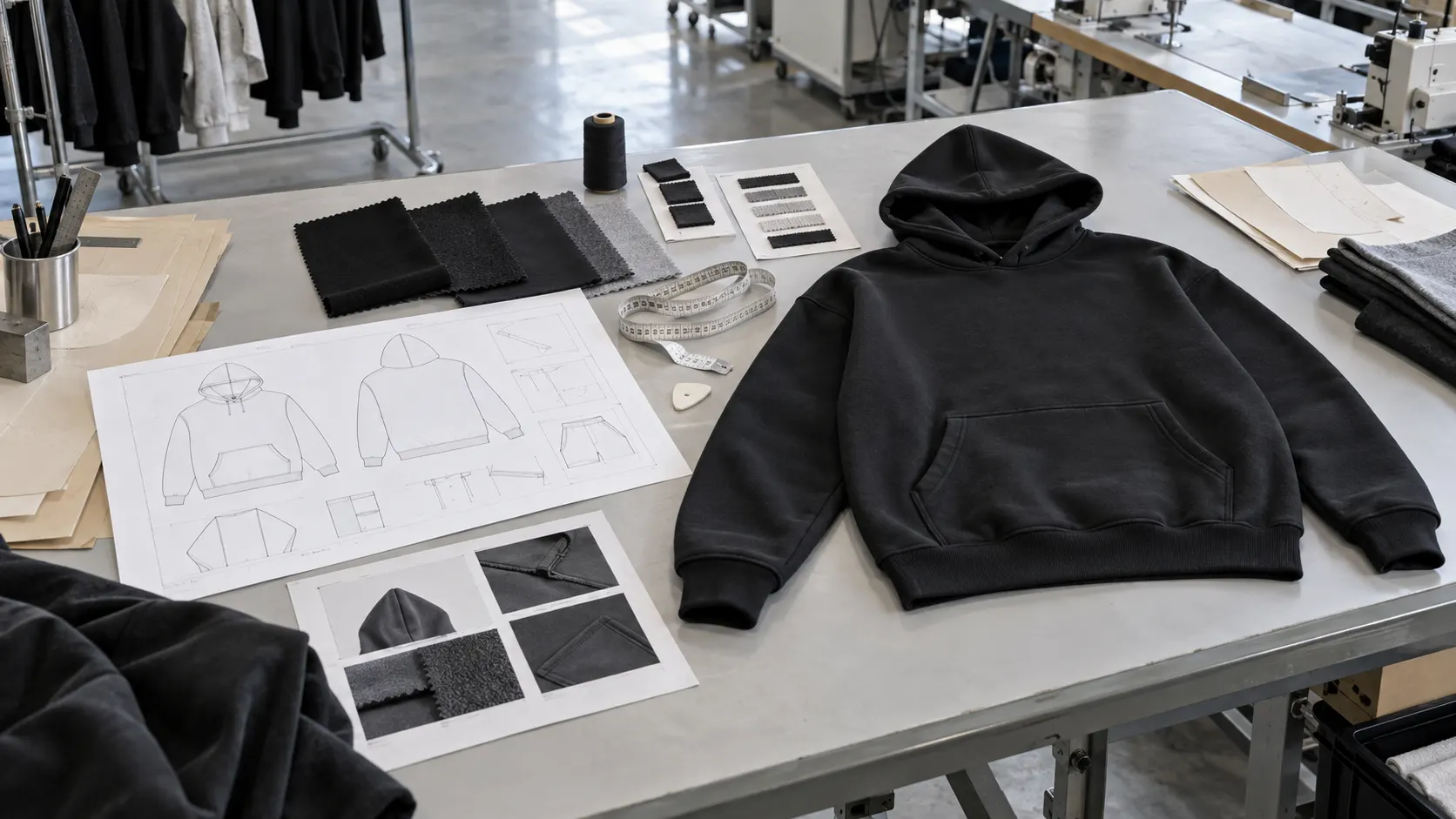
Clothing sample development is the process of turning a design idea, sketch, reference garment or tech pack into a physical garment that can be examined, fitted and improved before bulk production begins.
It allows a clothing brand and its manufacturer to confirm the fabric, measurements, construction, fit, colour and decoration before producing the complete order. Skipping this stage can turn a small misunderstanding into a costly problem across an entire production run.
What Is Clothing Sample Development?
Clothing sample development is a controlled product-development process in which a manufacturer produces one or more test garments before bulk production. The objective is not simply to make one finished piece. It is to verify that the design can be manufactured consistently and that the result meets the brand’s expectations.
Depending on the product, the sample may be used to evaluate:
- Fabric composition, weight, stretch and hand feel
- Garment measurements and overall fit
- Pattern shape and proportions
- Stitching, seams and internal construction
- Colour, wash and surface finish
- Print, embroidery, appliqué or transfer quality
- Zippers, buttons, drawcords and other trims
- Woven labels, care labels, hang tags and packaging
- Practical feasibility and estimated bulk-production cost
A simple printed T-shirt may require a relatively straightforward sample. A washed denim jacket, technical tracksuit, tailored blazer or heavily decorated hoodie can require additional sourcing, pattern work, artwork testing and revision rounds.
Why Is a Clothing Sample Necessary Before Bulk Production?
Digital artwork and specification sheets are important, but they cannot fully demonstrate how a finished garment will fit, feel or behave. Fabric drape, shrinkage, seam construction, artwork placement and colour can look different on a physical product than they do on a screen.
- Confirm the fit: A fitting can reveal issues involving sleeve angle, shoulder drop, rise, leg shape, body length and ease.
- Test the fabric: The sample shows whether the material provides the required structure, softness, stretch, breathability or warmth.
- Check construction: Seams, pockets, ribs, panels, closures and reinforcements can be inspected before bulk cutting.
- Approve decoration: The brand can assess the size, colour, texture and placement of printing, embroidery, patches or appliqué.
- Reduce production risk: Corrections made during sampling are easier and less costly than corrections after the entire order is produced.
- Create an approval standard: The approved sample gives the production and quality-control teams a clear reference.
Sampling reduces avoidable risk, but it does not replace bulk-production quality control. The manufacturer must still maintain measurements, construction and decoration consistency across every garment.
The Clothing Sample Development Process
Although every garment is different, most custom clothing sample projects follow these stages.
Design Review and Requirement Confirmation
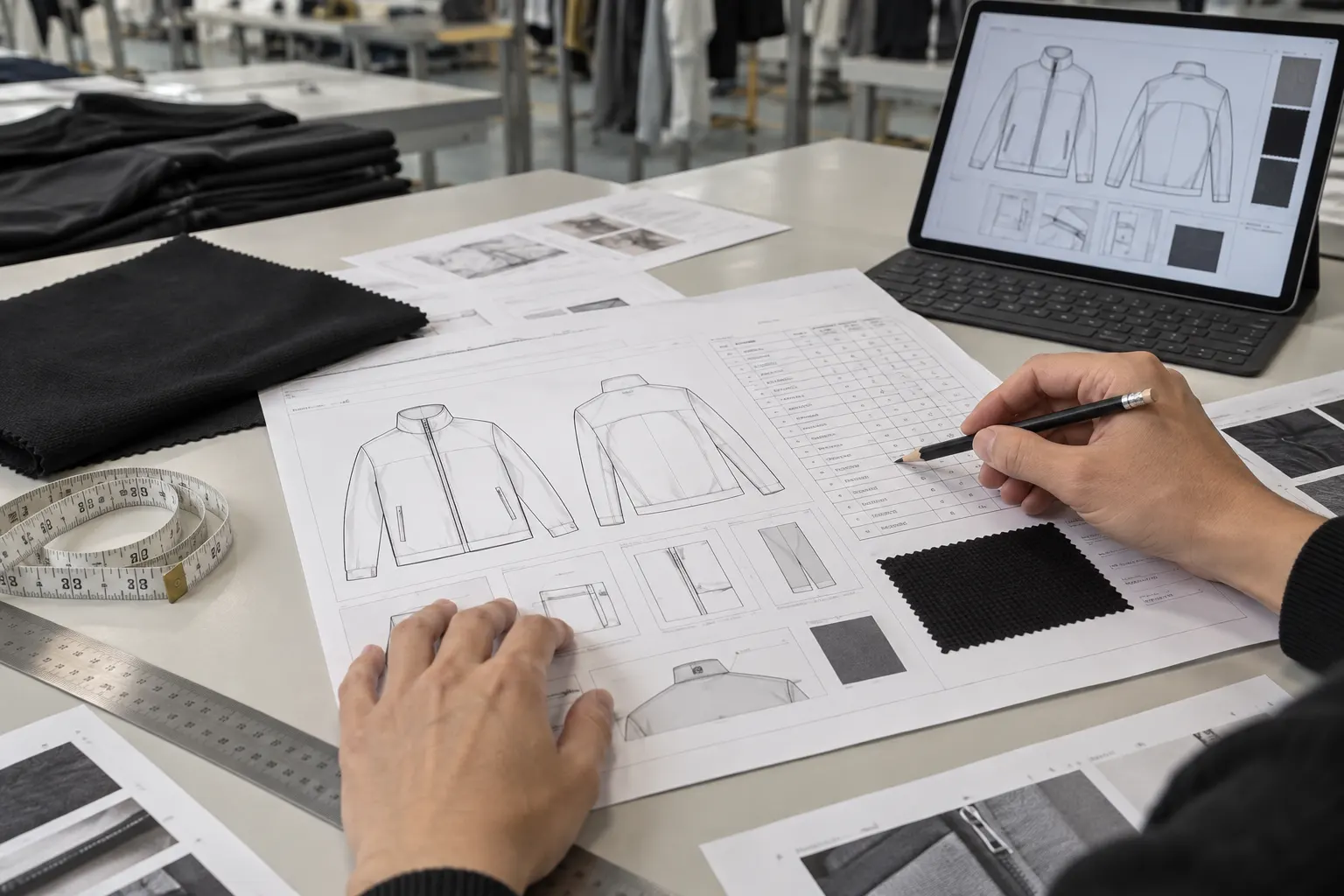
The process begins when the manufacturer reviews the information supplied by the brand. This may include a professional tech pack, sketches, reference images, artwork files, measurement charts or a physical reference garment.
The manufacturer should confirm the product type, intended fit, target size, fabric composition, GSM, colours, construction, artwork placement, decoration methods, labels, packaging, delivery destination and expected bulk quantity.
Clear information produces a more accurate quotation and reduces unnecessary revisions. If technical details are missing, the manufacturer can recommend practical options, but the brand should approve those decisions before production.
Sample Quotation
Once the design has been reviewed, the manufacturer prepares the sample quotation. It should explain what is included, such as fabric sourcing, pattern development, artwork setup, custom trims, garment construction, packaging and courier delivery.
The quotation may change if the project later requires different fabric, new artwork, custom moulds, special washing, additional samples or significant pattern redevelopment. The complete scope should therefore be confirmed before payment.
The sample price should not be treated as the expected bulk price per piece. Sample development and bulk manufacturing use different costing structures.
Fabric and Trim Sourcing
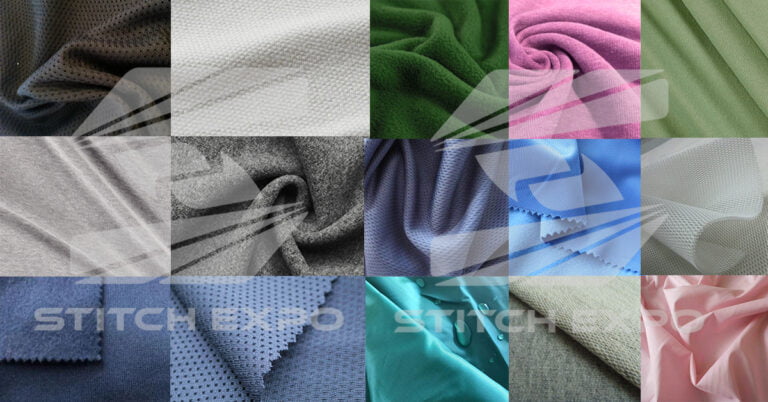
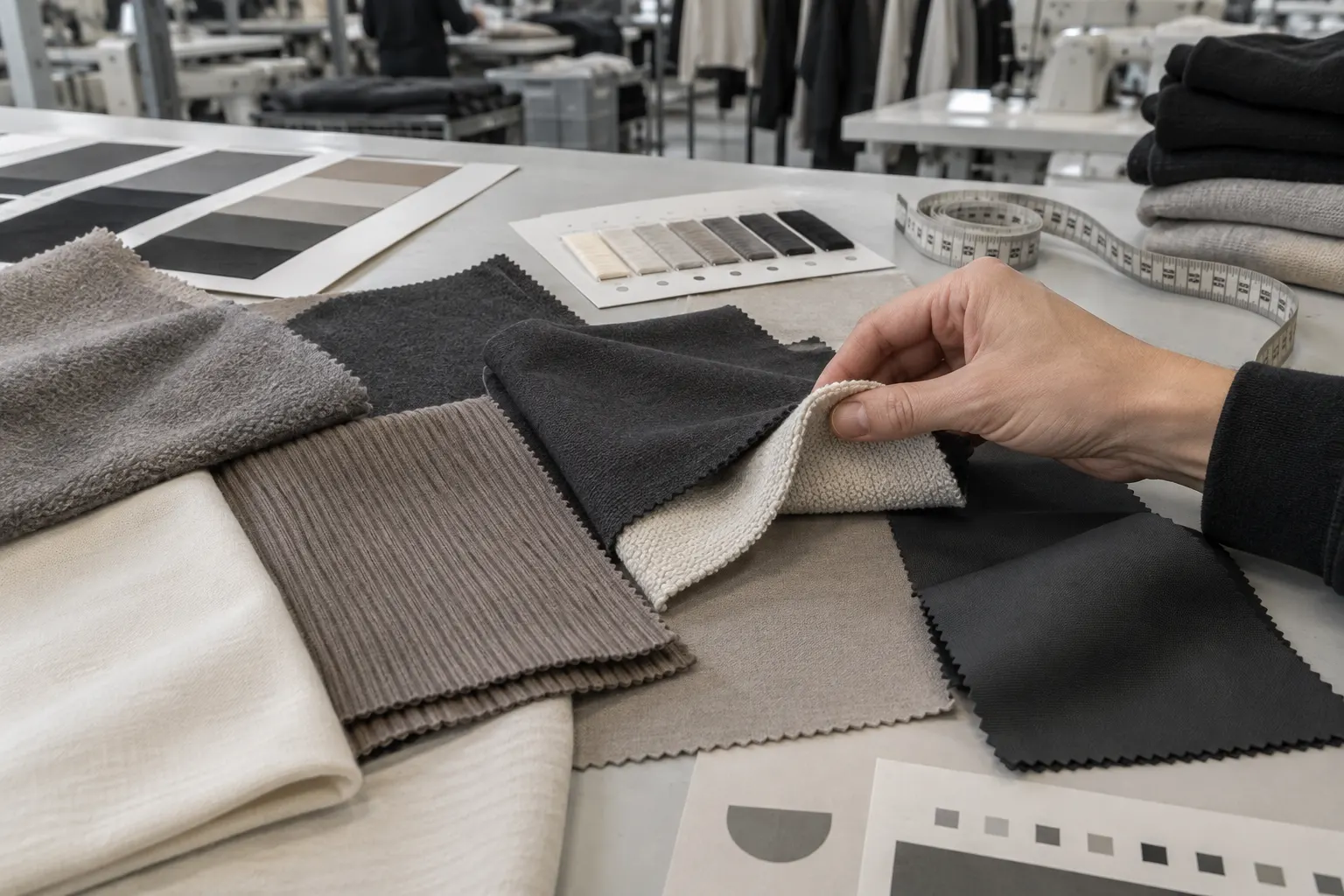
The manufacturer sources the selected fabric, ribbing, lining, zippers, buttons, drawcords, labels and other components. Important considerations include fibre composition, weight, construction, stretch, recovery, texture, colour availability, shrinkage, colourfastness and minimum order requirements.
A heavyweight streetwear hoodie might use cotton-rich brushed fleece, while an activewear set may require polyester-spandex fabric with stretch and moisture-management properties. GSM matters, but GSM alone does not determine quality. Yarn, knitting structure, fibre composition and finishing also affect performance. Read our complete fabric GSM guide for more detail.
If the exact bulk fabric is unavailable in a sample-sized quantity, the manufacturer should disclose whether a substitute is being used. The final bulk fabric may require separate approval.
Pattern Development
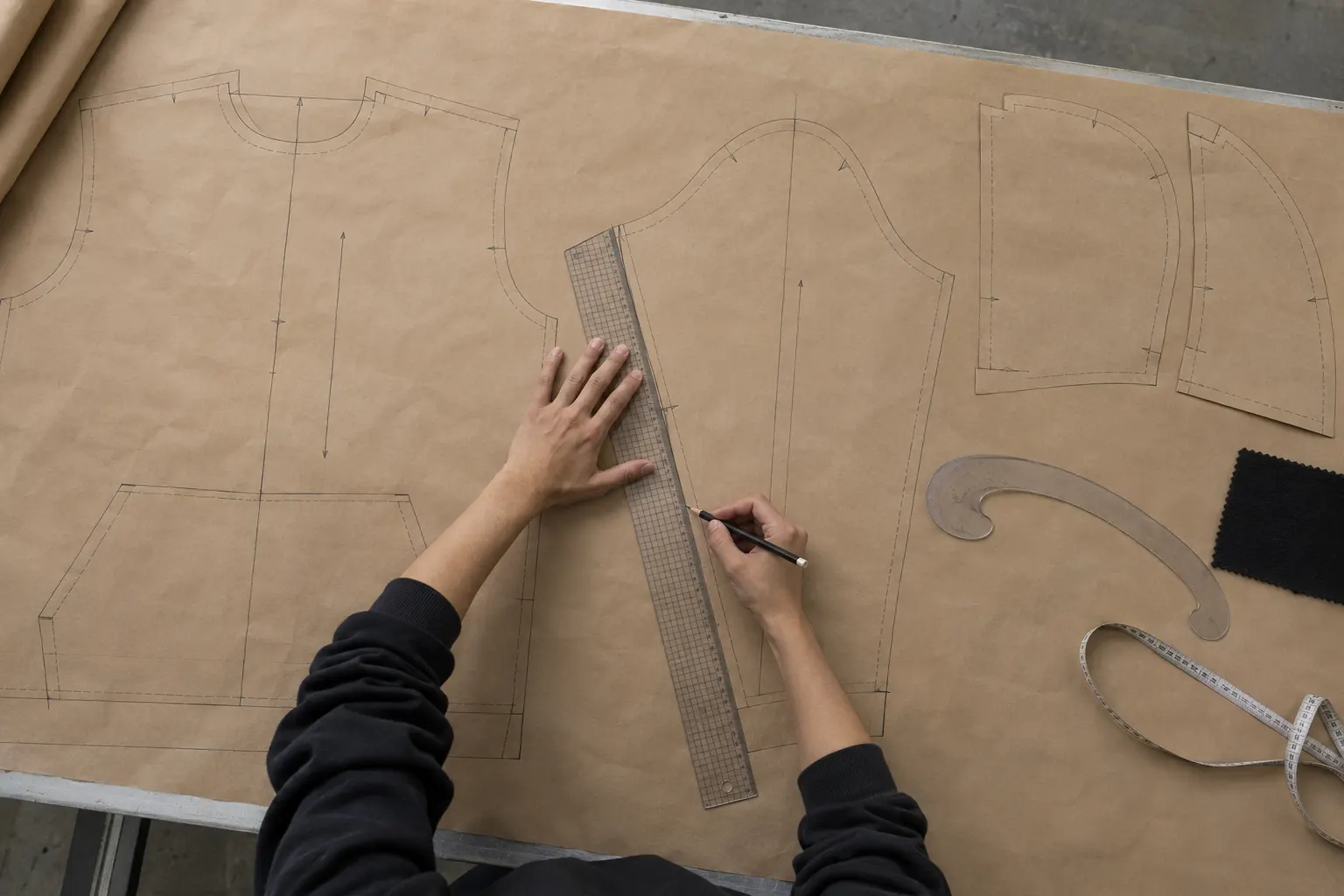
A garment pattern converts the design and measurements into individual shapes that can be cut from fabric and assembled. This stage has a major influence on fit, balance and silhouette.
The pattern may be based on a complete tech pack, a standard manufacturer block, measurements from a reference garment or a custom pattern developed from sketches and fit instructions.
Oversized, boxy, cropped, slim, wide-leg and tailored garments require different pattern decisions. After the base-size sample is approved, the pattern can be graded across the required size range while preserving the intended proportions.
Prototype or Development Sample Construction
The first physical garment is commonly called a development sample, prototype or first sample. Its purpose is to test the manufacturer’s interpretation of the design.
The production team cuts the fabric, assembles the panels, applies the required decoration and attaches the specified trims. Complex products may require separate construction or decoration tests before the complete garment is assembled.
The first prototype is a development tool and may not be the final approved product. New fits, unusual construction, custom washes and complex detailing can require refinement after the first fitting.
Print, Embroidery and Decoration Testing
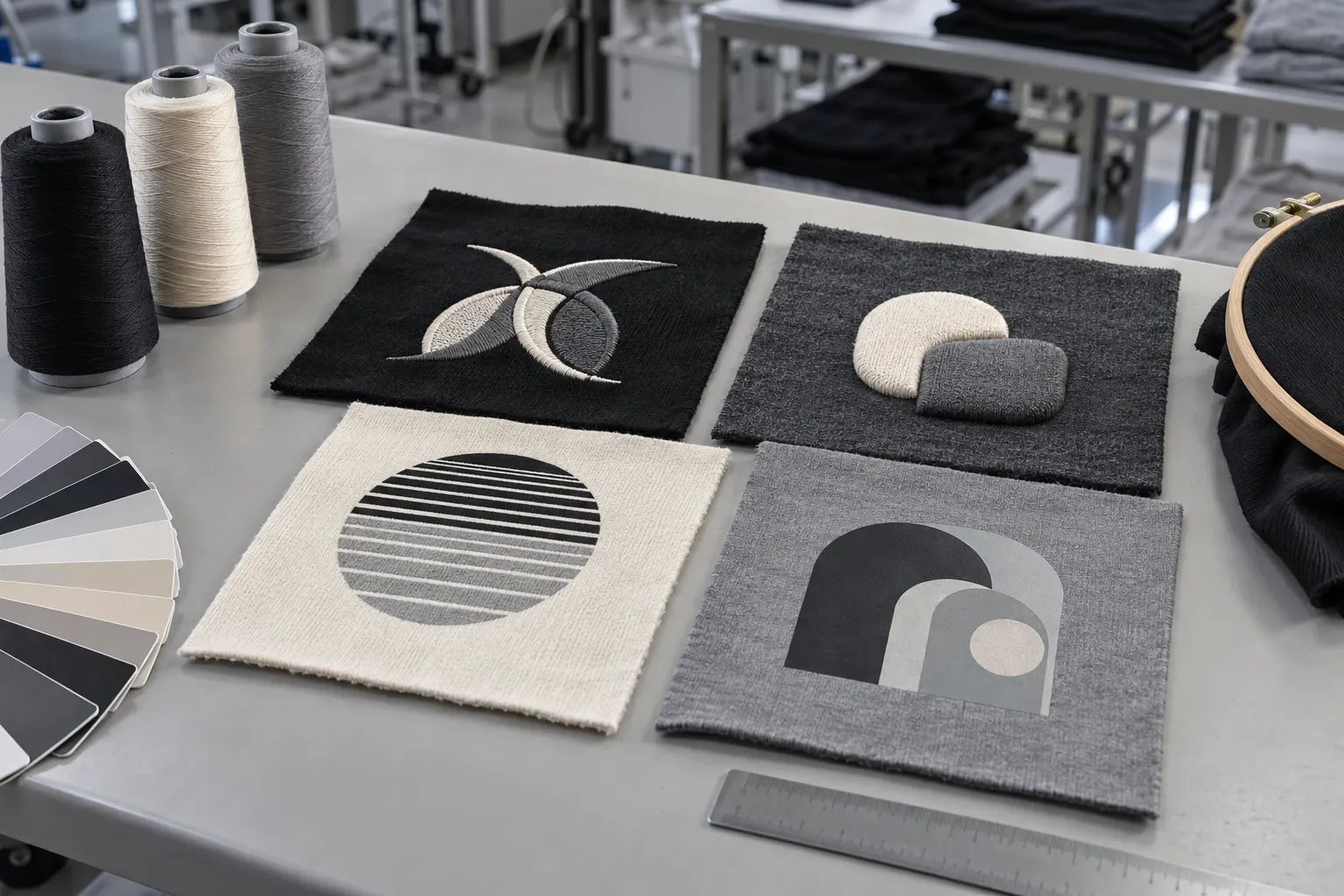
Decoration should be tested on the intended fabric whenever practical because the same artwork can behave differently across materials.
- Artwork dimensions and position
- Thread or ink colours
- Stitch density and fabric stability
- Print opacity on dark garments
- Transfer adhesion and curing
- Detail loss at small sizes
- Stretch and wash performance
- Puckering, distortion or dye migration
A highly detailed logo may not embroider cleanly at a very small size. Simplifying it, increasing its dimensions or using another decoration method can produce a better result. Vector artwork should be supplied whenever possible.
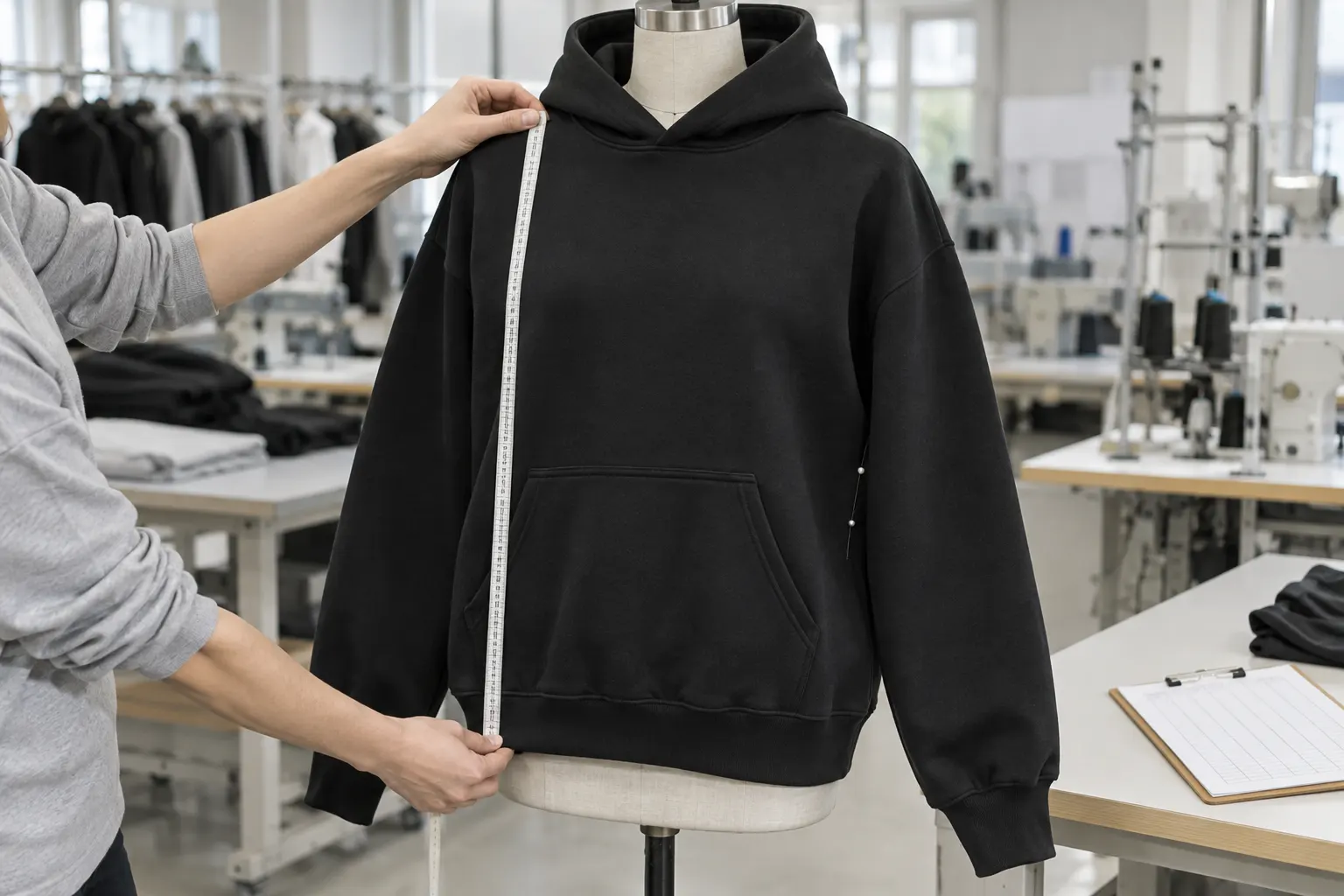
Fit Checking and Sample Evaluation
After completion, the sample should be evaluated systematically. A brand should not approve a garment based only on attractive photographs.
- Compare every point of measurement with the approved specification.
- Test the garment on an appropriate fit model or mannequin.
- Assess comfort, movement and garment balance.
- Inspect the front, back, side views, seams and internal finishing.
- Confirm pocket position, artwork size and placement.
- Review fabric feel, colour, weight, labels and packaging.
- Test zippers, snaps, buttons and drawcords.
Feedback should be measurable. “Move the chest logo 4 cm higher” is more useful than “the logo looks too low.” Annotated photographs and a revised measurement sheet help prevent confusion.
Revisions and Revised Samples
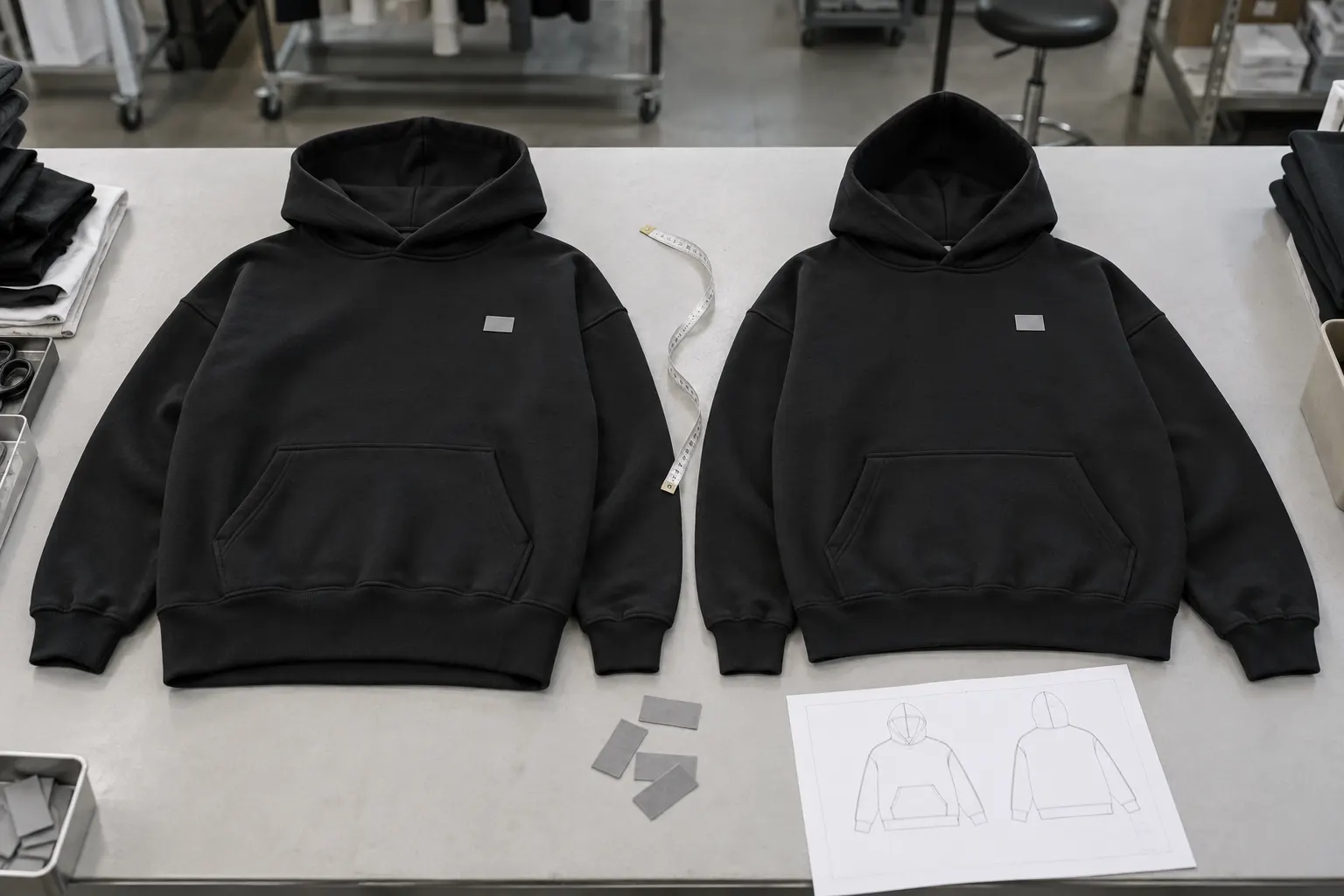
If changes are required, the brand provides consolidated feedback and the manufacturer updates the pattern, construction or artwork. Changes may involve garment length, shoulder drop, hood shape, trouser rise, logo placement, fabric, trims, embroidery density or internal finishing.
Submit one complete revision document instead of sending separate instructions across multiple messages. Number every requested change and support it with an updated measurement, annotated image or revised artwork where applicable.
Pre-Production Sample
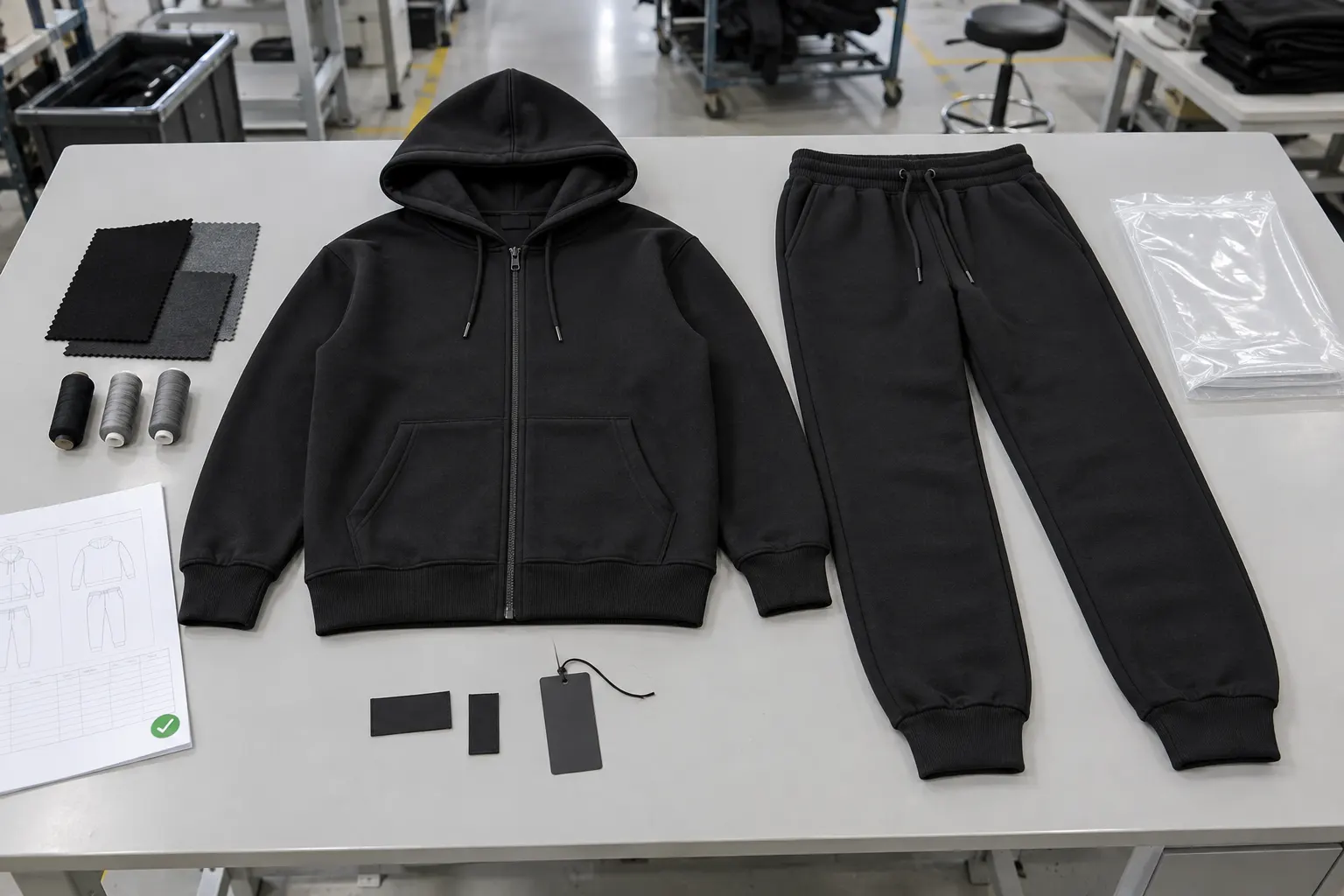
A pre-production sample, often shortened to PPS, is produced after the principal design and fit details have been finalized. It should represent the version intended for bulk manufacturing as closely as possible.
Ideally, it uses the confirmed fabric, colour, pattern, measurements, construction, decoration, labels, trims, wash and packaging. A prototype helps develop the product; a pre-production sample confirms the specification that should move into production.
Final Sample Approval
Before approval, all final changes should be documented. The brand should confirm the physical sample, measurement chart, artwork placements, colours, materials, trims and packaging in writing.
If a brand approves the sample while requesting additional changes, those changes must be documented and acknowledged before bulk production. Otherwise, the physical sample and written instructions may conflict.
Moving into Bulk Production
Following sample approval, the manufacturer confirms the quantity, colour and size breakdown, final price, payment terms and production schedule. Fabrics and trims are then procured in production quantities before cutting begins.
A responsible production workflow can include bulk fabric approval, size-set or first-production-piece checking, cutting control, inline inspection, decoration placement checks, measurement inspection, final quality control and packing verification.
How Long Does Clothing Sample Development Take?
At Stitch Expo, a typical custom sample takes approximately 7–11 working days to manufacture after the specifications, payment and required artwork have been confirmed. Express development may be possible for selected projects, depending on fabric availability, complexity and production capacity.
Development may take longer when a project requires custom-milled fabric, special dyeing, tailored construction, custom hardware, washing, distressing, heavy embellishment, multiple colourways or additional revisions. The most reliable schedule can only be provided after the complete design has been reviewed.
Why Does One Sample Cost More Than One Bulk Piece?
A single sample includes one-time development work and small-quantity purchasing that cannot be distributed across a larger order.
During bulk manufacturing, setup and development costs are distributed across multiple garments, and materials can be purchased more efficiently. This is why the bulk unit price is normally lower than the cost of one development sample.
How Many Sample Revisions Are Usually Required?
There is no honest fixed answer. A well-prepared basic product may be approved after the first sample or one revision, while a new custom fit, complex jacket, washed denim garment or highly decorated design may need multiple rounds.
The number of revisions depends on the accuracy of the original tech pack, construction complexity, material availability, clarity of feedback, the chosen fit block and whether the design changes after development begins.
The quotation should clarify whether revised physical samples are included or charged separately. A major design change is not simply a correction because it can require a new pattern, new materials or new decoration setup.
What Should You Send to a Clothing Manufacturer?
For a more accurate quotation and sample, provide as much of the following information as possible:
If you do not have a complete tech pack, organized reference images and clearly marked measurements are still much more useful than unlabelled inspiration pictures. New brands may also find our guide on how to start a clothing brand helpful.
Common Sampling Mistakes to Avoid
Approving Only from Photographs
Photographs and videos are useful for progress checks, but they cannot fully show measurements, fabric feel, weight or fit. When possible, inspect and fit the physical sample before approving bulk production.
Changing the Design Repeatedly
Frequent design changes increase cost, create conflicting instructions and delay approval. Finalize the main direction before sample construction begins.
Providing Vague Feedback
Comments such as “make it better” or “the fit is wrong” are difficult to apply. Use measurements, annotated images and direct comparisons with the approved specification.
Ignoring Production Feasibility
A design that works as a single handmade piece may not be practical for consistent bulk production. Consider durability, repeatability, production time and target price.
Focusing Only on Appearance
Also inspect comfort, movement, seam strength, shrinkage, care requirements and decoration durability. A visually attractive garment still needs to perform correctly.
Clothing Sample Development with Stitch Expo
Stitch Expo develops custom clothing samples for streetwear, sportswear, activewear, outerwear, denim, knitwear and private-label apparel. Depending on the project, development can include custom patterns, fabric sourcing, printing, embroidery, appliqué, patches, woven labels, hang tags and individual packaging.
We can review tech packs, sketches, reference garments or organized design images. Before quoting, our team evaluates the product, material, construction, decoration, quantity and delivery destination so the proposed sample reflects the intended bulk order as closely as practical.
If you are still comparing factories, review our guide to choosing the right custom apparel manufacturer.
Frequently Asked Questions
What is a clothing manufacturer sample?
A clothing manufacturer sample is a physical test garment produced before bulk manufacturing. It is used to evaluate the fabric, fit, measurements, construction, decoration, labels and overall appearance of a custom design.
What is the difference between a prototype and a pre-production sample?
A prototype or development sample is used to test and improve the initial design. A pre-production sample is produced after the principal details have been finalized and represents the version intended for bulk manufacturing.
How much does a custom clothing sample cost?
The price depends on the garment, fabric, construction, artwork, trims, development requirements and shipping destination. The complete design must be reviewed before an accurate quotation can be provided.
How long does garment sample development take?
At Stitch Expo, a typical sample takes around 7–11 working days after the specifications, artwork and payment are confirmed. Courier delivery generally requires an additional 4–6 days. Complex materials, hardware, washing or revisions can extend the schedule.
Can I order a sample before placing a bulk order?
Yes. Producing and approving a sample before bulk manufacturing is recommended for custom garments because it allows the design, fit, materials and decoration to be examined before a larger order is produced.
Is the sample price the same as the bulk unit price?
No. A sample includes one-time development, sourcing, pattern, setup and individual-production costs. In bulk manufacturing, many of these costs are distributed across the complete order, so the unit price is normally lower.
Can a sample be made without a tech pack?
It may be possible if the brand provides clear reference images, measurements, fabric requirements, artwork and construction information. However, a complete tech pack normally improves accuracy and reduces misunderstandings.
How many sample revisions are included?
This depends on the quotation and project scope. Brands should confirm revision charges and inclusions before development begins. Changes that alter the original design may require a new quotation.