Private Label Apparel Branding
Custom Clothing Labels & Packaging
Build a consistent private-label presentation with custom woven labels, care labels, size labels, printed neck labels, hang tags, garment packaging, inserts, folding and carton preparation integrated into your clothing production.
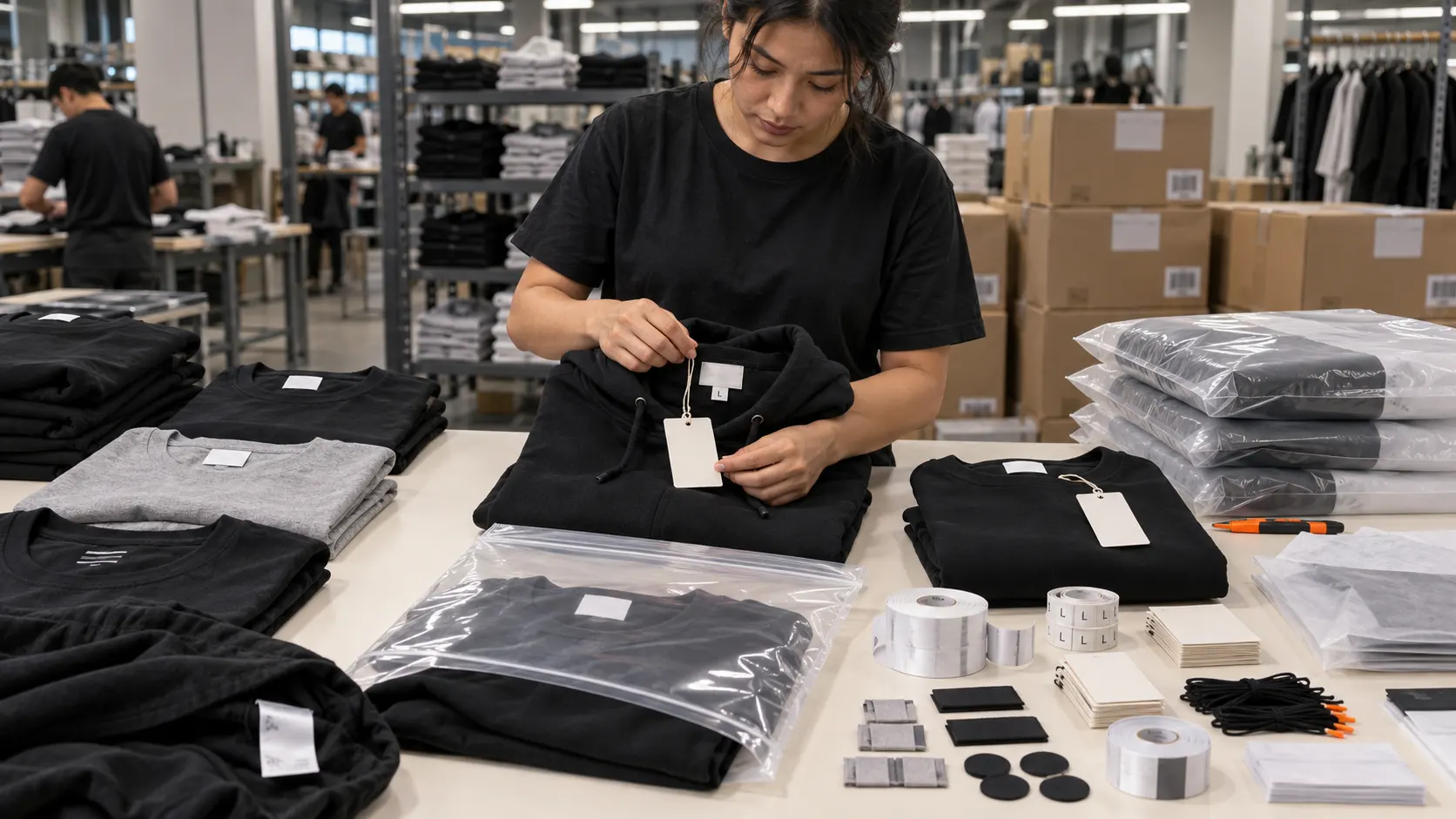
From the label sewn into the neckline to the hang tag, size identification, protective bag and export carton, each branding and packing detail helps define how the finished apparel is presented, identified and delivered.
What Are Custom Clothing Labels & Packaging?
Custom clothing labels and packaging are the brand-specific identification, information and presentation components applied to finished apparel before the product reaches the customer. They can include woven neck labels, printed neck labels, care labels, composition labels, size labels, hang tags, stickers, inserts, protective bags, folding instructions, barcodes, carton markings and other private-label details.
For clothing brands, these elements are not separate from the product experience. The garment may be manufactured correctly, but inconsistent labels, weak hang tags, incorrect care information or poor packaging can make the overall order feel unfinished.
Private-label apparel production therefore requires both garment manufacturing and final brand presentation to be coordinated around the approved specification.
Why Labels and Packaging Matter for Clothing Brands
Labels and packaging influence more than appearance. They help identify the garment, communicate sizing and care requirements, organise inventory, support retail presentation and protect finished products during handling and transportation.
Brand Identity
Neck labels, hang tags, patches and packaging help carry the brand identity beyond the garment artwork itself.
Product Information
Care, composition and size labels communicate practical information needed by customers and retailers.
Presentation
Consistent folding, tags, bags and inserts can make the final product feel organised and retail-ready.
Order Control
Size stickers, SKUs, barcodes and carton identification help keep bulk orders organised.
Product Protection
Appropriate garment bags and cartons help protect finished apparel from dirt, moisture and handling damage.
Customer Experience
The way a garment is labeled and packed affects the customer's first physical interaction with the finished product.
Garment Branding
Custom Woven Labels for Clothing
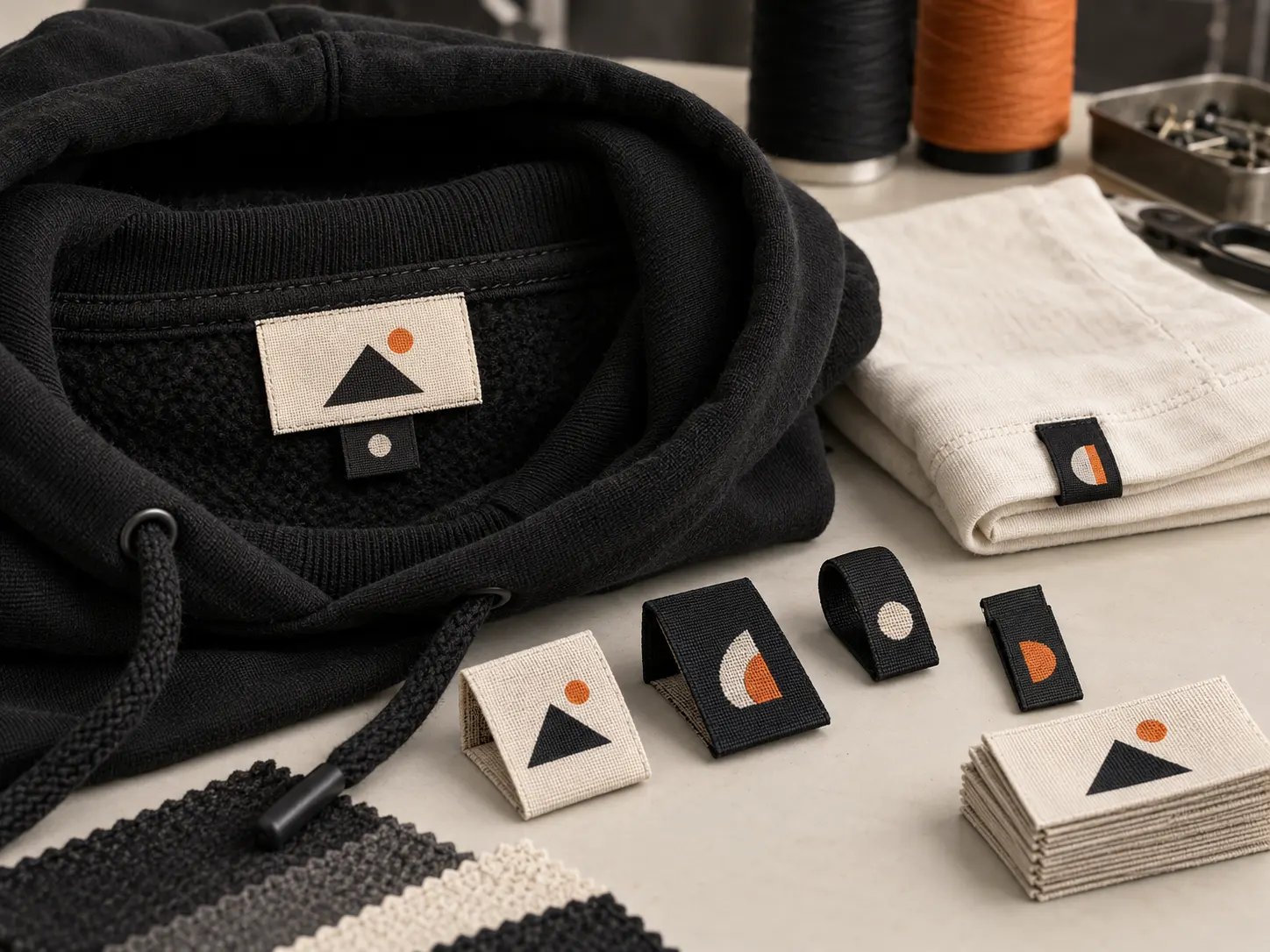
Woven labels are commonly used as permanent brand labels inside garments. Instead of printing the design onto a surface, the artwork is created through woven threads, giving the label a textile appearance that integrates naturally with apparel.
They can be used for neck branding, small logo labels, side-seam labels, hem labels and selected external branding applications. The final result depends on artwork complexity, thread density, label size, fold type and attachment method.
- Main woven neck labels
- Centre-fold labels
- End-fold labels
- Loop-fold labels
- Hem or side-seam labels
- Small logo tabs
- Woven size integration where suitable
Product Information
Care Labels, Composition Labels & Size Labels
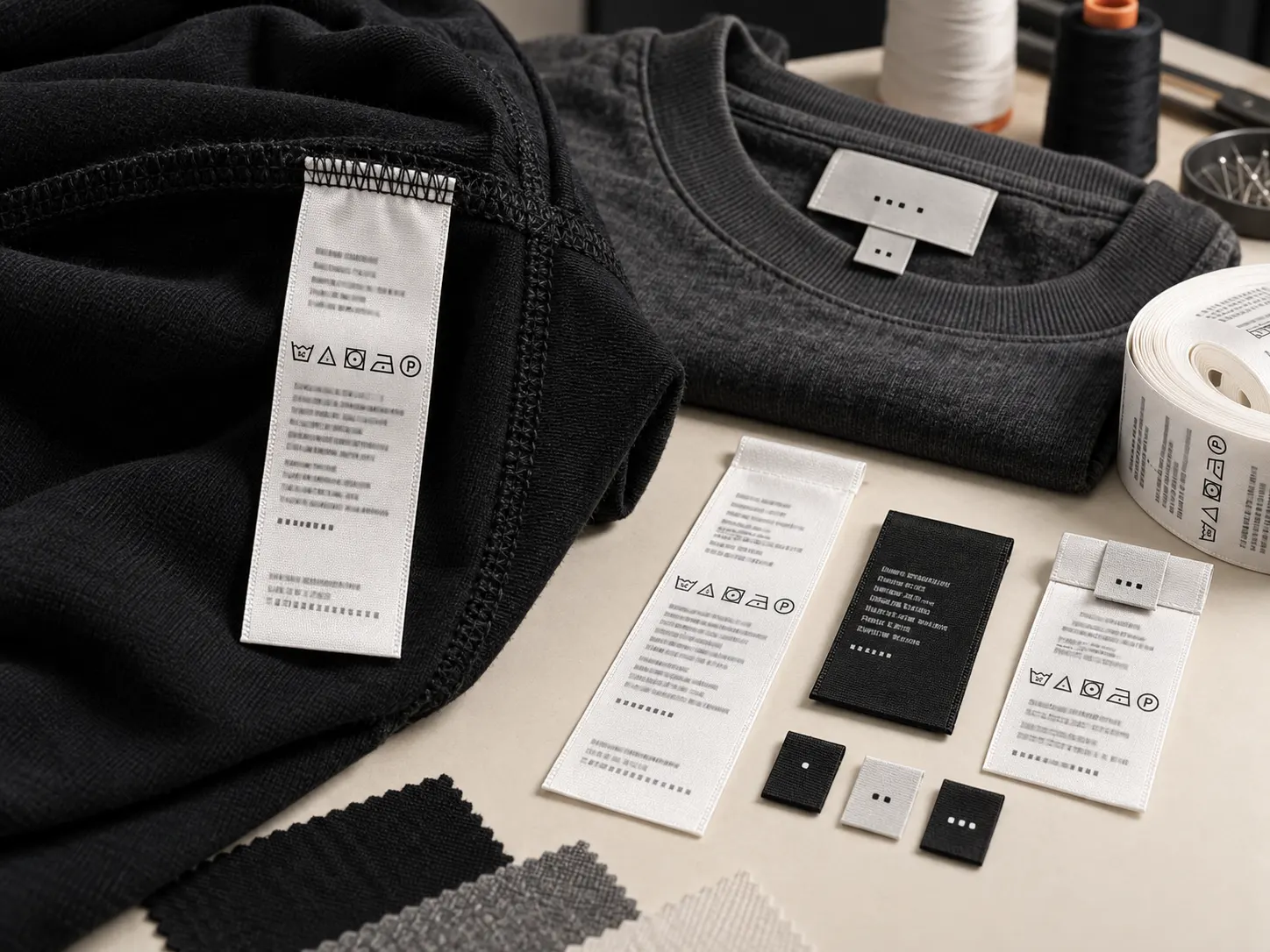
Care and composition labels communicate information about the garment's materials and maintenance. The exact wording, symbols, fibre declarations, country-of-origin information and legal requirements depend on the product and destination market.
Size labels may be separate or integrated with another label depending on the brand's preferred construction. They should remain easy to identify and consistent with the approved size breakdown.
- Fibre composition
- Care instructions
- Washing symbols
- Country-of-origin information where required
- Brand or supplier information where applicable
- Separate or integrated size identification
Printed Neck Labels
A printed neck label applies brand and product information directly to the inside back-neck area of a compatible garment. This can create a clean, minimal appearance without a separate sewn neck label.
The method needs to suit the garment fabric, colour and stretch. The print should remain legible and positioned so it does not interfere with seams or feel uncomfortable during wear.
Main brand identification printed inside the neckline.
Size information can be incorporated into the print layout.
Selected concise information can be included where technically and legally appropriate.
A label-free neck area can suit T-shirts, sportswear and selected performance garments.
Retail Presentation
Custom Clothing Hang Tags
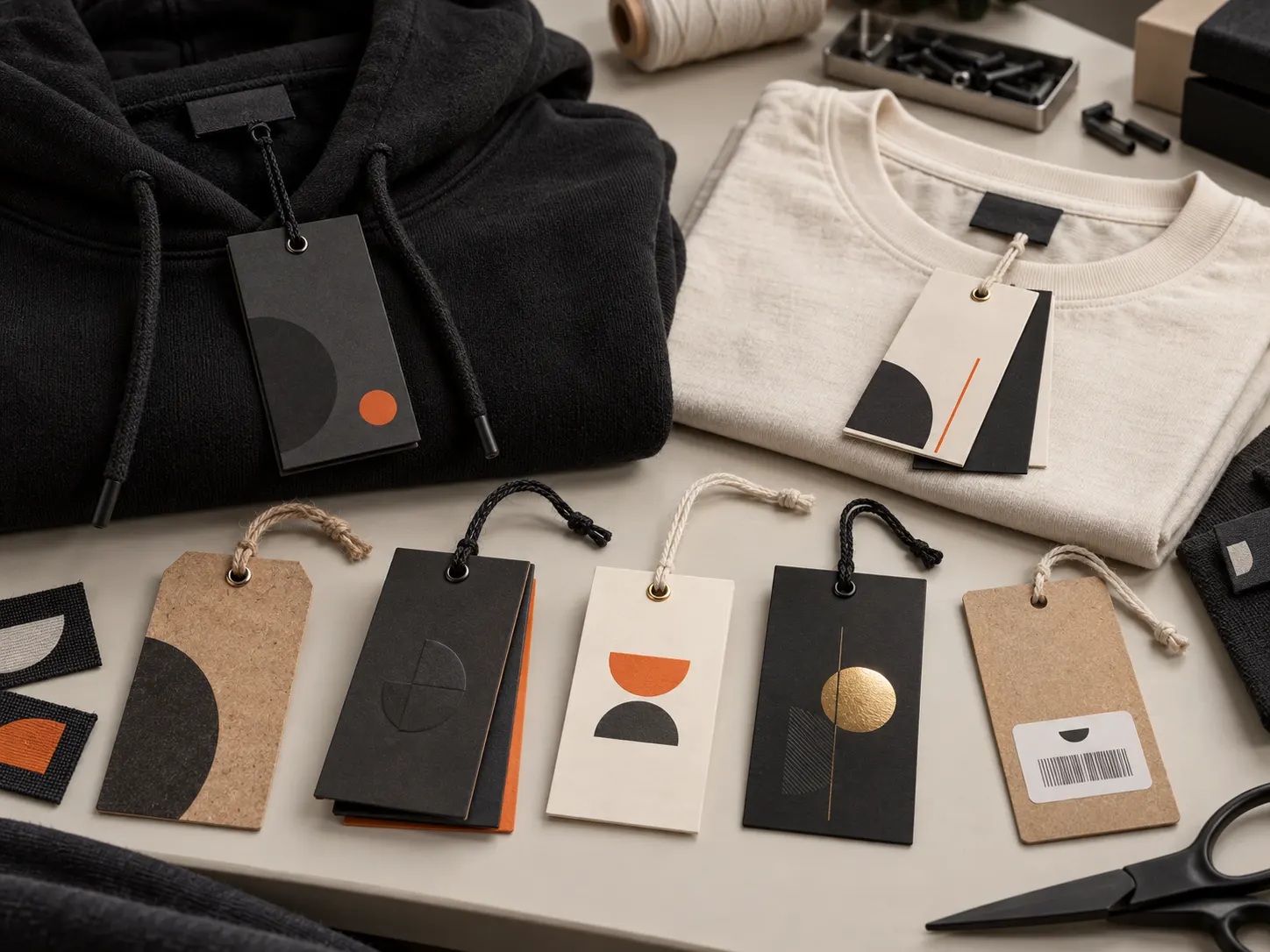
Hang tags provide a removable branding surface that can carry product, collection or retail information. They are typically attached to the garment using string, cord, plastic fasteners or other approved attachment methods.
Hang tag quality is influenced by paper stock, thickness, finish, print quality, shape, hole position, cord choice and any additional treatments such as foil, embossing or spot effects.
- Single-card hang tags
- Multi-card tag sets
- Kraft paper tags
- Matte or coated stock
- Foil or selected specialty finishes
- Custom strings and cords
- Barcode or SKU stickers
Additional Branding
Patches, Badges & Custom Branding Trims
Some private-label programmes use more than standard inside labels. Additional branding can be built into the garment through patches, badges, zipper pulls, drawcord details and other custom trims.
Embroidered Patches
Thread-based patches suited to logos, badges and dimensional apparel branding.
Woven Patches
Suitable for finer artwork where woven thread can reproduce more detail than standard embroidery.
Silicone & Rubber
Flexible molded branding can create a modern technical appearance on compatible garments.
Leather / Synthetic Patches
Commonly used on denim, outerwear, knitwear and selected lifestyle products.
Custom Zipper Pulls
Selected zipper components can be customised when product and order requirements justify the tooling.
Drawcord Details
Custom aglets, cord colours and drawcord constructions can reinforce brand presentation.
Garment Packaging
Custom Apparel Packaging
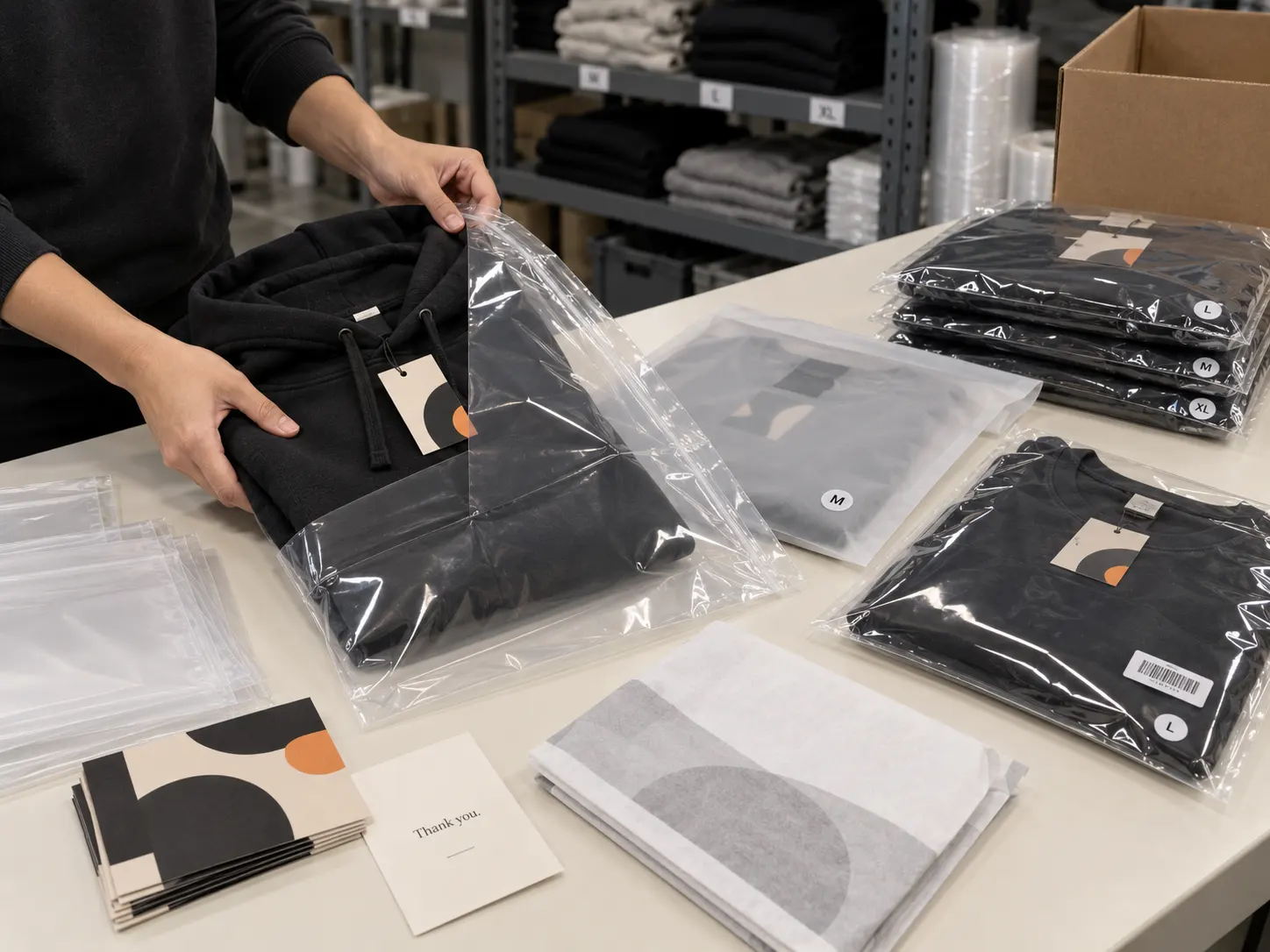
Garment packaging protects finished clothing and organises the order before carton packing. Depending on the project, packaging may remain simple and functional or include additional private-label presentation elements.
Packaging should be selected according to garment size, fabric, folding method, destination and customer requirements. Overly tight packaging can crush structured products, while excessive packaging can add unnecessary volume and cost.
- Clear garment bags
- Frosted or selected custom bags
- Resealable packaging
- Branded stickers
- Size stickers
- Thank-you or information cards
- Tissue or protective inserts where required
- Custom packaging formats for selected projects
Folding & Garment Presentation
Consistent folding helps keep bulk orders organised and ensures garments fit their approved packaging. The folding method may change according to product category, dimensions and whether the garments are going to a warehouse, retailer, event, team or direct-to-consumer operation.
Hoodies, T-shirts, jackets, trousers and other garments often require different folding dimensions. Hang tags and visible branding should also be positioned so they do not damage the garment or create unnecessary pressure points inside the packaging.
Order Organisation
Barcodes, SKUs, Size Stickers & Product Identification
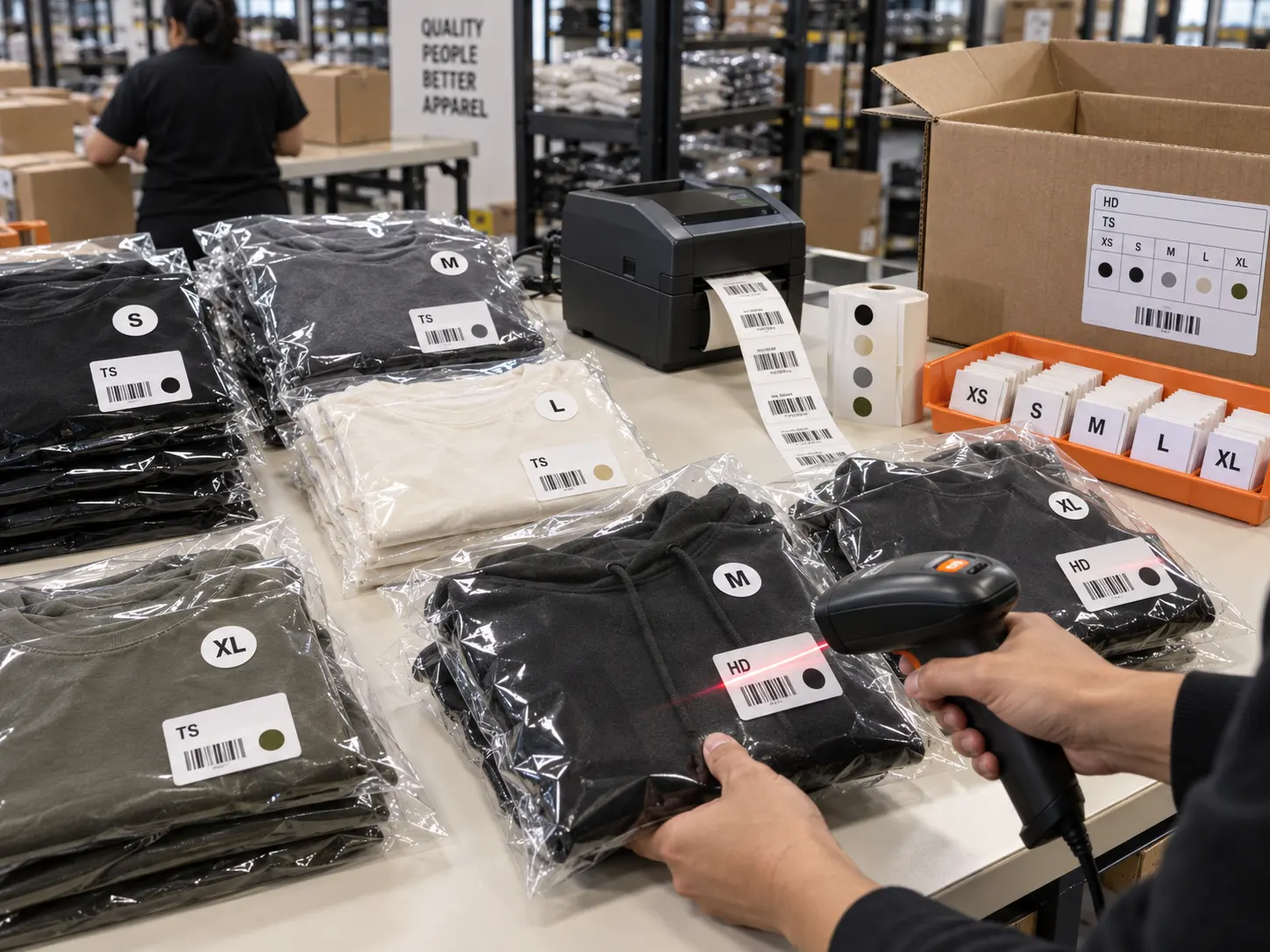
Retail and warehouse programmes often need individual garments to be identified beyond the sewn size label. Barcodes, SKU labels, stickers and carton markings can help connect physical products with inventory or order-management systems.
The manufacturer should receive the final barcode or SKU data from the brand rather than creating product codes independently unless that responsibility has been clearly assigned.
- Individual barcode stickers
- SKU labels
- Size stickers
- Colour identification
- Style identification
- Carton assortment labels
Bulk Packing
Carton Packing & Shipment Preparation
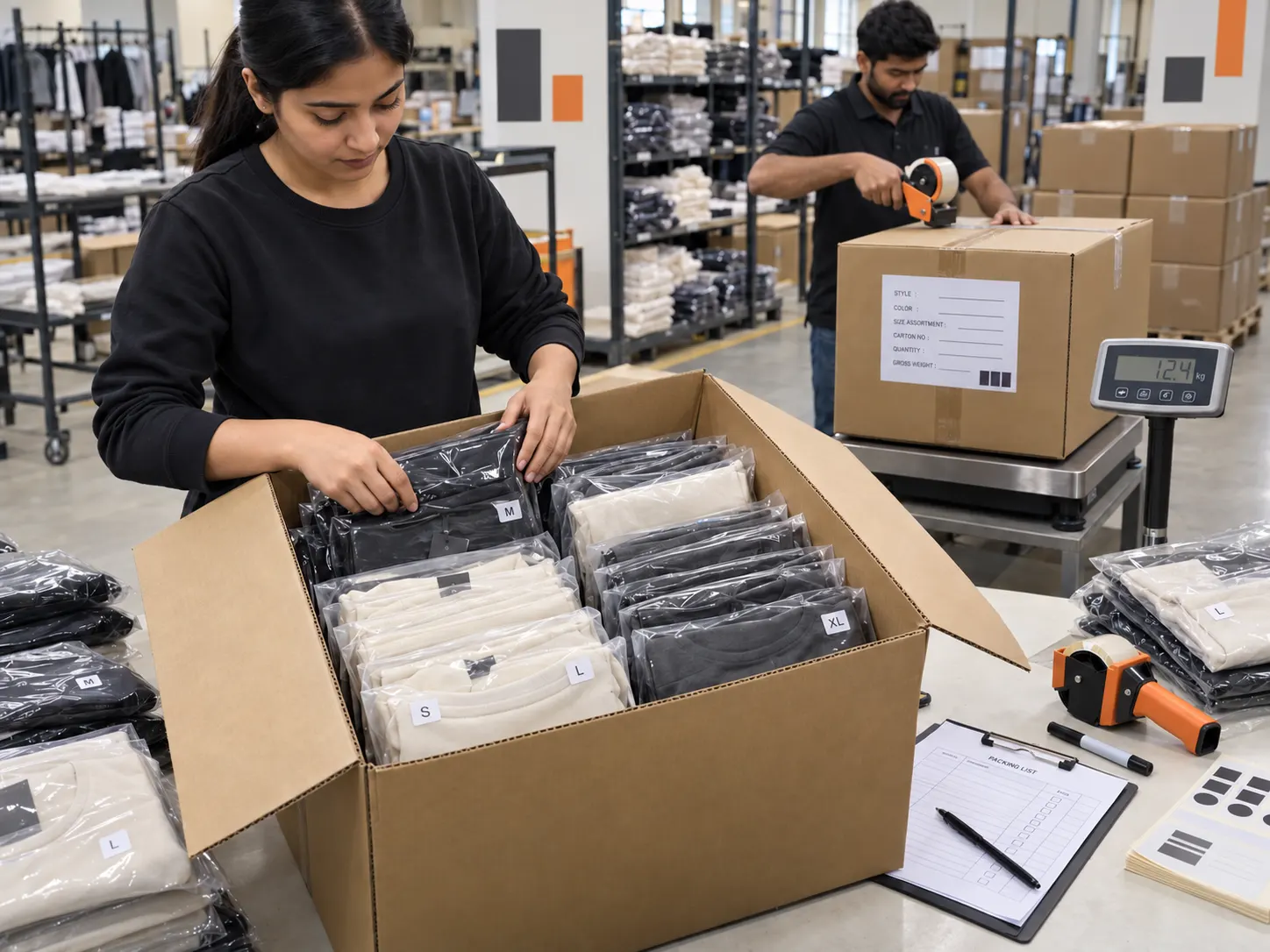
After individual garments are folded and packaged, the order is organised into cartons for storage and shipment. Carton preparation needs to balance protection, weight, volume and order control.
Depending on the project, cartons can be packed by style, colour, size assortment or customer-specific ratio. Final carton counts should align with the approved order quantity and packing list.
- Carton quantity control
- Style and colour organisation
- Size assortment control
- Carton labels and markings
- Gross and net weight checks where required
- Final dispatch preparation
Labels & Packaging for Different Apparel Categories
Branding and packing requirements vary by garment. A lightweight sports jersey does not always use the same labeling or packaging configuration as a heavyweight hoodie, denim jean or structured jacket.
| Apparel Category | Common Label Needs | Packaging Considerations |
|---|---|---|
| T-Shirts | Woven or printed neck label, care label, size identification, hang tag | Flat folding, compact garment bag, size sticker where required |
| Hoodies & Sweatshirts | Woven neck label, care label, size label, hang tag, possible patches | Larger bag volume, careful hood and sleeve folding |
| Sportswear | Printed or lightweight sewn labels, size information, care label | Lightweight packaging and clear size/team identification |
| Denim | Waist labels, care labels, size labels, hang tags, leather/synthetic patches | Structured folding and stronger packaging where needed |
| Outerwear | Main labels, care labels, size labels, zipper or trim branding, hang tags | More volume, protection for zippers, hardware and structured panels |
| Knitwear | Soft neck labels, care labels, size labels, hang tags | Folding that avoids stretching and unnecessary compression |
Production Workflow
How the Custom Labels & Packaging Process Works
Labels and packaging should be developed alongside the garment rather than left until the final days of production. Early confirmation helps reduce mistakes and ensures required components are ready when finishing and packing begin.
Define the branding requirements
The brand confirms which labels, hang tags, packaging and product-identification components are required.
Provide artwork and specifications
Final vector artwork, dimensions, colours, materials, fold types, attachment positions and packaging instructions are supplied.
Review technical feasibility
The manufacturer checks small text, fine artwork, label dimensions, attachment methods and packaging sizes for production suitability.
Create samples where required
Branding components can be sampled or reviewed during garment development before bulk use.
Approve positioning and application
Neck-label placement, care-label position, hang-tag attachment point and other details are confirmed.
Produce bulk branding components
Approved labels, tags and packaging are prepared in the quantities needed for the order.
Apply labels and final branding
Sewn labels are attached during the relevant garment operation, while hang tags, stickers and other branding are added during finishing or packing.
Fold, identify and package garments
Finished garments are folded, packaged and organised by style, colour and size.
Pack and verify cartons
Carton quantities and assortments are checked before shipment preparation.
What Clothing Brands Should Provide
Clear specifications make label and packaging development faster and reduce the risk of incorrect production. Ideally, the brand should provide:
- Logo and label artwork in suitable vector format
- Final label dimensions
- Preferred label material and fold type
- Approved colours or colour references
- Care and composition wording confirmed for the target market
- Size-label requirements
- Hang-tag artwork, stock and finishing preferences
- Packaging bag dimensions or style requirements
- Barcode, SKU and product-identification data where required
- Folding instructions
- Carton assortment or packing-ratio requirements
- Reference samples when a specific finish must be matched
Final Control
Quality Control for Labels & Packaging
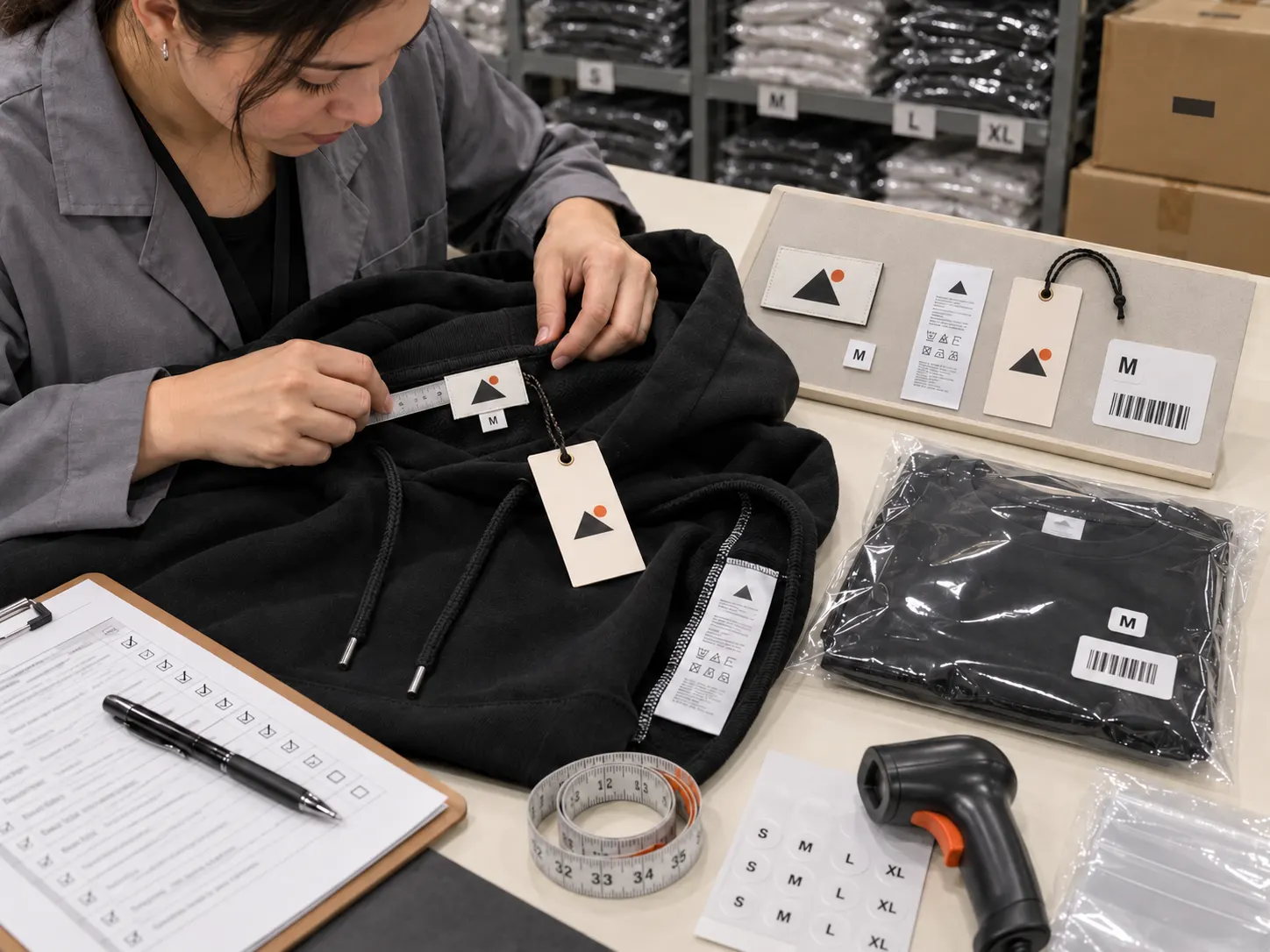
Label and packaging quality should be checked alongside the garment itself. A technically correct hoodie can still be rejected if the wrong size label is attached, the care label is missing or the hang tags do not match the approved artwork.
- Correct brand artwork
- Correct label size and fold
- Correct placement and orientation
- Legibility of printed information
- Correct size identification
- Hang-tag attachment and appearance
- Barcode and SKU verification where provided
- Clean folding and packaging
- Correct carton assortment
- Final order quantity control
Integrated Manufacturing
Private Label Branding Integrated With Clothing Production
Labels and packaging are most effective when they are coordinated with the garment manufacturing process. Neck labels need to match neckline construction, care labels need an approved seam position, hang tags need an attachment point that will not damage the garment, and packaging needs to fit the final product dimensions.
Stitch Expo can coordinate custom garment manufacturing with private-label branding so these elements are reviewed as part of the same production project rather than treated as unrelated add-ons at the end.
Explore our apparel manufacturing services, review the complete clothing manufacturing process, or use our clothing tech pack builder to organise your product requirements before development.
Questions Answered
Custom Clothing Labels & Packaging FAQs
What types of custom clothing labels can be added to garments?
Depending on the product, labels can include woven neck labels, printed neck labels, satin or printed care labels, composition labels, size labels, side-seam labels and selected external logo labels.
What is the difference between a woven label and a printed label?
A woven label creates artwork using woven threads, while a printed label applies ink or another print process to a label substrate. The best option depends on artwork detail, feel, size, budget and garment requirements.
Can care labels include my brand logo?
Yes, where appropriate, but required care, fibre and regulatory information should remain clear and compliant with the destination market.
Can you make custom hang tags for clothing brands?
Yes. Hang tags can be developed around supplied artwork and selected paper, shape, print and attachment requirements, subject to feasibility and quantities.
Can packaging include my brand logo?
Selected packaging components can be customised with brand artwork, stickers, inserts or other presentation details depending on format and order requirements.
Do you provide size stickers, barcodes and SKU labels?
These can be reviewed as part of the packaging specification. Final barcode and SKU data should normally be supplied by the brand or retailer so it matches their inventory system.
When are clothing labels added during manufacturing?
Sewn labels are usually attached during the relevant garment assembly operation, while hang tags, stickers and other removable branding are generally added during finishing and packing.
Can I approve labels and packaging before bulk production?
Where required, branding components can be reviewed during development so dimensions, artwork, materials and placement can be confirmed before bulk use.
Does every garment need the same packaging?
No. Packaging depends on garment size, structure, fabric, destination and customer requirements.
Can labels and packaging be included with custom clothing manufacturing?
Yes. Private-label branding and packaging can be coordinated with the broader garment manufacturing project so the finished products follow the agreed presentation and packing specifications.
Build Your Private Label
Develop Your Clothing Labels & Packaging With Stitch Expo
Share your garment design, brand artwork, label requirements, packaging preferences and order details. We can review how your private-label branding should integrate with the clothing production process.