OEM & Private-Label Lightweight Outerwear
Custom Windbreaker Jacket Manufacturer
Manufacture custom windbreaker jackets for your clothing, streetwear, sportswear or outdoor brand with control over shell fabric, fit, colour, lining, hood, ventilation, zippers, pockets, reflective details, printing, embroidery, private labels and packaging.
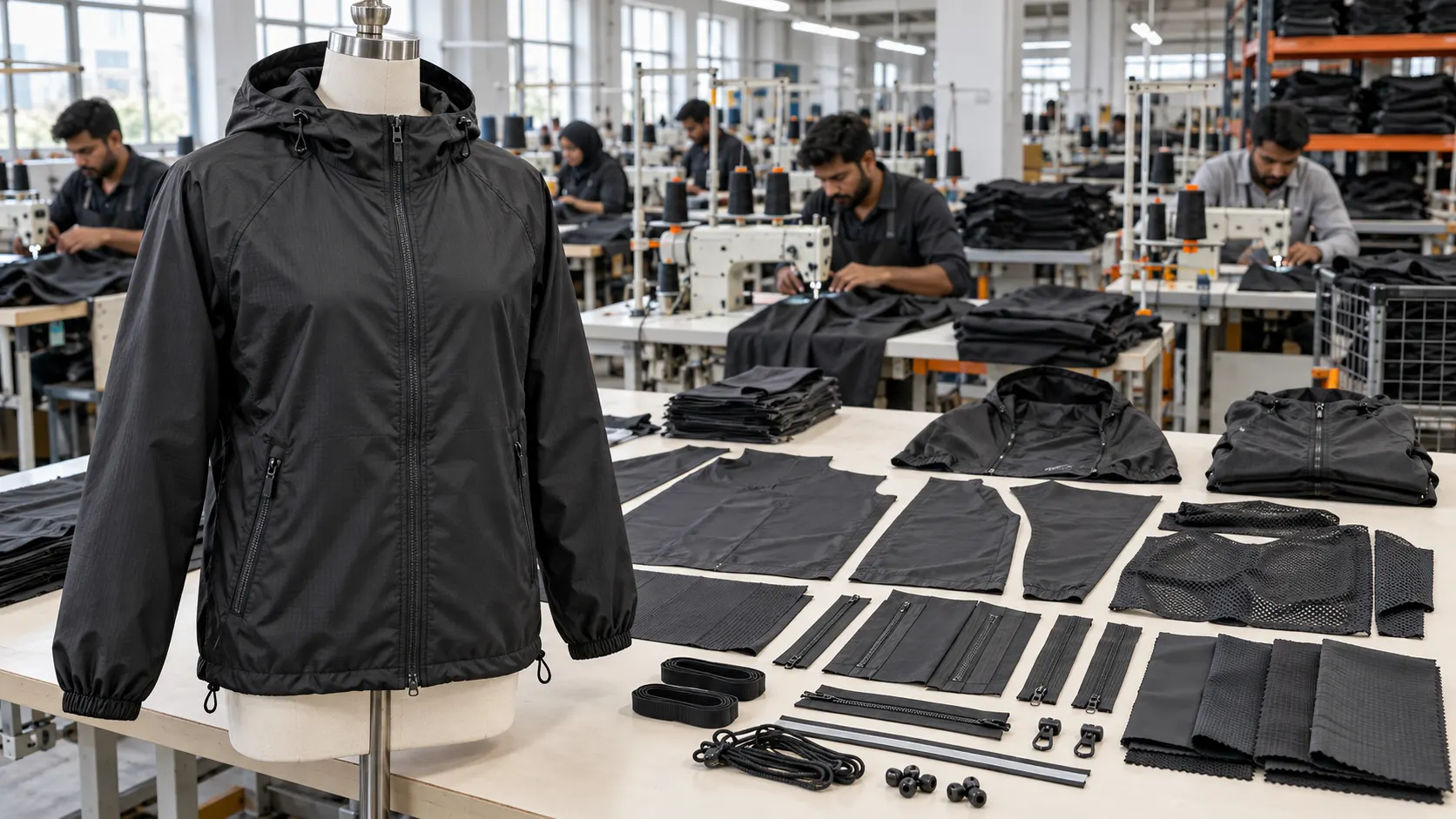
Custom Windbreaker Jacket Manufacturing for Clothing Brands
Stitch Expo develops custom windbreaker jackets for brands that need a product manufactured around their own specifications rather than a generic blank with a logo added. The jacket can be developed around your shell fabric, fit, colourway, panel layout, lining, hood or collar, cuffs, hem, ventilation, pockets, zipper system, decoration, private labels and packaging.
Windbreakers are lightweight products, but that does not make them simple to manufacture well. Because the shell is thin and flexible, poor pattern balance, seam puckering, incorrect zipper tension, bulky pocket construction and unsuitable decoration can be much more visible than on heavier outerwear. Material selection and construction therefore need to be considered together from the beginning.
Development can start from a complete tech pack, an existing reference jacket, measurement chart, sketch or clear reference images. A physical sample gives the brand an opportunity to review shell hand feel, fit, mobility, hood shape, zipper operation, pocket access, lining, ventilation, cuff and hem function, artwork placement and overall appearance before bulk production.
What Is a Windbreaker Jacket?
A windbreaker is a lightweight outer jacket designed primarily to reduce wind penetration while remaining lighter and easier to layer or pack than insulated outerwear. Many windbreakers use tightly woven nylon or polyester fabrics, and the complete jacket may be unlined, mesh lined or finished with another lightweight lining depending on the target product.
Windbreaker is often used as a broad product term, so the exact performance should be defined in the specification. A tightly woven shell can provide useful wind resistance, and a water-repellent finish can help with drizzle or light precipitation. That does not automatically make the complete garment waterproof. Waterproof performance depends on the shell, coating or membrane, seams, zipper system and other openings and should be supported by the appropriate material and test requirements.
Types of Custom Windbreaker Jackets We Manufacture
Your windbreaker can be developed around streetwear, sports, running, travel, teamwear or outdoor-lifestyle positioning. These are common construction directions rather than fixed templates.
Full-Zip Windbreaker
A versatile lightweight jacket with full front zipper, side pockets and optional hood or stand collar.
Pullover Windbreaker
Overhead construction with a clean front and lightweight outerwear character.
Half-Zip Anorak
Pullover style using a half zipper, often combined with a kangaroo or utility front pocket.
Packable Windbreaker
Low-bulk construction designed to fold into a pocket or compact pouch where technically suitable.
Hooded Windbreaker
Fixed, detachable or stowable hood developed around coverage, movement and intended use.
Oversized Streetwear Windbreaker
Relaxed body, dropped shoulder, larger sleeve volume and fashion-led proportions.
Running & Training Windbreaker
Movement-focused lightweight layer with ventilation and visibility details where required.
Team Warm-Up Jacket
Custom colours, branding and practical construction for clubs, teams and sports programmes.
Coach-Style Windbreaker
Clean lightweight outerwear direction with collar, snap or zipper closure and streetwear styling.
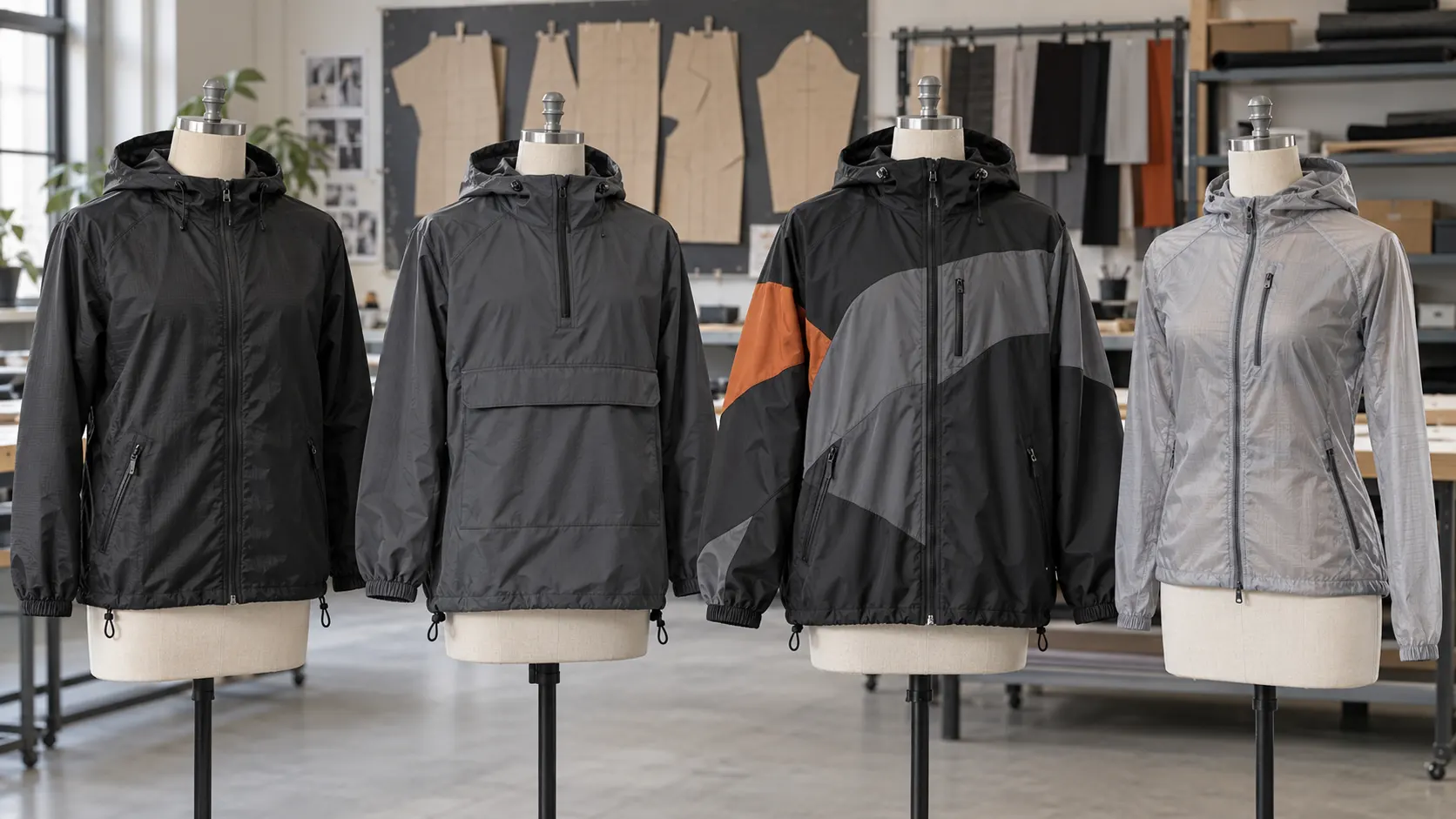
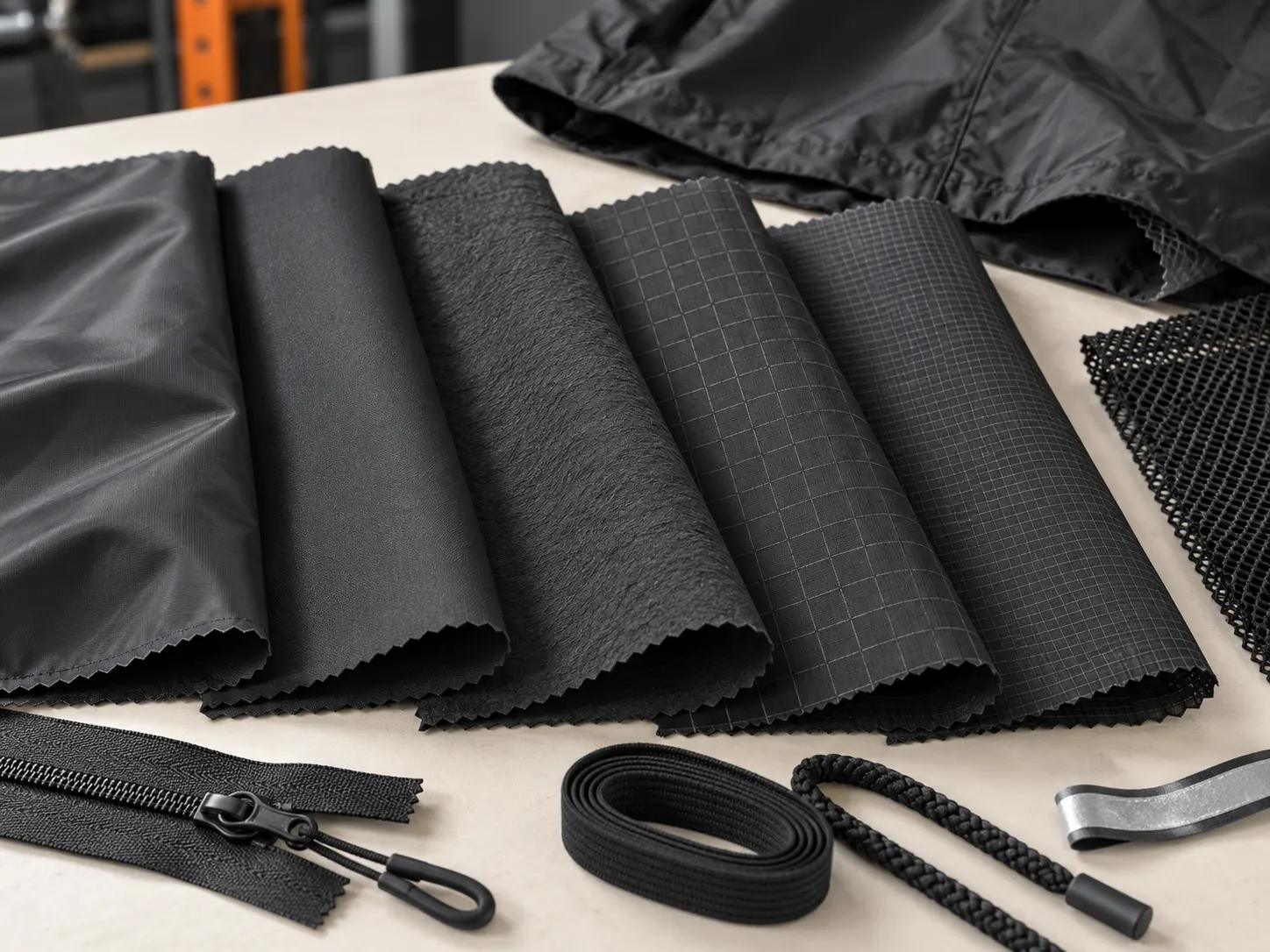
Windbreaker Fabrics: Nylon, Polyester, Taslan, Ripstop & Micro-Ripstop
Shell fabric is one of the most important decisions in custom windbreaker manufacturing. It affects weight, wind resistance, hand feel, drape, durability, packability, colour appearance, water repellency and decoration compatibility.
| Fabric Direction | Typical Character | Useful For | Development Considerations |
|---|---|---|---|
| Lightweight Nylon | Smooth, technical, low bulk | Running, packable and lifestyle windbreakers | Hand feel, tear strength, coating, shine and heat sensitivity |
| Polyester Woven | Versatile, stable and decoration-friendly | Teamwear, streetwear and general outerwear | Weight, finish, print method and drape |
| Taslan | Textured, less glossy hand | Outdoor-lifestyle and casual windbreakers | Surface texture, coating and colour |
| Ripstop / Micro-Ripstop | Visible reinforcement grid, technical appearance | Outdoor, sports and technical-inspired streetwear | Grid scale, weight, tear performance and coating |
| Mechanical Stretch Woven | Improved movement without heavy bulk | Training, running and active outerwear | Recovery, hand feel and panel engineering |
Recycled polyester or nylon options may also be sourced for suitable projects, but any recycled-content claim should match the actual material documentation supplied for the order.
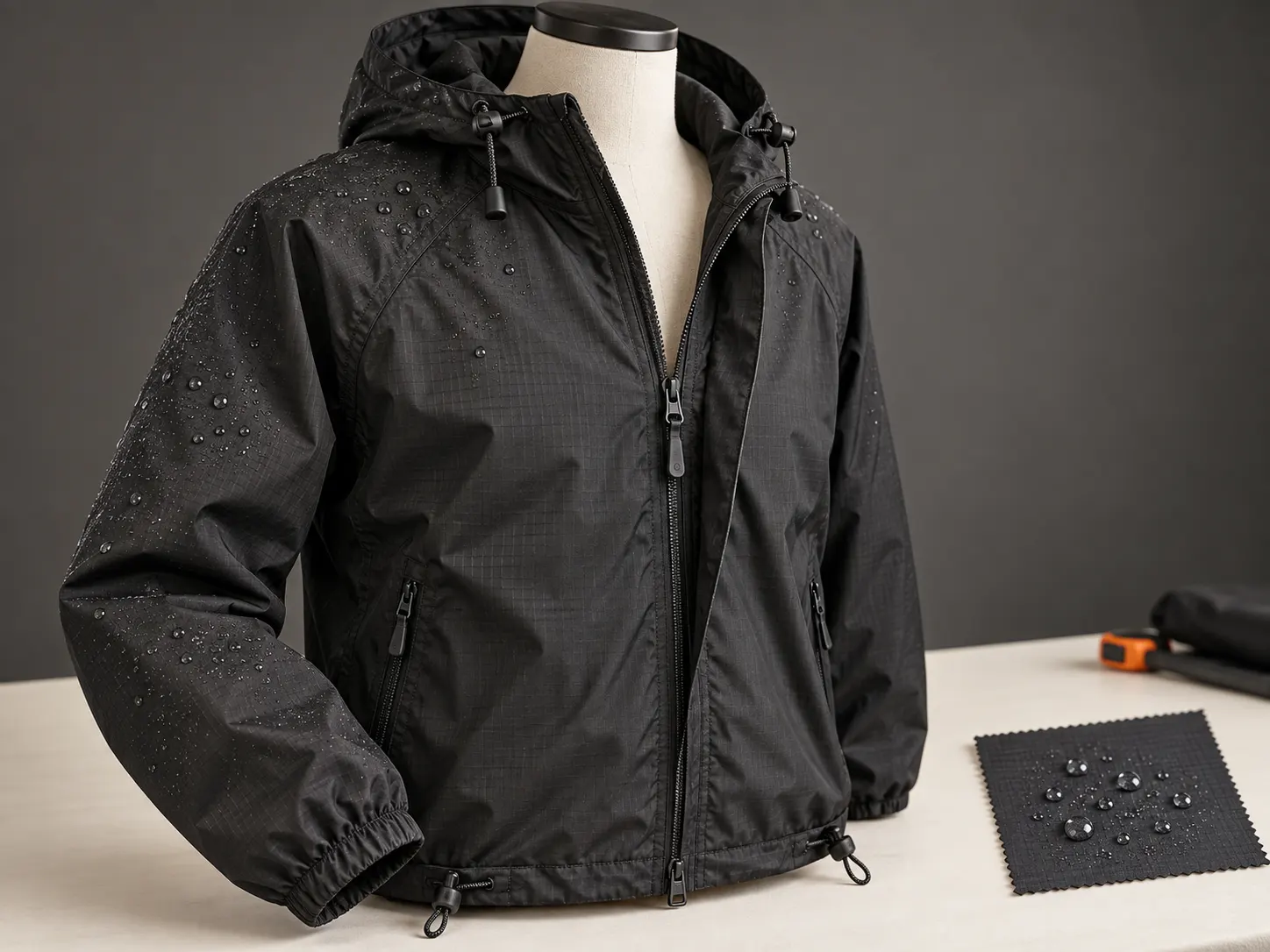
Wind-Resistant, Water-Resistant & Weather-Protection Options
A windbreaker’s weather performance comes from the complete system rather than one marketing term. Tightly woven shell construction can help reduce air penetration. A DWR-style water-repellent finish can help water bead and roll away during light precipitation. Coated or laminated shells can be considered for projects requiring higher weather protection.
If your brand requires a specific waterproof or breathability target, define that target before fabric sourcing so the correct fabric, seam construction and testing can be considered. We avoid treating “water resistant” and “waterproof” as interchangeable descriptions.
- Wind-resistant tightly woven shells
- Water-repellent finishes
- Coated shell options
- Lightweight membrane constructions for suitable projects
- Internal zipper storm flaps
- Adjustable hoods and hems
- Elastic or adjustable cuffs
- Ventilation features for comfort
Unlined, Mesh-Lined & Lightweight Windbreaker Lining Options
An unlined windbreaker can minimize weight and packed volume. Mesh lining can improve interior comfort and create separation from a coated shell. Lightweight woven lining can provide a cleaner interior appearance and help hide pocket bags or internal construction.
Unlined Construction
Best where minimal weight and compact packability are priorities, with seam finishing planned accordingly.
Mesh Lining
Common for sports and lifestyle jackets where airflow and interior comfort are important.
Lightweight Woven Lining
Provides a smooth interior and more finished presentation for selected fashion and team styles.
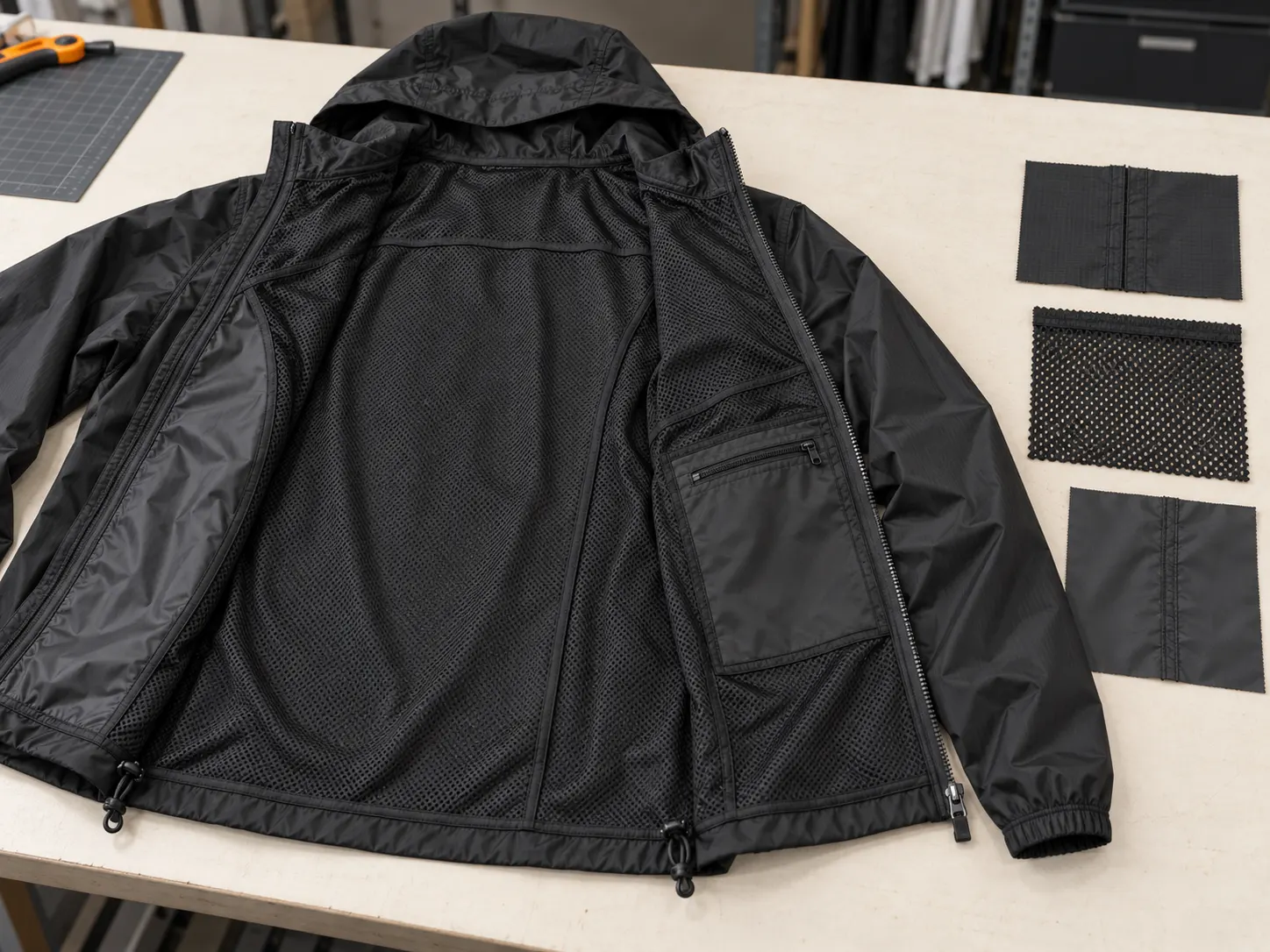
Windbreaker Hoods, Collars, Ventilation, Cuffs & Hems
Openings have a direct effect on wind protection, comfort and silhouette. A hood should provide the intended coverage without restricting movement or pulling the neckline. Cuffs and hems should control openings while remaining comfortable. Ventilation can be introduced where a tightly woven shell would otherwise feel too enclosed during activity.
Fixed Hood
Integrated hood with custom depth, opening shape and drawcord direction.
Stowable Hood
Lightweight hood designed to fold into the collar when the construction permits.
Stand Collar
Clean collar option for non-hooded or convertible windbreaker concepts.
Elastic Cuffs
Simple low-bulk wrist finishing for sport and everyday styles.
Adjustable Hem
Drawcord and cord-lock construction to control bottom opening and silhouette.
Back / Mesh Ventilation
Yoke vents, mesh-backed openings or selected ventilation panels for movement-focused products.
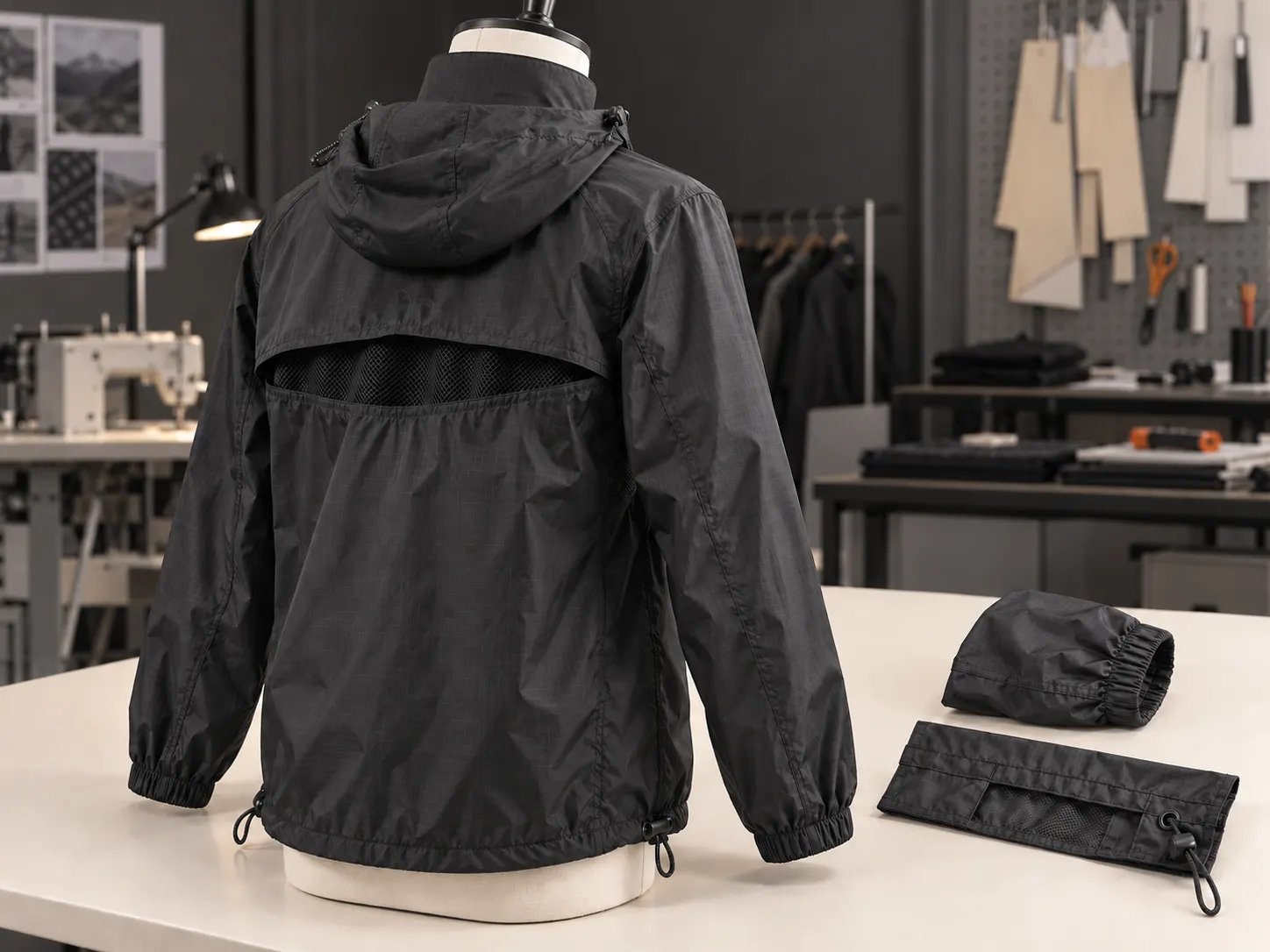
Packable Windbreaker Jacket Development
Packability needs to be engineered into the product rather than added at the end. Shell weight, zipper size, lining, pocket bags, hood structure, drawcords and decoration all contribute to the packed volume.
A windbreaker may be designed to fold into an integrated pocket, reversible pocket bag or separate pouch. The storage solution should be large enough to accept the garment without excessive force and strong enough to handle repeated packing. Bulky embroidery, heavy hardware or thick lining may work against the goal of a compact packable jacket.
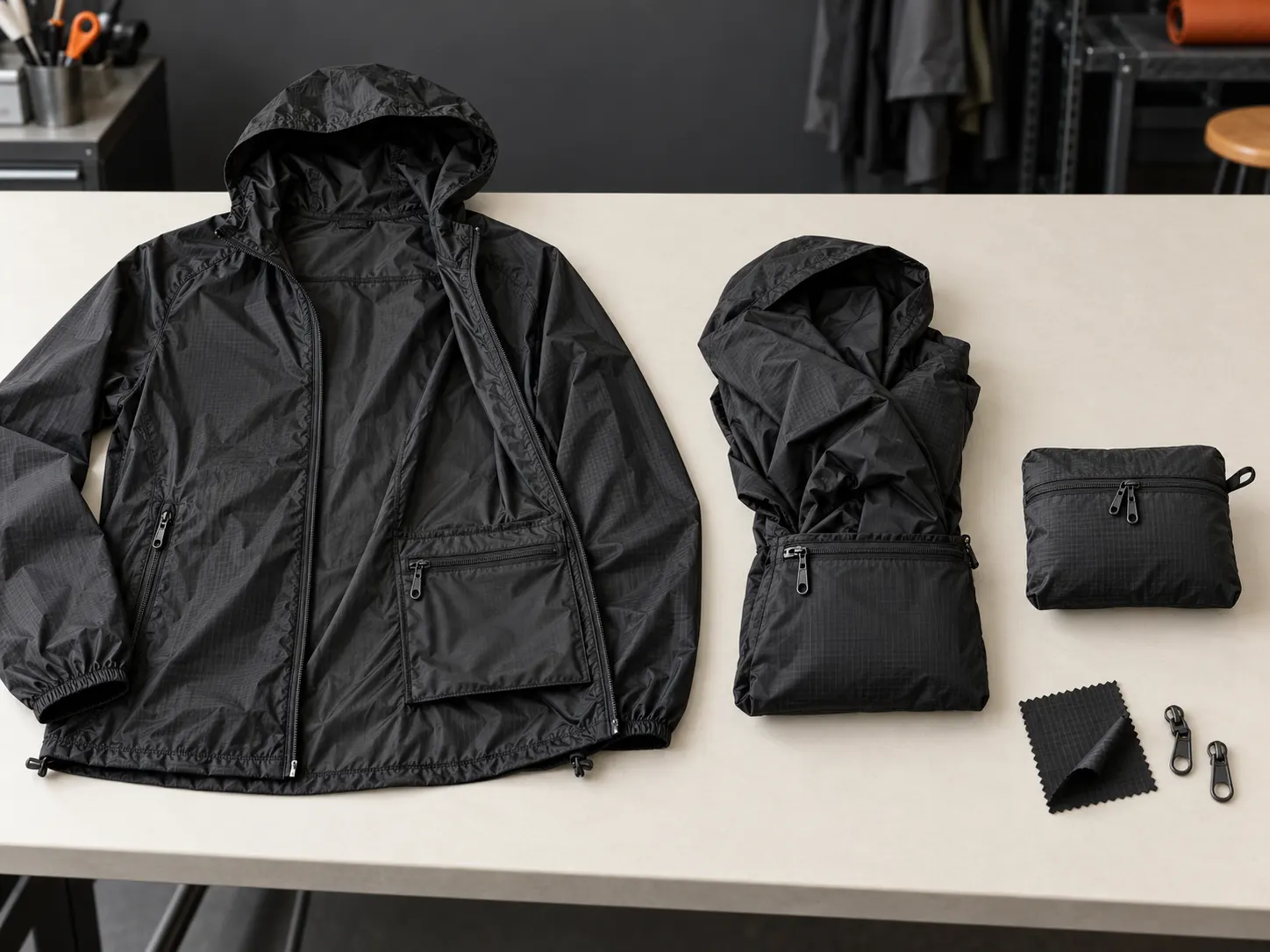
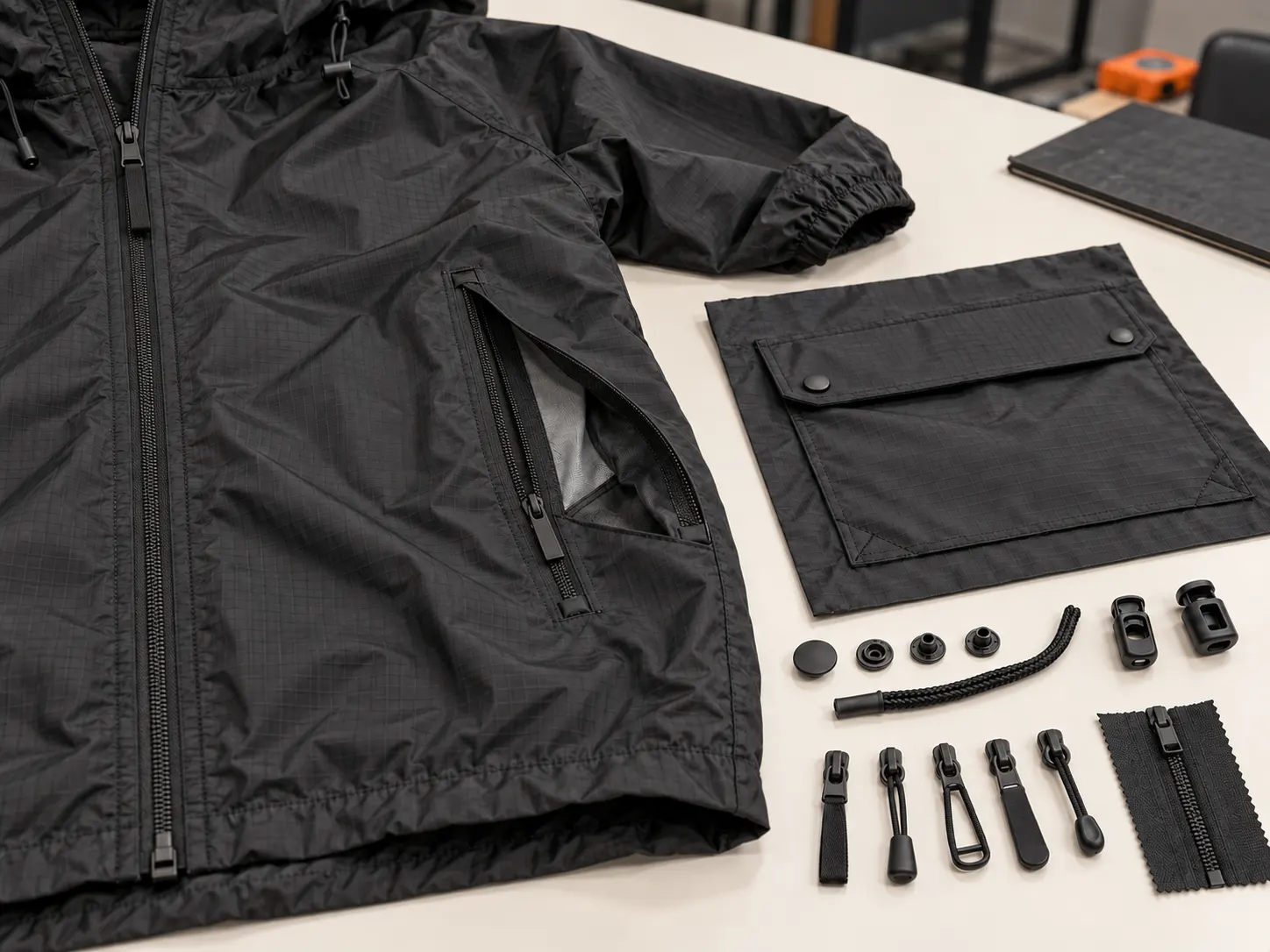
Windbreaker Zippers, Pockets, Snaps & Hardware
Lightweight outerwear should use hardware that matches the scale and strength of the shell. Heavy components can distort thin fabric, while poorly reinforced zipper ends or pockets can create stress points.
- Full-front coil or molded zipper directions
- Half-zip or quarter-zip closures
- Zippered side pockets
- Welt or concealed side pockets
- Chest or utility pockets
- Anorak kangaroo pockets
- Internal security pockets
- Snap closures
- Drawcords and cord locks
- Custom zipper pull directions subject to feasibility and minimums
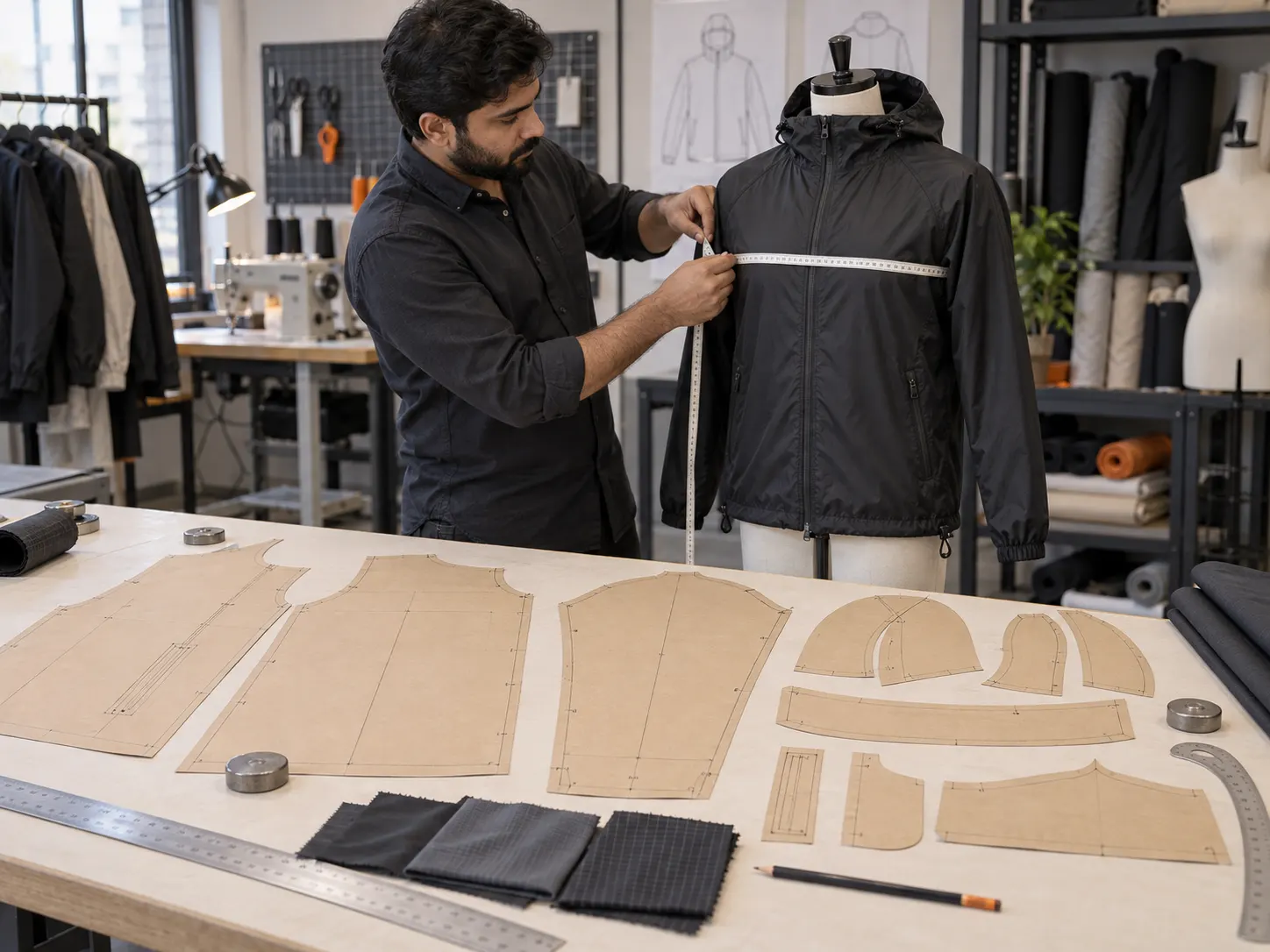
Windbreaker Fit, Pattern Making & Size Grading
Because windbreaker shells are thin, the pattern and sewing quality are visually exposed. The base pattern should reflect the intended silhouette instead of relying on a generic jacket block.
Regular, athletic, relaxed, oversized, cropped and cycling-oriented fits each require different proportions. Pattern development may account for layering allowance, shoulder position, armhole mobility, sleeve articulation, hood or collar shape, cuff opening, dropped rear hem, pocket placement and ventilation panels.
- Chest and body width
- Shoulder width or drop
- Body length and rear-drop requirements
- Armhole mobility
- Sleeve length and volume
- Cuff opening
- Hood depth and face opening
- Bottom opening
- Pocket and vent positioning
After the base size is approved, the pattern can be graded into the required size range. For more detail, see our pattern making in clothing manufacturing guide.
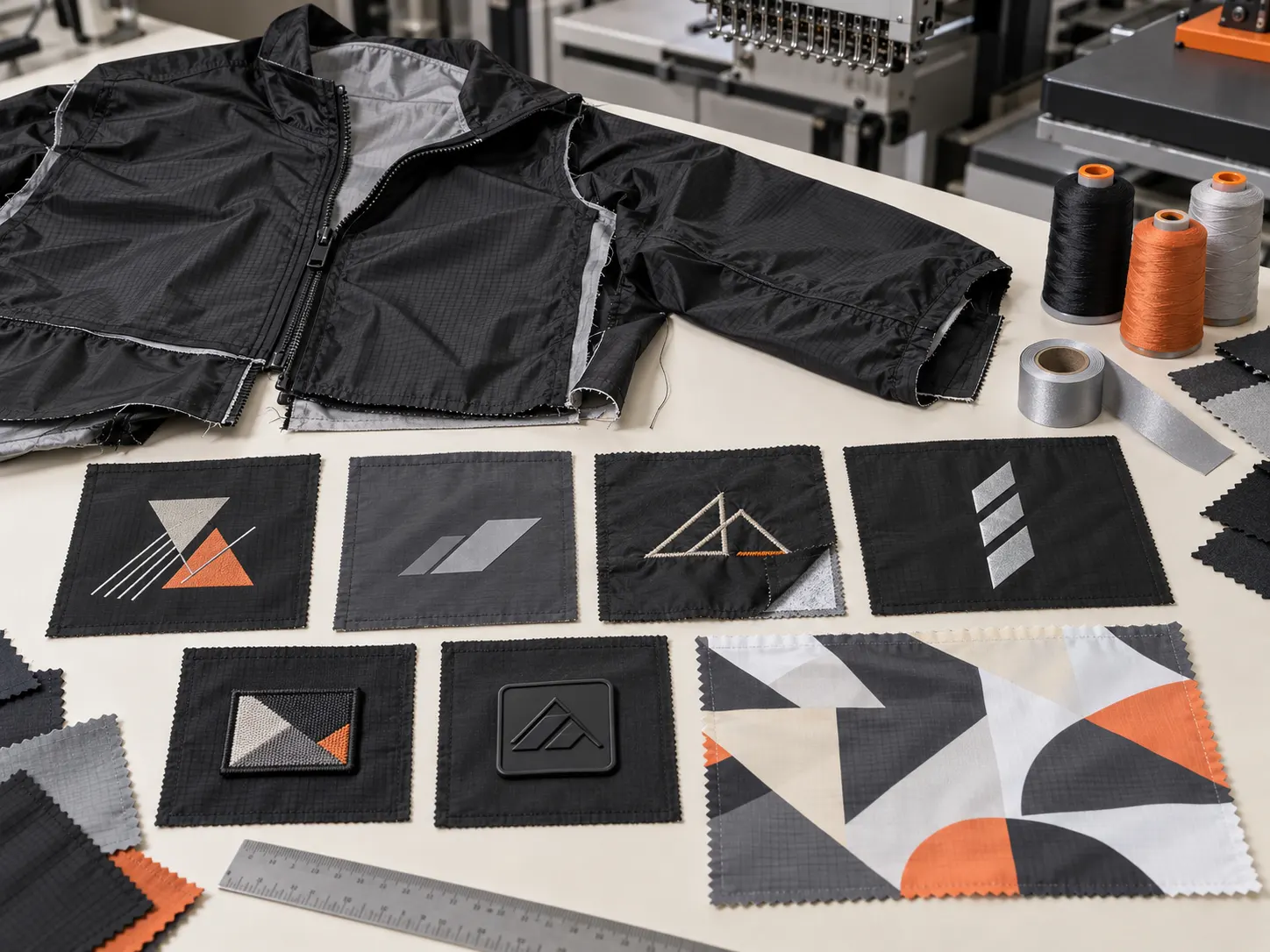
Custom Printing, Embroidery, Sublimation, Patches & Reflective Details
Decoration needs to be compatible with the shell composition, coating and heat sensitivity. Artwork is best planned at panel stage so placement can be controlled accurately and the inside of the garment can be finished cleanly.
Screen Printing
Can be used on compatible woven shells after ink and material suitability are confirmed.
Heat Transfer
Useful for clean logos, numbers and technical graphics where application temperature suits the fabric.
Sublimation
Suitable for compatible white polyester panels when full-colour graphics or all-over designs are required.
Embroidery
Provides dimensional branding, but stitch density and backing should be chosen for lightweight woven fabric.
Patches
Embroidered, woven, rubber and silicone patch directions can be considered according to the jacket design.
Reflective Details
Reflective transfer, piping or trim can support running, cycling and visibility-oriented concepts.
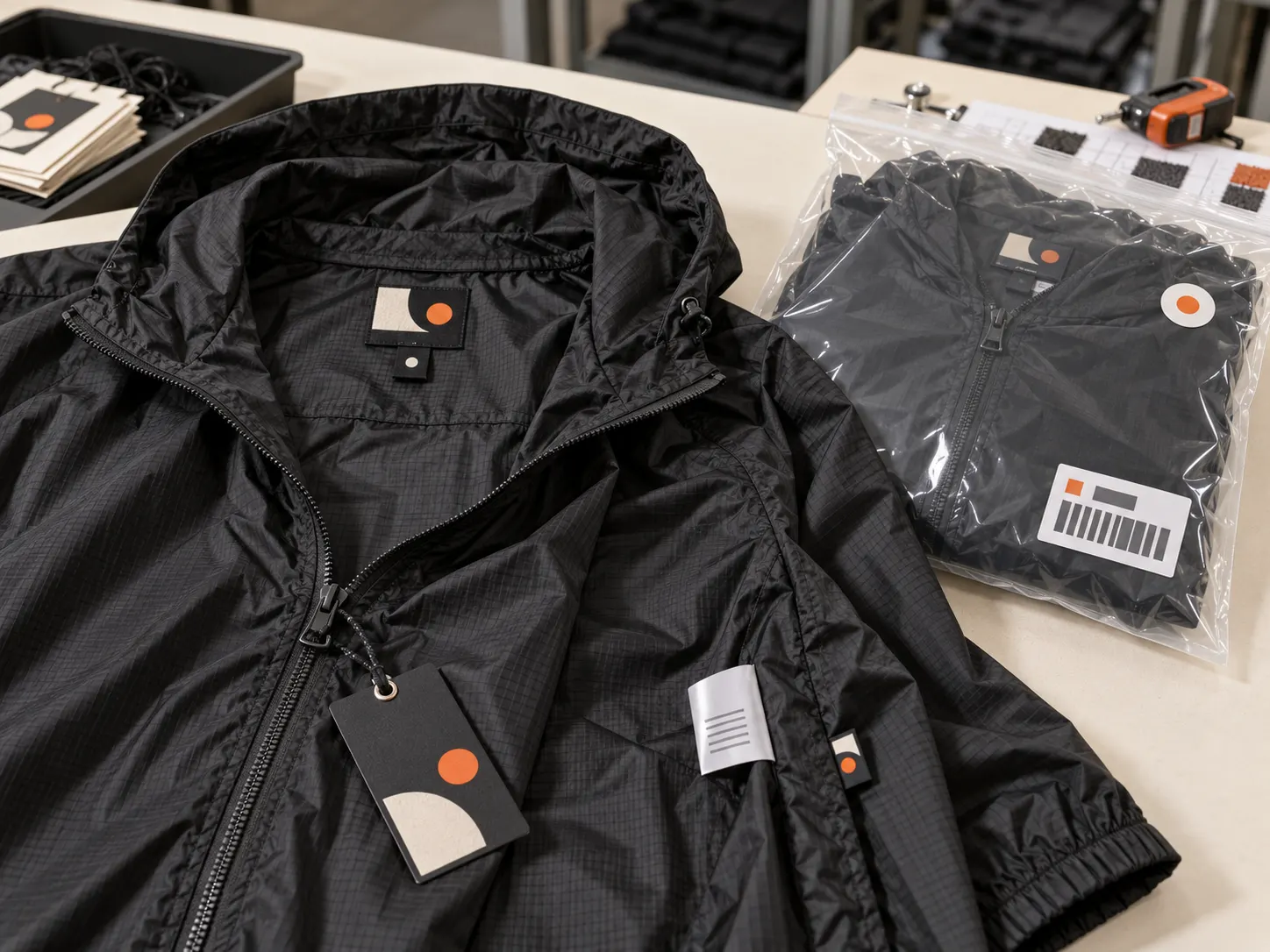
Private Label Windbreaker Jacket Manufacturing
Your windbreaker can be finished as a complete private-label product rather than supplied as a generic blank. Labels and packaging should match the actual garment specification and your retail workflow.
- Custom woven main labels
- Size labels
- Care and composition labels
- Printed neck branding where suitable
- Hang tags
- Woven logo tabs
- Branded zipper-pull direction where feasible
- Size stickers and SKU identification
- Protective garment bags
- Bulk carton preparation
See our complete guide to custom clothing labels and packaging.
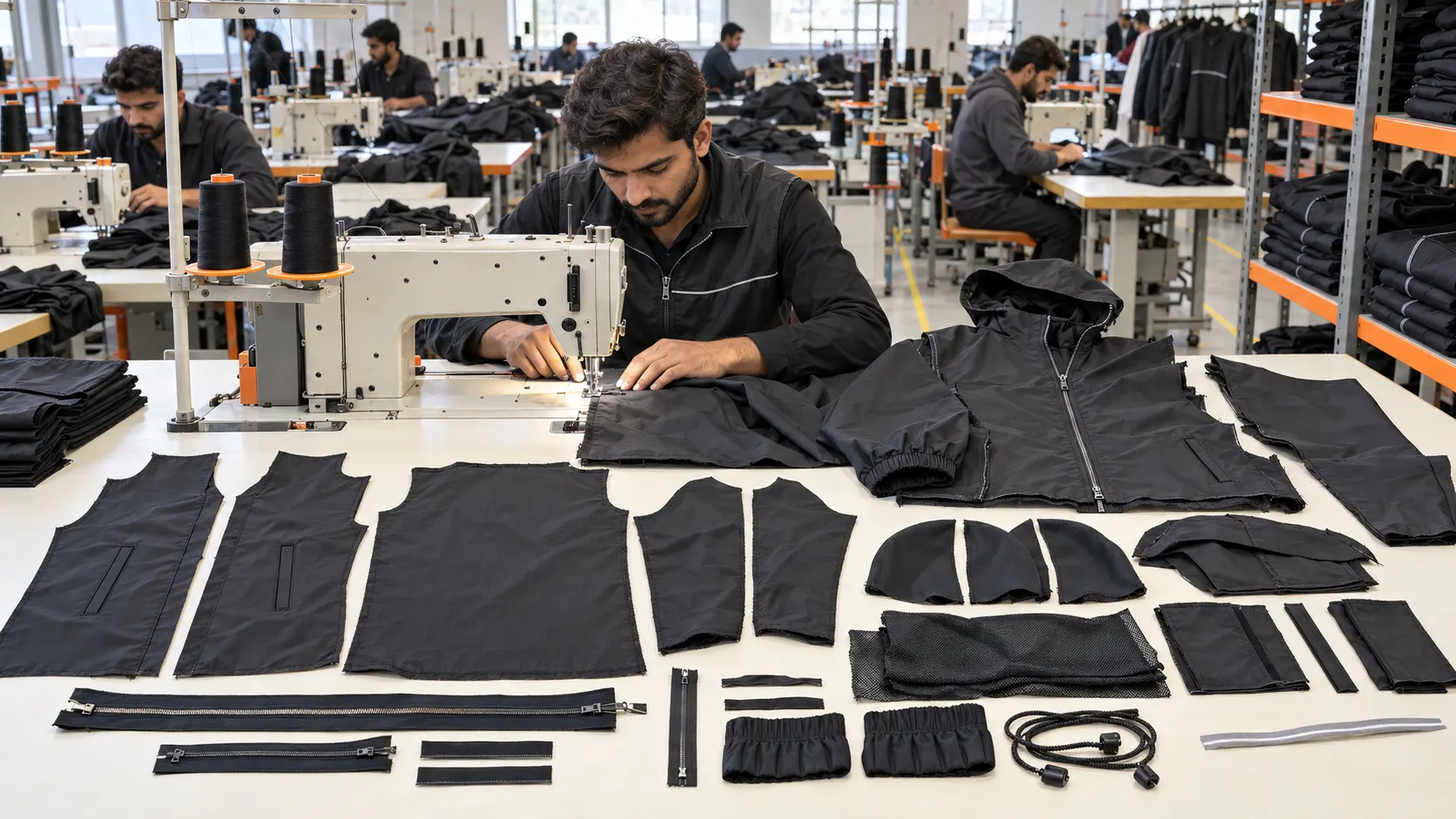
Custom Windbreaker Jacket Manufacturing Process
Bulk production should follow the approved sample, material references, artwork approvals and controlled specifications. The exact sequence varies by style, but a typical windbreaker programme includes the following stages.
1. Design & Brief
Define target use, silhouette, shell direction, colours, branding, quantity and destination.
2. Tech Pack
Confirm measurements, panels, hood/collar, pockets, vents, trims, labels and construction.
3. Fabric & Trim Sourcing
Select shell, lining, zippers, elastic, drawcords, cord locks and supporting trims.
4. Pattern Development
Create the base pattern around fit, mobility, layering and functional details.
5. Sample Development
Construct a physical sample using the intended materials and construction.
6. Fit & Function Review
Check movement, hood, zipper, pockets, vents, cuffs, hem and overall balance.
7. Corrections & Approval
Update the controlled specification following customer feedback.
8. Grading & Marker
Develop the approved size range and production cutting layout.
9. Fabric Inspection
Check shell colour, surface quality, defects and consistency before cutting.
10. Cutting & Bundling
Cut components accurately and organize them by size and production bundle.
11. Printing & Decoration
Apply approved graphics, transfers, embroidery or patches at the correct stage.
12. Sewing & Assembly
Assemble body, sleeves, hood/collar, pockets, zipper, lining and adjustment components.
13. Finishing & QC
Inspect measurements, seam quality, zipper function, appearance and branding.
14. Labels, Packing & Shipping
Apply final labels, identify sizes, pack and prepare the bulk order for dispatch.
Windbreaker Jacket Quality Control
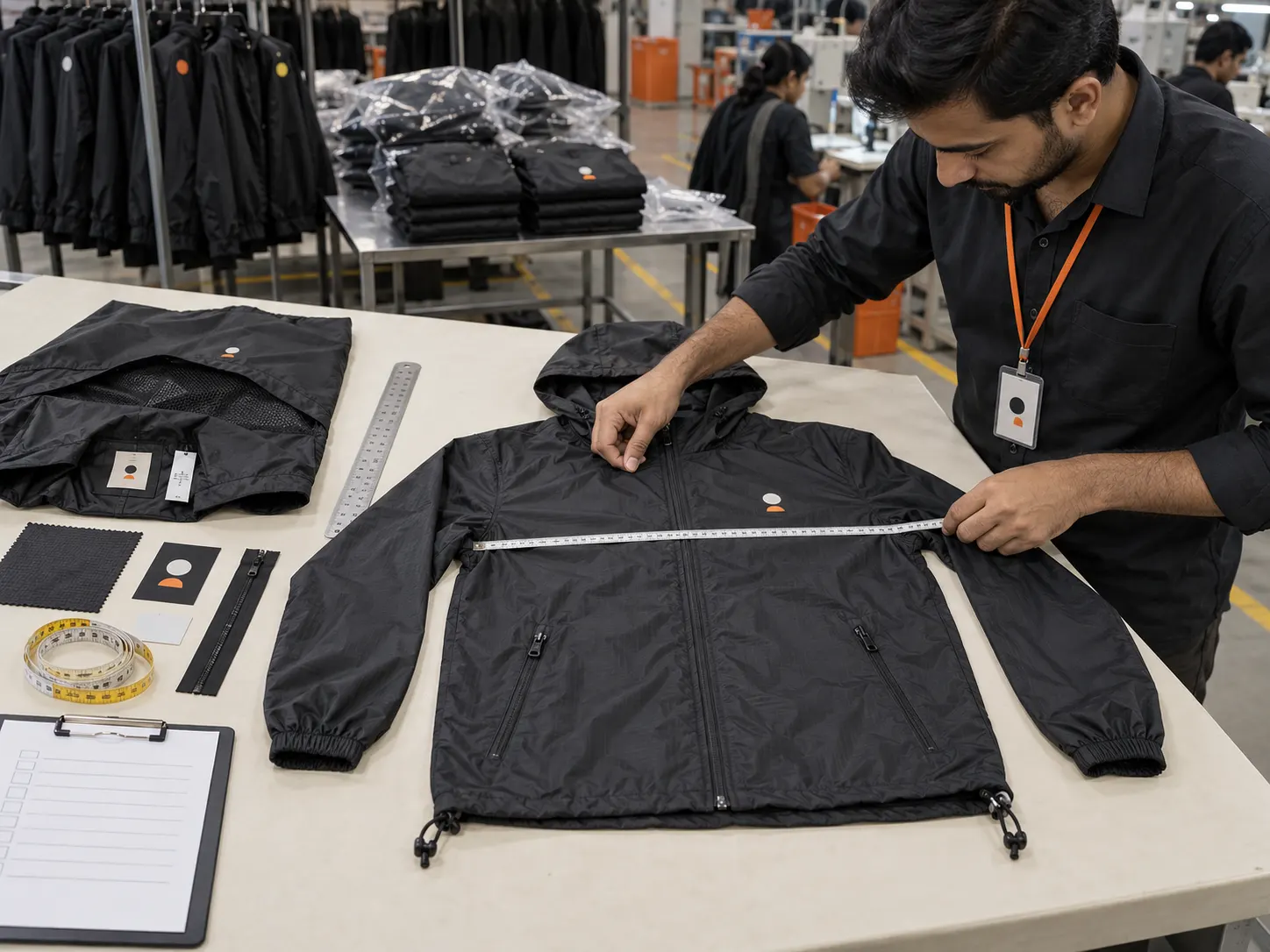
Quality control for lightweight jackets should compare production against the approved sample and specification. Thin woven shells can reveal stitching and handling problems quickly, so the inspection should cover both visual workmanship and functional details.
- Finished garment measurements
- Shell colour and shade consistency
- Panel and seam alignment
- Seam puckering
- Needle holes or shell damage
- Front zipper operation and alignment
- Pocket construction and symmetry
- Hood or collar shape
- Cuff and hem function
- Vent construction
- Lining and internal finishing
- Artwork dimensions and placement
- Labels and size identification
- Loose threads, stains and surface marks
- Packaging and carton assortment
Windbreaker Manufacturing for Streetwear, Sportswear, Teams & Outdoor Brands
Streetwear Brands
Oversized, colour-blocked, pullover and technical-inspired lightweight jackets.
Running Brands
Low-bulk shells with movement, ventilation, reflective details and packable construction.
Cycling Brands
Articulated sleeves, dropped rear hems, lightweight shells and visibility-oriented details.
Sports Teams & Clubs
Warm-up, travel and sideline jackets with custom colours, logos and team identity.
Outdoor & Lifestyle Brands
Packable and weather-conscious lightweight outerwear for everyday use.
Retailers & Distributors
Private labels, consistent size grading, SKU identification and bulk packing.
What Should You Send for a Custom Windbreaker Quote?
The more complete the brief, the more accurately the material, construction and quotation can be reviewed. A complete tech pack is ideal, but clear references can also be used to begin development.
- Front, back and detail reference images
- Full zip, pullover, anorak, packable or other style
- Shell fabric and colour direction
- Target use and climate
- Water-repellent or other performance requirement
- Unlined, mesh-lined or other lining direction
- Fit and measurement requirements
- Hood or collar construction
- Cuff and hem construction
- Pocket and zipper details
- Ventilation or packable requirements
- Artwork files, dimensions and placements
- Private-label requirements
- Quantity and size breakdown
- Destination and target delivery date
MOQ, Windbreaker Samples & Bulk Production
Typical MOQ
Stitch Expo commonly works around 20–30 pieces per design for custom apparel projects where materials, colours and trims permit. Exact windbreaker minimums are confirmed after reviewing the specification.
Sample Development
Typical custom apparel samples can be around 7–11 working days once specifications and required materials are ready. Special shells, custom trims or complex construction can take longer.
Bulk Production
Typical custom apparel bulk production can be around 12–20 working days for suitable programmes. Larger quantities, special materials and more technical construction can require additional time.
For windbreakers, sample approval should cover shell hand feel, fit, mobility, zipper operation, hood balance, ventilation, pocket access, hem and cuff function, decoration placement and overall finishing.
Custom Windbreaker Manufacturing for International Brands
Stitch Expo works with custom apparel projects for buyers in markets including the USA, United Kingdom, Canada, Europe, Australia and other destinations. International windbreaker programmes benefit from sample approval because shell hand feel, coatings, lightweight construction and fit can be difficult to judge accurately from a digital mockup alone.
For seasonal launches, allow enough time for material sourcing, sample review, corrections, bulk production and international shipping. If the windbreaker is being developed for a specific climate, sport or launch date, include that information in the original product brief.
Custom Windbreaker Jacket Manufacturer FAQs
What is a windbreaker jacket?
A windbreaker is a lightweight outer jacket designed primarily to reduce wind penetration. It commonly uses tightly woven nylon or polyester shell fabric and may be unlined, mesh lined or lightly lined.
Do you manufacture fully custom windbreaker jackets?
Yes. A project can define the shell fabric, fit, colour, lining, hood, pockets, ventilation, closures, trims, branding, labels and packaging.
What is your MOQ for custom windbreakers?
Stitch Expo commonly works around 20–30 pieces per design where the required materials, colours and trims permit. Exact minimums are confirmed after the specification is reviewed.
Can you manufacture nylon windbreakers?
Yes. Lightweight nylon is a common windbreaker direction and can be sourced according to the required weight, finish, colour and technical characteristics.
Can you manufacture polyester windbreakers?
Yes. Polyester woven shells are widely used for teamwear, streetwear and sports windbreakers and can support several compatible decoration methods.
Do you offer ripstop and micro-ripstop fabric?
Yes, subject to the required composition, weight, finish, colour and sourcing availability.
Can you make water-resistant windbreaker jackets?
Yes. Water-repellent shell options can be developed. A water-resistant shell does not automatically make the complete jacket waterproof.
Can you make waterproof windbreakers?
A higher weather-protection specification can be considered when the required fabric, seam construction, zipper system and test targets are defined. We would not describe a garment as waterproof based only on a DWR-treated shell.
Can you make packable windbreakers?
Yes. Lightweight styles can be developed to pack into an integrated pocket or separate pouch when the fabric, lining, trims and construction support low packed volume.
Can you make anorak and half-zip windbreakers?
Yes. Pullover and half-zip anoraks can be developed with hoods, utility pockets, elastic cuffs, drawcord hems and custom branding.
Can you add mesh lining?
Yes. Mesh lining, lightweight woven lining and unlined construction can be selected according to comfort, weight, packability and appearance.
Can you manufacture oversized streetwear windbreakers?
Yes. Oversized proportions should be built intentionally into the base pattern so the shoulder, body, sleeve and hem proportions remain balanced.
Can you make running or cycling windbreakers?
Yes. Performance-oriented patterns can include movement-focused sleeves, ventilation, reflective details, low-bulk construction and sport-specific hem or pocket requirements.
Can windbreakers be sublimated?
Sublimation can be used on compatible white polyester panels and is particularly useful for full-colour graphics. The artwork and panel layout should be planned before cutting and assembly.
Can you print or embroider windbreakers?
Yes. Compatible methods can include screen printing, heat transfer, embroidery, patches and reflective details. The correct method depends on the shell composition, finish and heat sensitivity.
Do you provide custom labels and packaging?
Yes. Private-label programmes can include woven labels, size labels, care labels, hang tags, size identification and protective packaging.
Can I order a windbreaker sample before bulk production?
Yes. Sampling is recommended so the shell, fit, construction, function and branding can be reviewed before bulk production.
How long does a custom windbreaker sample take?
Typical custom apparel samples can be around 7–11 working days once the specifications and required materials are ready. Special fabric sourcing or complex details can increase the timeline.
How long does bulk production take?
Typical custom apparel bulk production can be around 12–20 working days for suitable programmes, while special materials, complex construction and larger quantities can require longer.
Do you ship windbreaker jackets internationally?
Yes. International shipping can be arranged according to the order, destination, delivery requirement and available courier or freight method.
Manufacture Your Custom Windbreaker Jacket With Stitch Expo
Send us your tech pack, reference images, shell fabric direction, fit, construction details, branding, size range and quantity. We can review the requirements, develop a sample and prepare your private-label windbreaker project for bulk manufacturing.