OEM & PRIVATE-LABEL PERFORMANCE OUTERWEAR
Custom Softshell Jacket Manufacturer
Develop custom softshell jackets for outdoor, workwear, sportswear, corporate and lifestyle brands with control over bonded fabrics, stretch, fleece backing, membranes, weather protection, fit, hoods, ventilation, pockets, zippers, reflective details, embroidery, labels and packaging.
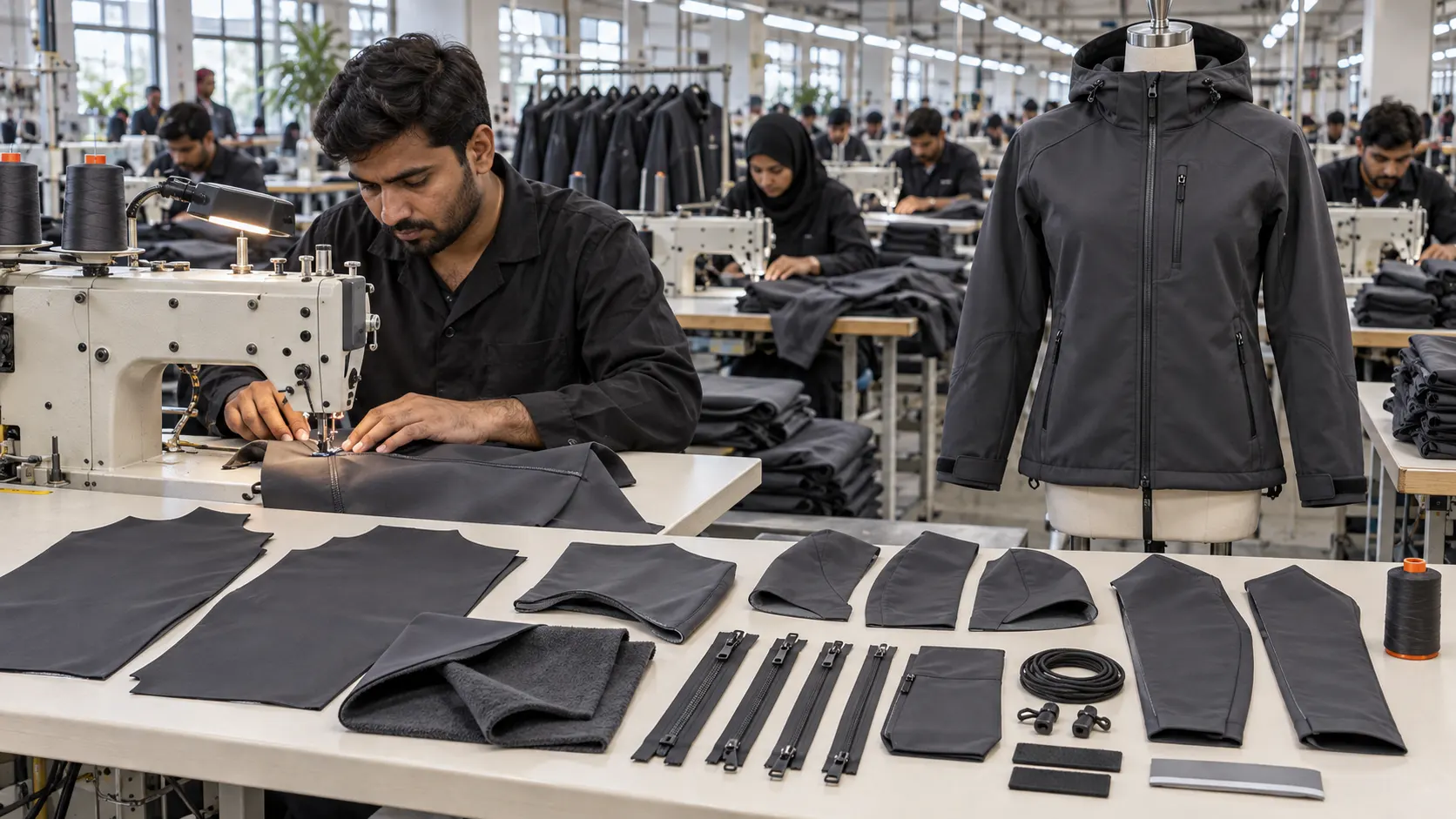
Custom Softshell Jacket Manufacturing for Clothing Brands
Stitch Expo develops custom softshell jackets for brands that need flexible outerwear positioned between lightweight windbreakers and heavier insulated jackets. A custom programme can define the face fabric, stretch, bonded backing, membrane direction, weight, colour, fit, hood, collar, pockets, ventilation, cuffs, hem adjustment, zippers, reflective details, decoration, labels and packaging.
Softshell is a category rather than one universal fabric specification. Different constructions can prioritize stretch, wind resistance, warmth, breathability, water repellency or a balance of these properties. A hiking jacket, corporate uniform, cycling shell and workwear softshell may therefore require different material and construction choices.
Development can begin from a tech pack, reference garment, sketch, measurement chart or detailed images. Sampling allows the brand to evaluate the actual hand feel, stretch, inner surface, fit, movement, hood, pockets, zipper function, cuff and hem adjustment, decoration and labels before bulk production.
Types of Custom Softshell Jackets We Can Develop
Classic Full-Zip Softshell
Clean full-front zipper construction for outdoor, corporate, uniform and everyday programmes.
Hooded Softshell Jacket
Fixed or detachable hood direction with adjustment options for outdoor and sportswear use.
Stretch Performance Softshell
Flexible construction designed around movement for hiking, training and active collections.
Fleece-Backed Softshell
Bonded brushed or fleece inner surface for warmth without puffer-style insulation.
Softshell Work Jacket
Utility pockets, durable trims and branding zones for workwear and corporate programmes.
Softshell Gilet / Vest
Sleeveless softshell layer for workwear, teamwear and transitional seasons.
Hybrid Softshell Jacket
Softshell combined with quilted, stretch or other compatible panels.
Lightweight Softshell
Lower-bulk direction for layering, travel, running and mild weather.
Technical Outdoor Softshell
Performance-led paneling, hood, ventilation and adjustment details.
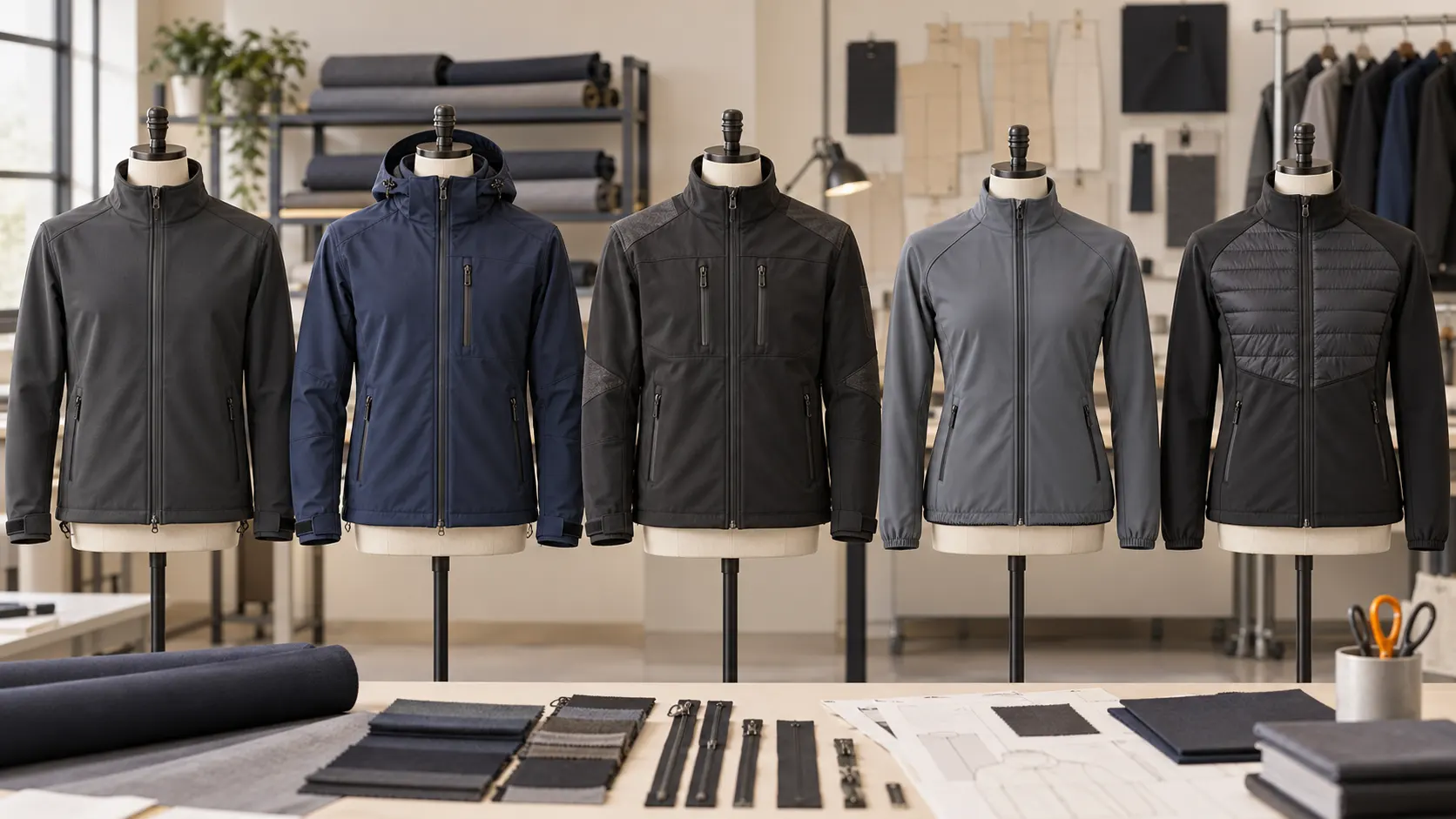
Softshell Fabric Construction: 2-Layer, 3-Layer & Stretch Options
A softshell fabric is commonly built by bonding functional layers together. Exact construction varies by mill and specification, so production fabric should be approved by sample rather than selected only by a generic “softshell” name.
| Construction | Typical Structure | Possible Use | Development Focus |
|---|---|---|---|
| 2-layer softshell | Outer face bonded to inner backing | Outdoor, corporate, workwear | Stretch, hand feel, warmth, wind resistance |
| 3-layer softshell | Face + functional membrane + backing | Technical outdoor/workwear | Weather performance, breathability, bond quality |
| Stretch softshell | Polyester/nylon face with elastane where specified | Active and hiking | Stretch direction, recovery and fit |
| Fleece-backed | Face bonded to brushed/fleece inner | Cool-weather outerwear | Warmth, bulk, pilling and comfort |
| Lightweight softshell | Lower-bulk bonded/stretch construction | Layering and transitional weather | Drape and breathability |
Possible face-fabric directions include polyester, nylon and polyester/elastane or nylon/elastane blends depending on sourcing and required performance. Weight, stretch, recovery, surface finish, inner backing and colour should be approved for the actual project.
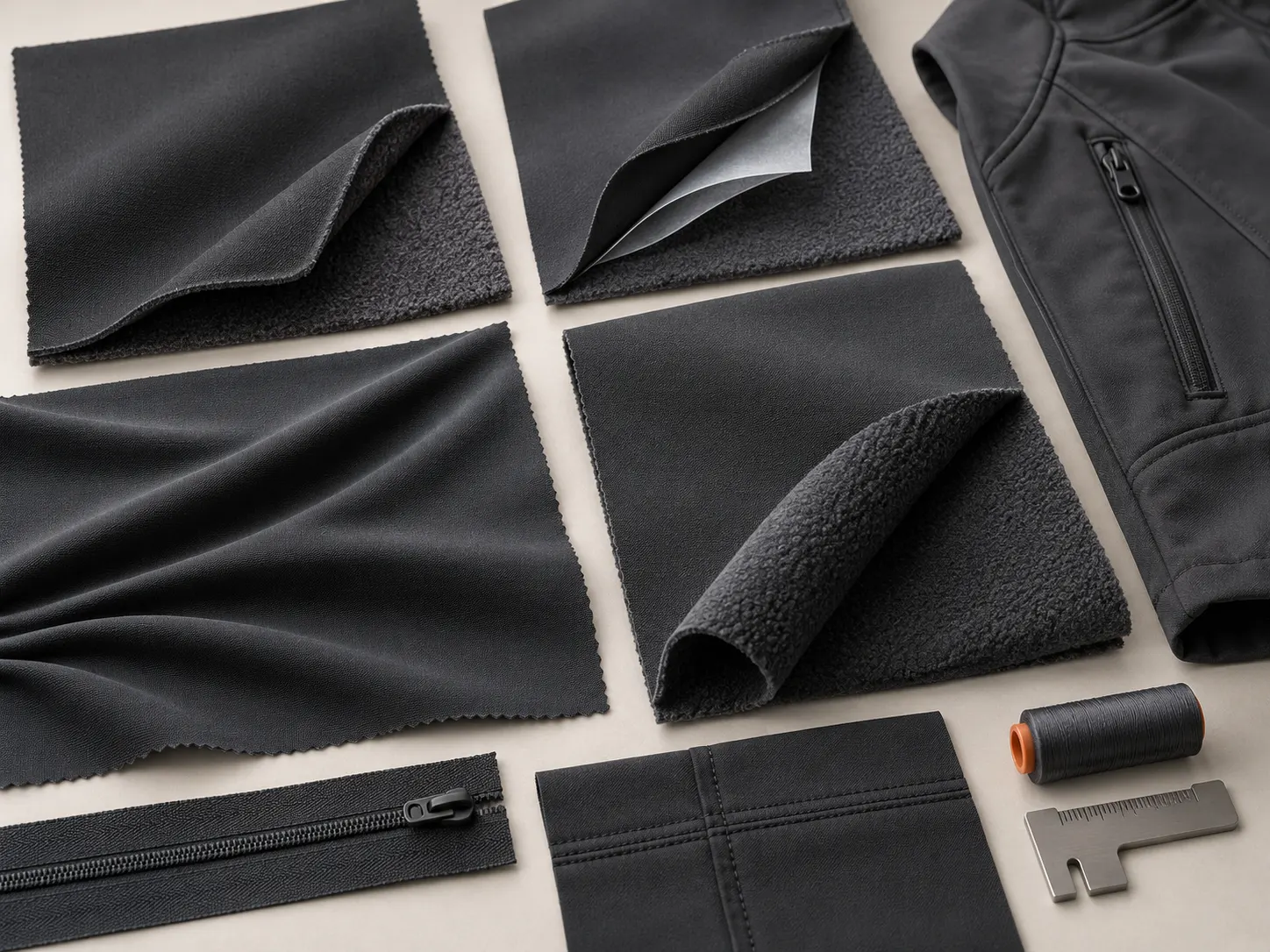
Wind Resistance, Water Repellency & Breathability
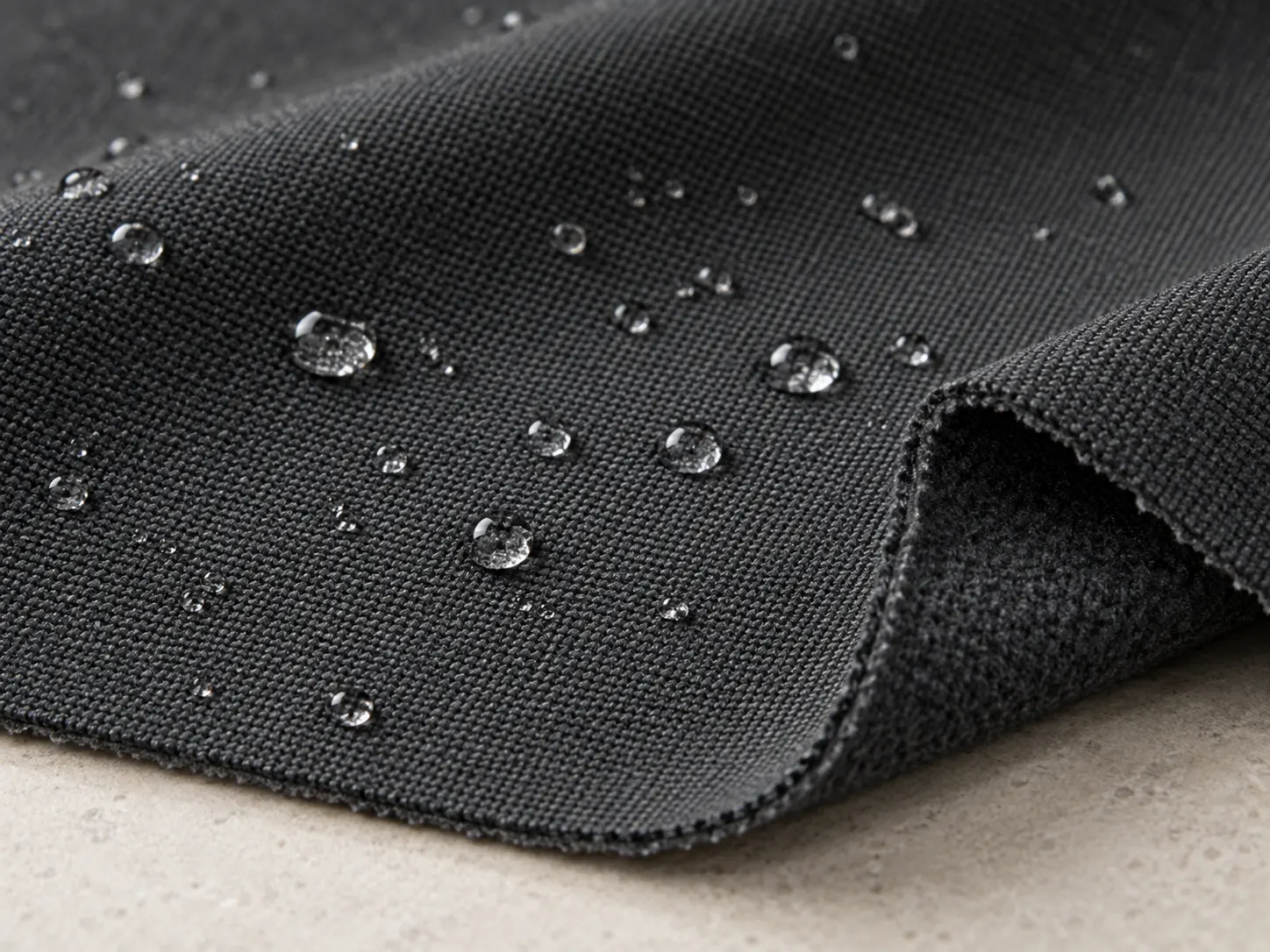
Softshell jackets are often chosen to balance protection and comfort. Fabric density, membrane construction, closures, collar, hood, cuffs and hem influence wind resistance. A suitable surface finish can help light rain bead from the face, while moisture-vapour transfer depends on the fabric system and construction.
When a buyer requires a specific hydrostatic-head, breathability, windproof or other performance value, include the target and test method in the development brief. Supplier data and finished-product testing should support measurable claims.
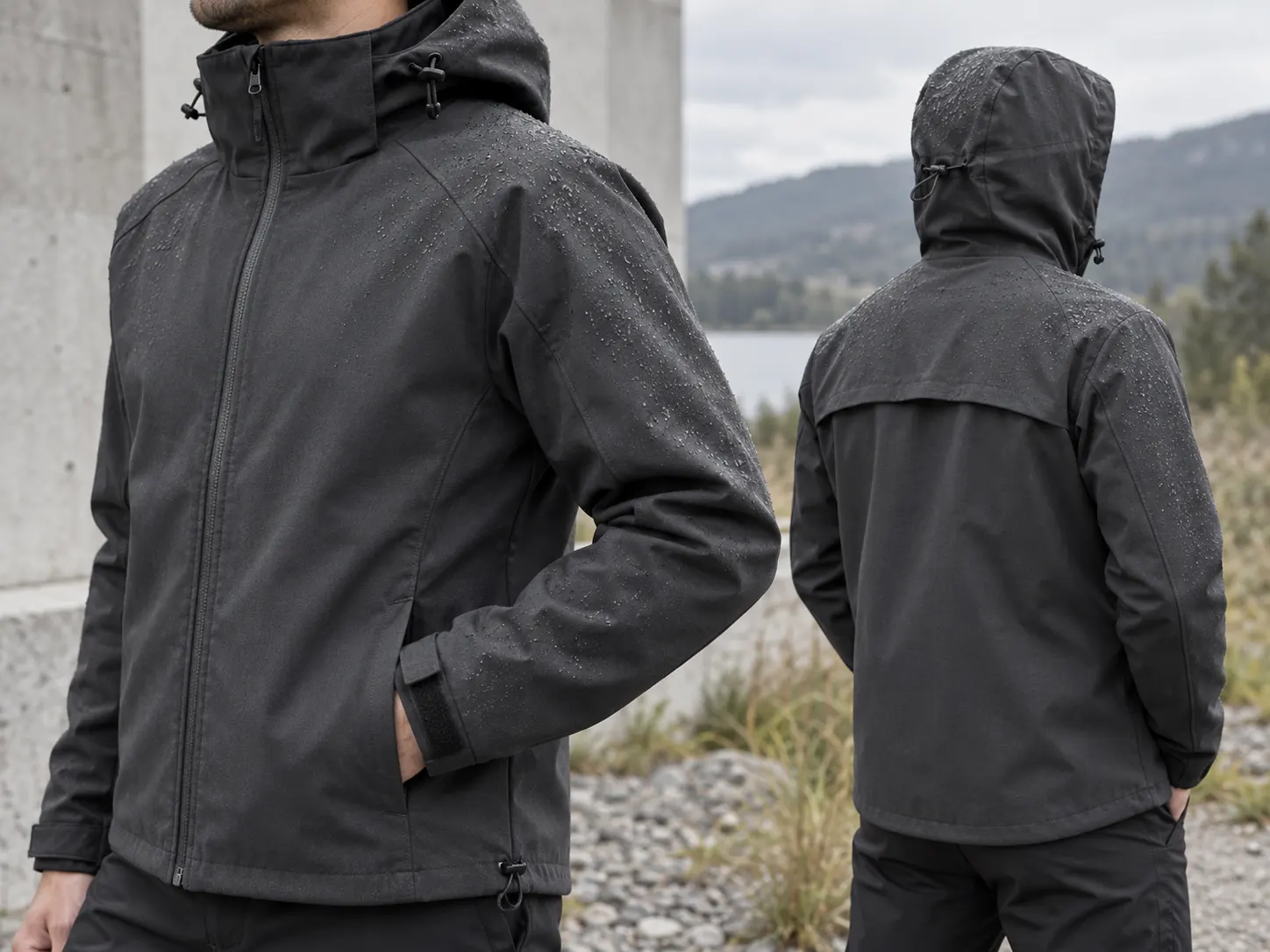
DWR & Water-Repellent Softshell Finishes
A durable water-repellent treatment may be specified on suitable face fabrics to encourage water to bead rather than immediately wet the surface. DWR is not the same as a waterproof garment. Performance can change with abrasion, laundering, chemistry and time.
If your market requires a particular chemical restriction, fluorine-free treatment, certification or performance standard, specify it before sourcing rather than assuming every softshell complies.
Fleece-Backed Softshell Jackets & Inner Surface Options
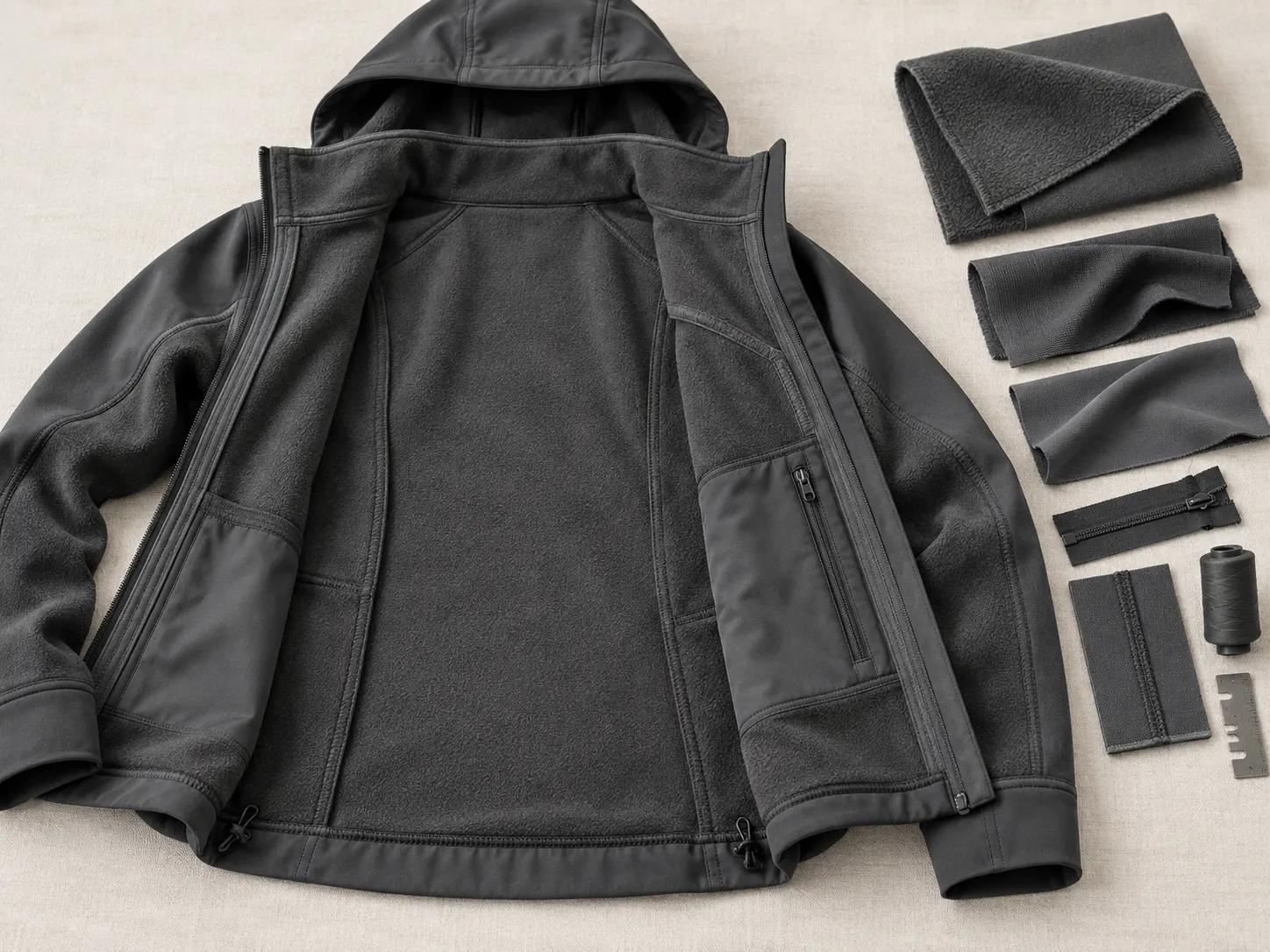
Many softshell constructions use a brushed, microfleece or fleece-style backing bonded to the outer face. This adds warmth and a softer feel without the loft of a puffer jacket. Options can include brushed backing, microfleece, warmer fleece, smoother lightweight backing and selected technical inner surfaces.
Softshell Jacket Construction: Hoods, Collars, Cuffs, Hems & Ventilation
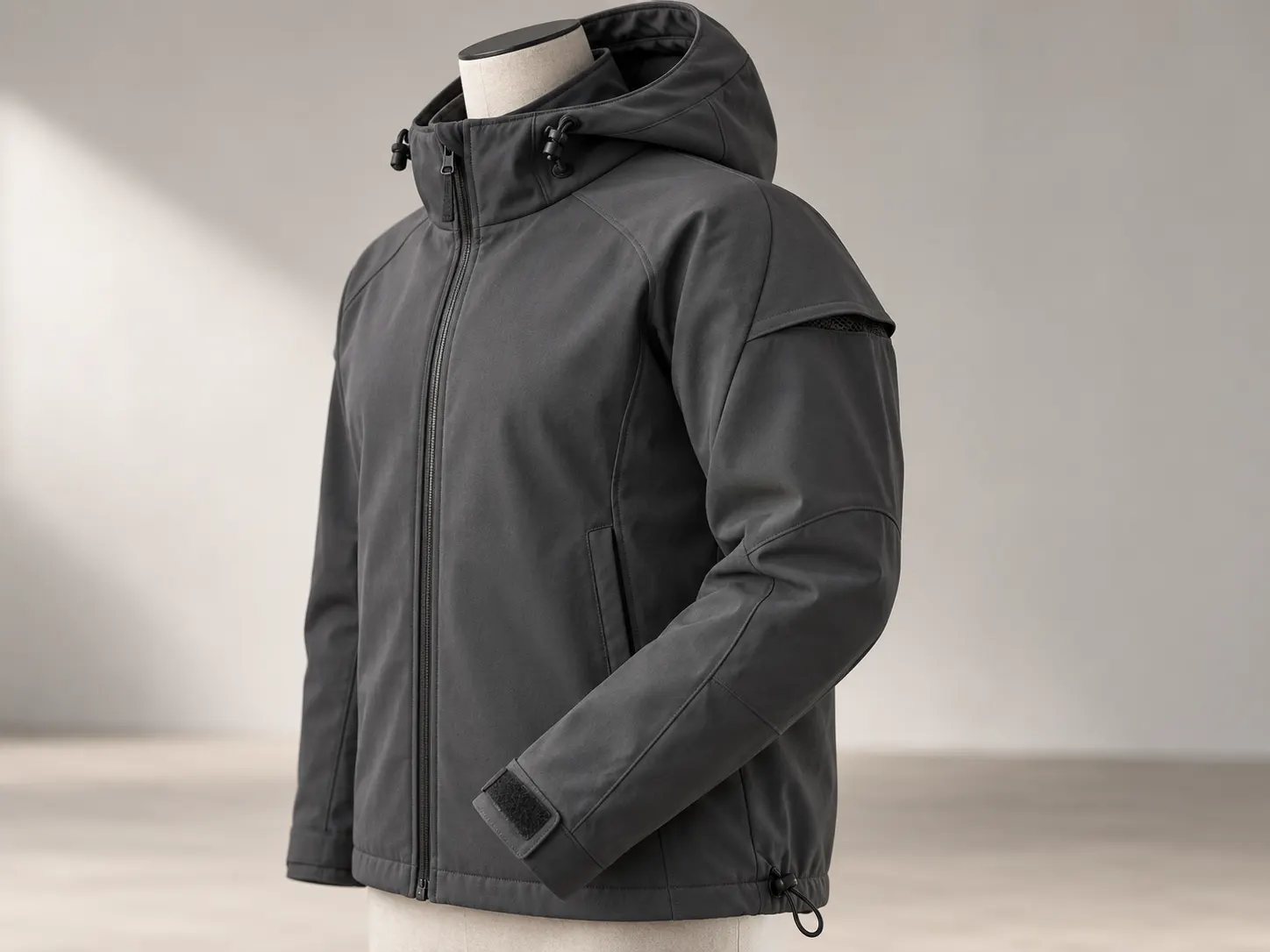
Construction should support the intended environment and movement. Options include fixed or adjustable hoods, stand collars, chin guards, elastic or hook-and-loop cuffs, adjustable drawcord hems, underarm or back ventilation and ergonomic paneling or articulated sleeves.
Softshell Zippers, Pockets, Drawcords & Hardware
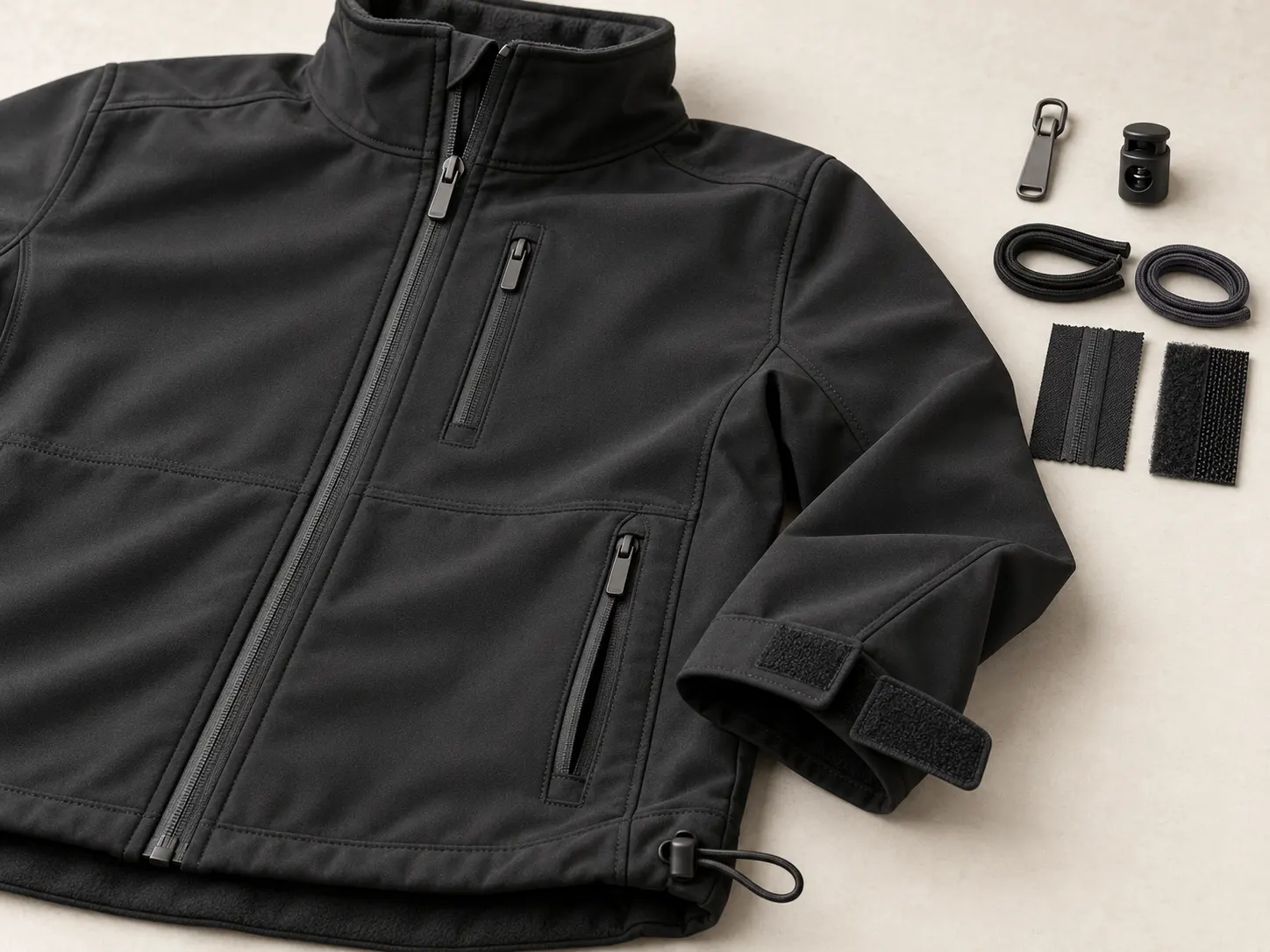
Zipper and pocket specifications should match the fabric and use case. Options can include full-front reverse-coil zippers, water-resistant zipper directions where specified, zipped hand and chest pockets, sleeve pockets, internal storage, zipper garages, chin guards, elastic drawcords, cord locks and adjustable cuff tabs.
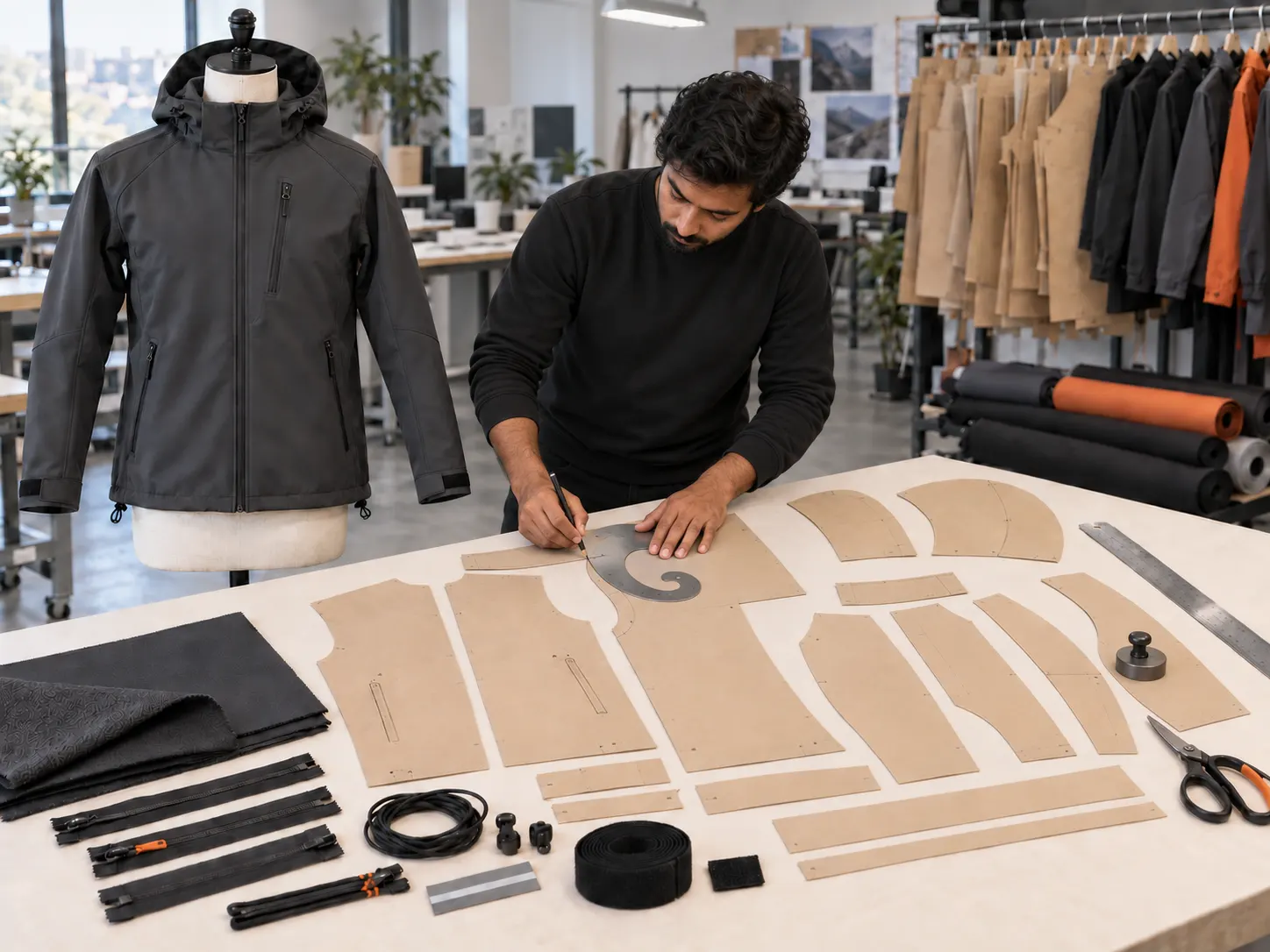
Softshell Jacket Pattern Making, Stretch, Fit & Size Grading
Pattern development should account for fabric stretch and recovery plus the layers expected underneath. Slim athletic, regular outdoor, workwear and relaxed lifestyle fits require different ease and mobility. Key controls include chest, shoulder, armhole, sleeve pitch, bicep, cuff, body length, hood volume, pocket position and hem opening.
After sample approval, the base pattern can be graded into the required sizes. See our pattern making in clothing manufacturing guide.
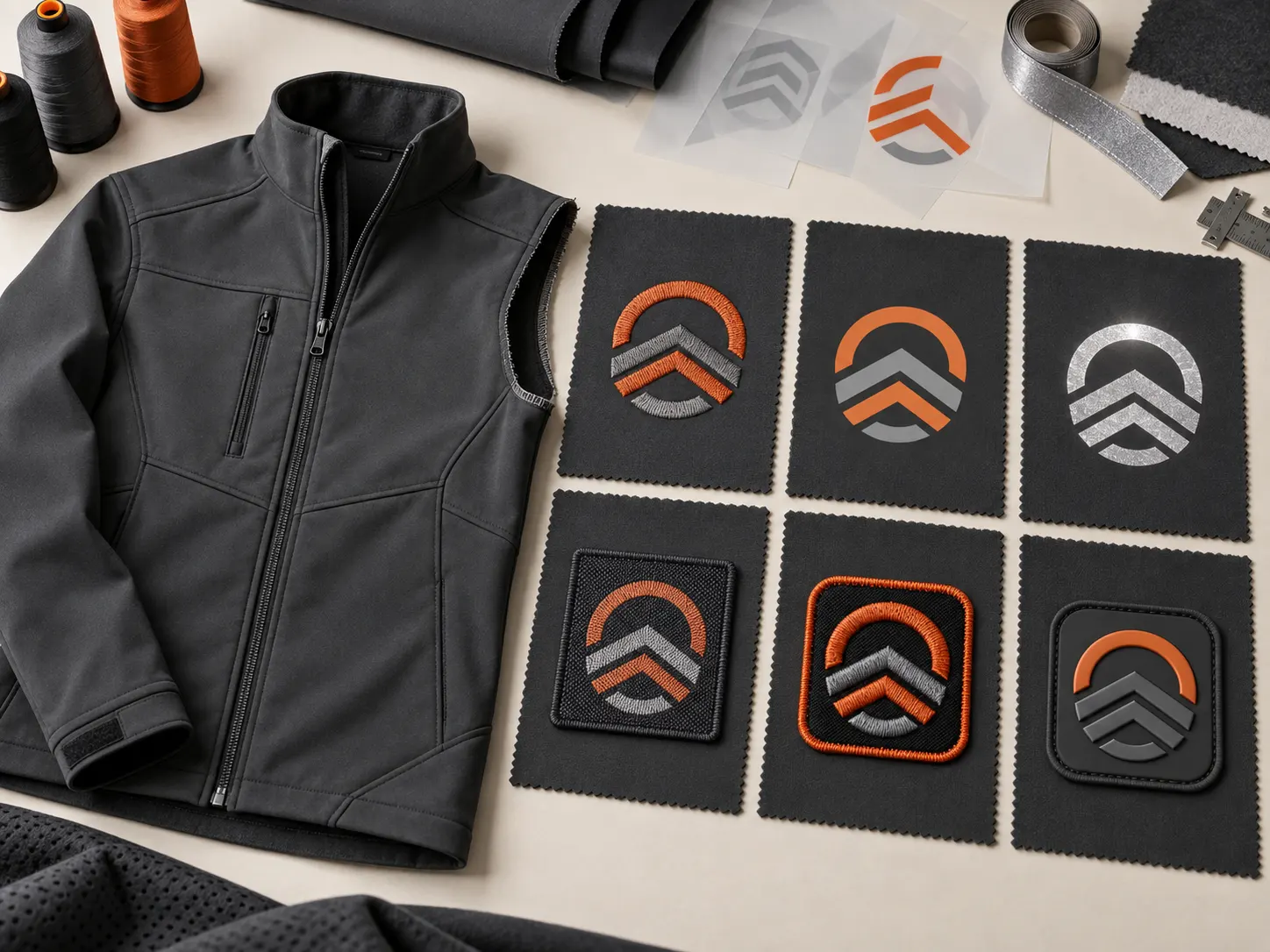
Embroidery, Heat Transfer, Reflective Details & Softshell Branding
Softshell jackets can carry corporate, sportswear and outdoor branding. Decoration should be tested on the actual bonded fabric because needle penetration, heat and pressure can affect performance materials. Options include embroidery, compatible heat transfer, reflective transfer, selected printing methods and woven, embroidered, rubber or silicone-style patches.
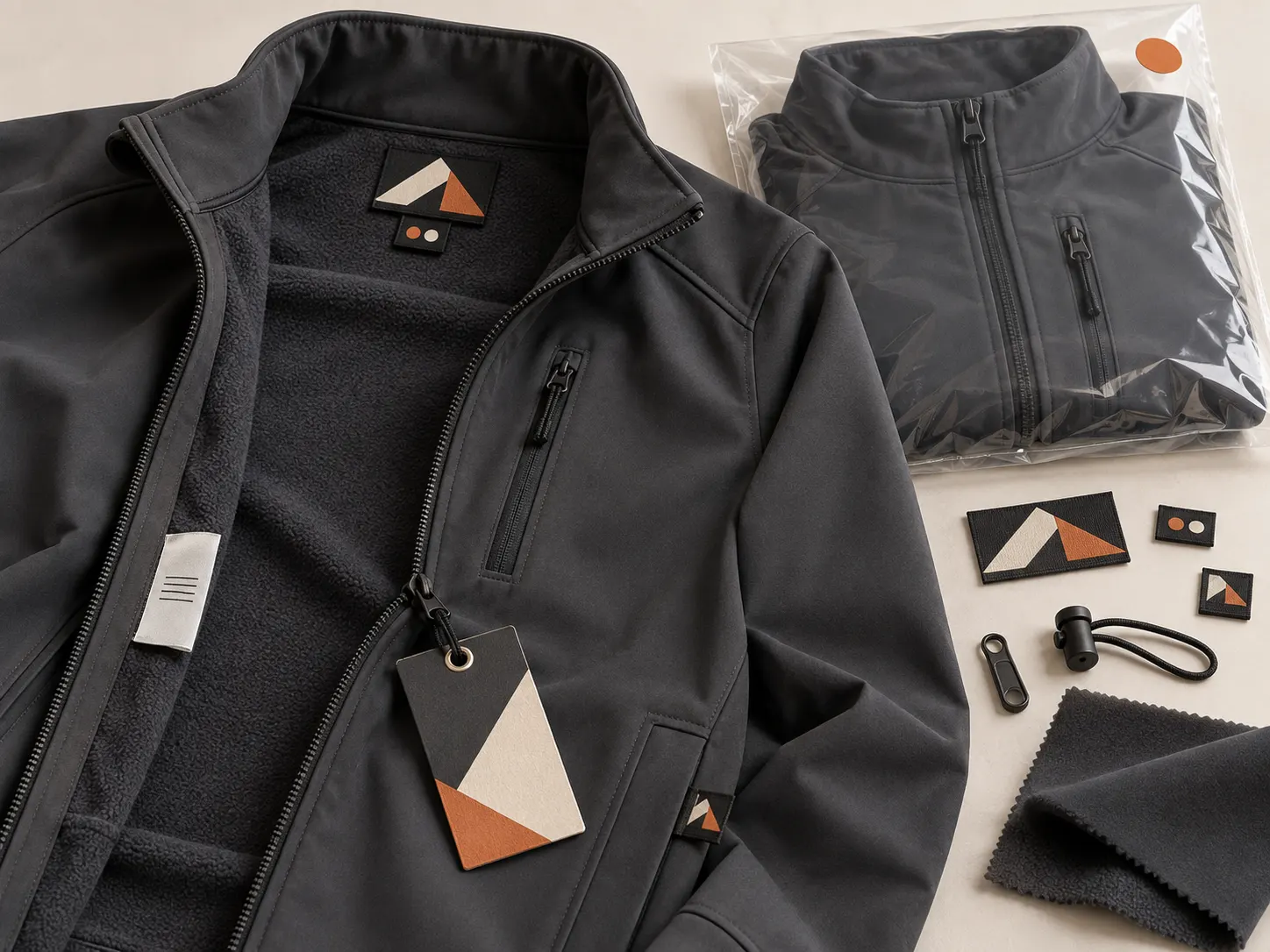
Private Label Softshell Jacket Manufacturing
Private-label programmes can include woven main labels, size labels, care and composition labels, heat-transfer neck branding where suitable, woven or rubber tabs, custom zipper-pull direction where feasible, hang tags, size stickers, protective bags and carton packing.
Care and composition information should match the actual face fabric, membrane/backing and trims. See our custom clothing labels and packaging guide.
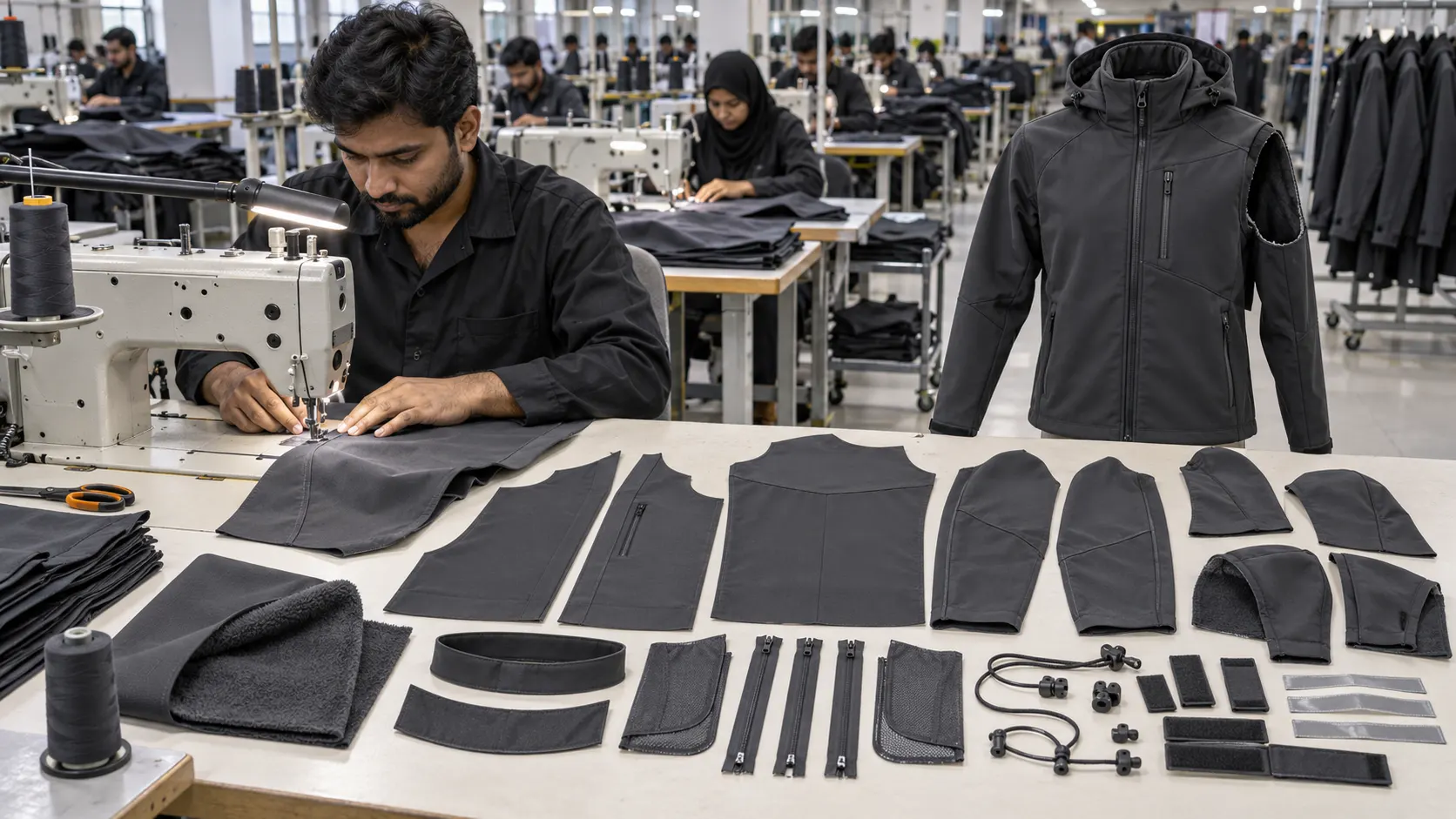
Custom Softshell Jacket Manufacturing Process
A typical programme moves through product brief, tech pack, fabric and trim sourcing, pattern development, sampling, fit and function review, testing where required, corrections, size grading, fabric inspection, cutting, branding, sewing, finishing, QC, packing and shipping.
1. Brief & Tech Pack
Define use, performance priorities, measurements, details, colours and quantity.
2. Fabric & Trims
Select bonded fabric, backing, zippers, cord locks, reflective details and labels.
3. Pattern & Sample
Develop fit around stretch, movement and layering allowance.
4. Review & Testing
Evaluate fit and function and verify measurable performance where required.
5. Grading & Cutting
Grade approved sizes, inspect fabric and cut production panels.
6. Branding & Sewing
Apply approved decoration and assemble the jacket.
7. Finishing & QC
Inspect measurements, seams, closures, adjustments, artwork and labels.
8. Packing & Shipping
Identify sizes, protect garments and prepare bulk delivery.
Softshell Jacket Quality Control
QC should compare bulk garments against the approved sample and specifications. Checks can include measurements, fabric shade and surface, visible bonding issues, stretch/recovery feel, seam alignment, zipper and pocket function, hood/collar shape, cuff adjustment, hem drawcords, ventilation, artwork, labels, cleanliness and carton assortment.
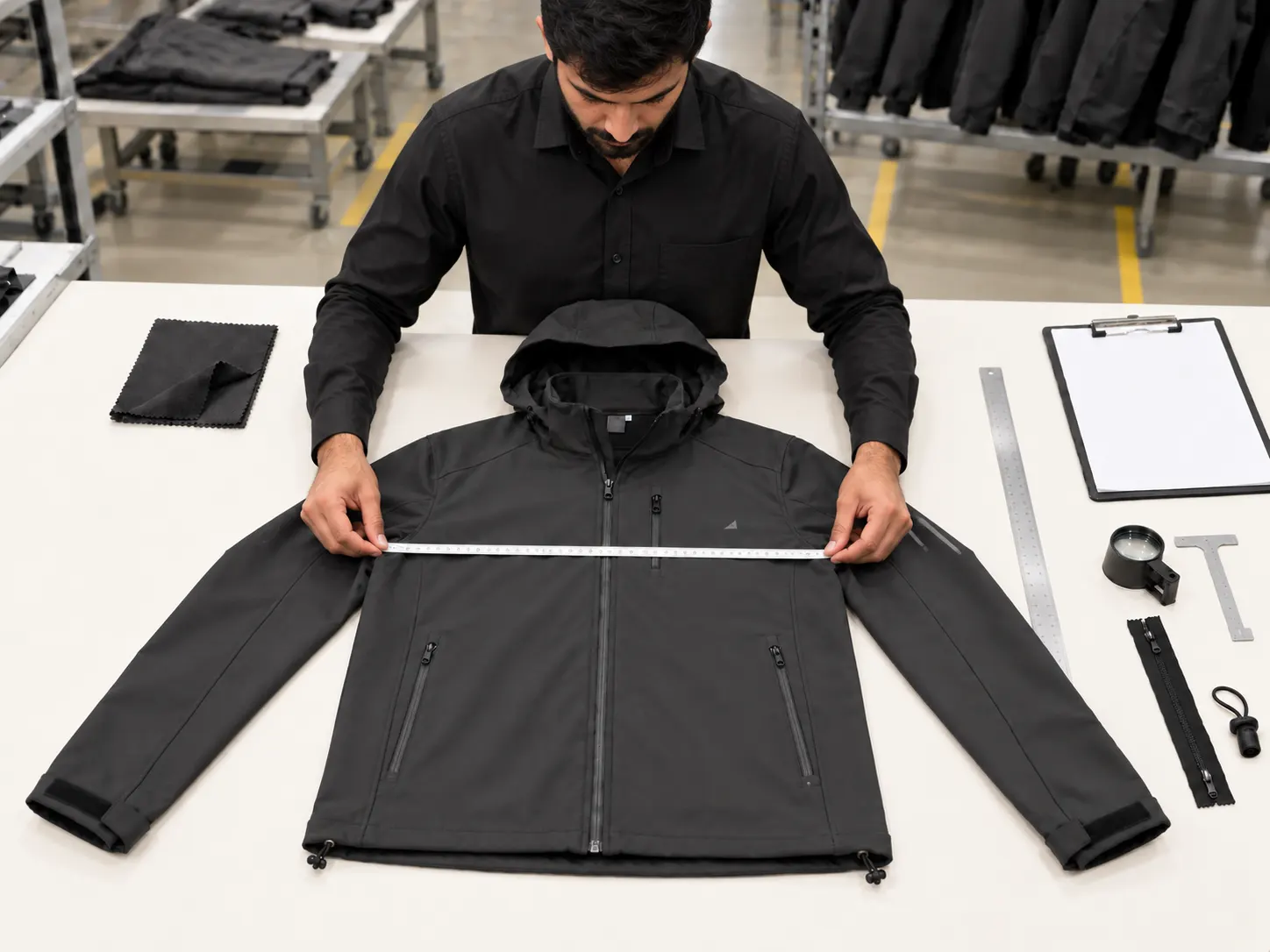
What Should You Send for a Custom Softshell Jacket Quote?
- Front, back and detail reference images
- Intended use: outdoor, hiking, workwear, teamwear, corporate or lifestyle
- 2-layer, 3-layer, stretch or fleece-backed direction if known
- Target fabric weight or hand feel
- Required stretch direction
- Water-repellent, wind or breathability requirements
- Any measurable performance target and test method
- Colour reference
- Fit and measurement chart
- Hood, collar, cuff and hem details
- Pocket and zipper layout
- Branding artwork
- Private-label requirements
- Quantity and size breakdown
- Packaging and destination
MOQ, Softshell Jacket Samples & Bulk Production
Typical MOQ
Stitch Expo commonly works around 20–30 pieces per design where the selected fabric, colour, trims and decoration permit. Exact minimums are confirmed after specification review.
Sample Development
Typical custom apparel samples can be around 7–11 working days once specifications and required materials are ready. Special materials or testing can add time.
Bulk Production
Typical custom apparel bulk production can be around 12–20 working days for suitable programmes. Larger quantities, special materials and complex construction can extend the timeline.
Softshell Jacket Manufacturer for USA, UK, Germany & European Brands
Stitch Expo develops custom softshell outerwear for international clothing, outdoor, workwear, sportswear and corporate buyers, including projects for the United States, United Kingdom, Germany and wider European markets. Material composition, care information, labels, packaging and any market-specific performance or compliance requirements should be confirmed before production.
If a buyer requires certified high-visibility, protective, waterproof or other regulated performance, identify that requirement at the start so the correct material, construction and testing route can be evaluated.
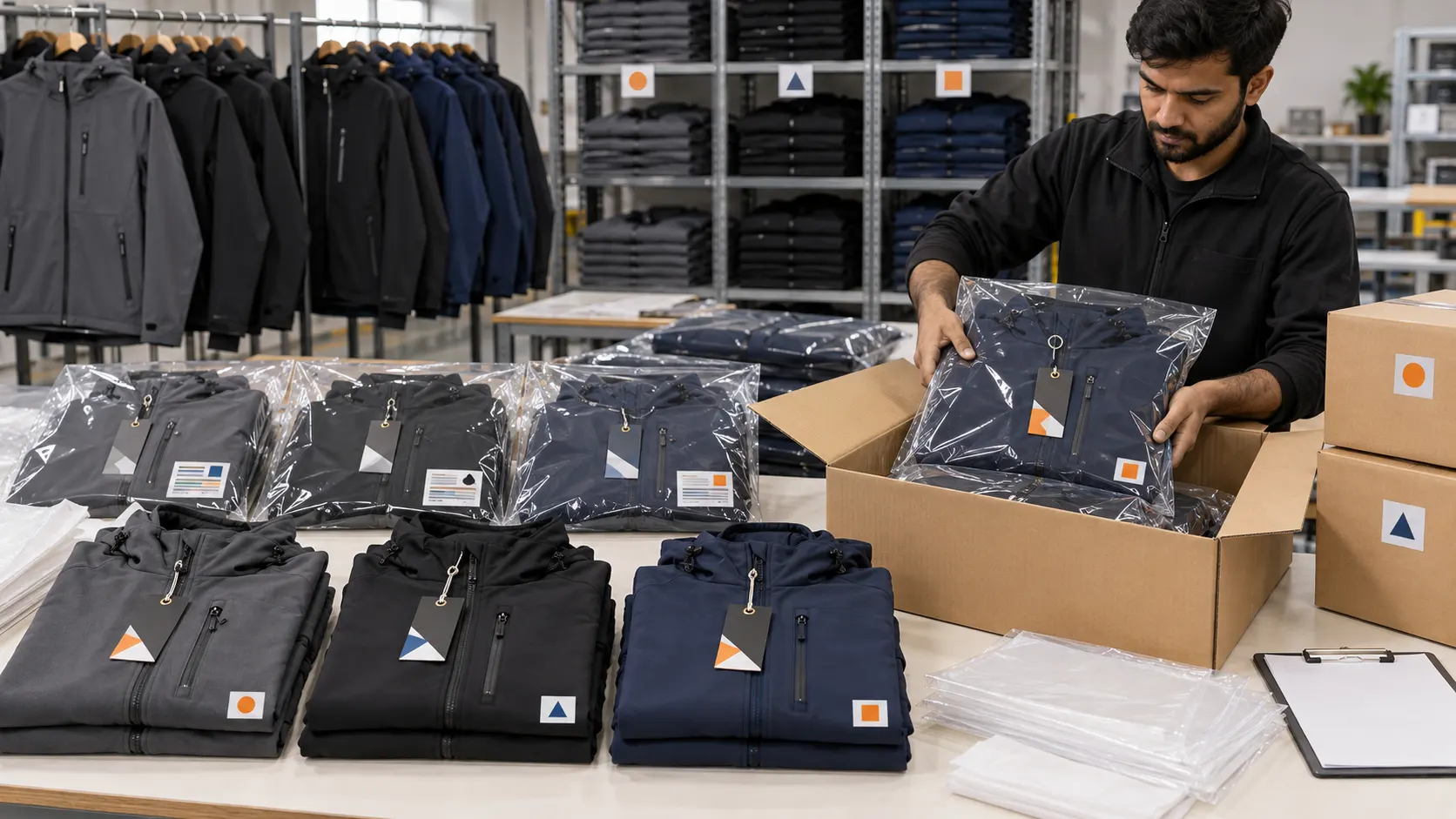
Custom Softshell Jacket Manufacturer FAQs
Do you manufacture fully custom softshell jackets?
Yes. Projects can define fabric, stretch, backing, colour, fit, hood, pockets, zippers, cuffs, hems, ventilation, decoration, labels and packaging.
What is a softshell jacket?
Softshell is a flexible outerwear category commonly designed to balance movement, wind resistance, breathability and light-weather protection. Construction varies by fabric and use.
What is the difference between 2-layer and 3-layer softshell?
A 2-layer construction generally bonds an outer face to an inner backing. A 3-layer construction adds a functional membrane between the face and backing. Exact constructions vary by supplier.
Can you make fleece-backed or stretch softshell jackets?
Yes. Brushed/fleece-backed and polyester- or nylon-based stretch directions can be reviewed depending on sourcing and design.
Are softshell jackets waterproof?
Not automatically. Many softshells are wind resistant and water repellent, but a waterproof claim requires an appropriate fabric system, garment construction and relevant testing.
Can you add a DWR finish?
A water-repellent finish can be specified where available. If particular chemistry, certification or performance is required, include it in the sourcing brief.
Can you manufacture hooded softshell jackets and vests?
Yes. Hooded, non-hooded and sleeveless softshell designs can be developed according to the collection.
Can you make softshell work jackets?
Yes. Workwear-oriented designs can include utility pockets, robust closures, adjustable cuffs, reflective details and corporate branding.
Can you embroider or add reflective branding?
Yes. Compatible embroidery, heat transfer, reflective details and patches can be tested on the selected softshell material.
Do you provide private labels and packaging?
Yes. Programmes can include woven labels, size/care labels, brand tabs, hang tags, size identification, protective bags and bulk cartons.
What is your MOQ?
Stitch Expo commonly works around 20–30 pieces per design where fabric, colour, trims and decoration permit. Exact minimums are confirmed after review.
Can I order a sample first?
Yes. Sampling is recommended so fabric, stretch, fit, construction, zippers, branding and details can be approved before bulk.
How long does sampling take?
Typical custom apparel samples can be around 7–11 working days once specifications and materials are ready. Special materials or testing can add time.
How long does bulk production take?
Typical custom apparel bulk production can be around 12–20 working days for suitable programmes; larger orders or special requirements can take longer.
Do you manufacture for USA, UK, Germany and Europe?
Yes. International projects can be developed and shipped according to the order, destination and project-specific requirements.
Develop Your Custom Softshell Jacket With Stitch Expo
Send your tech pack, reference images, softshell fabric direction, performance requirements, fit, hood, pockets, zippers, branding, size range and quantity. We can review the project, develop a sample and prepare your private-label softshell jacket for bulk manufacturing.