Custom Outerwear Manufacturing
Custom Bomber Jacket Manufacturer
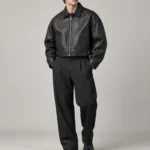
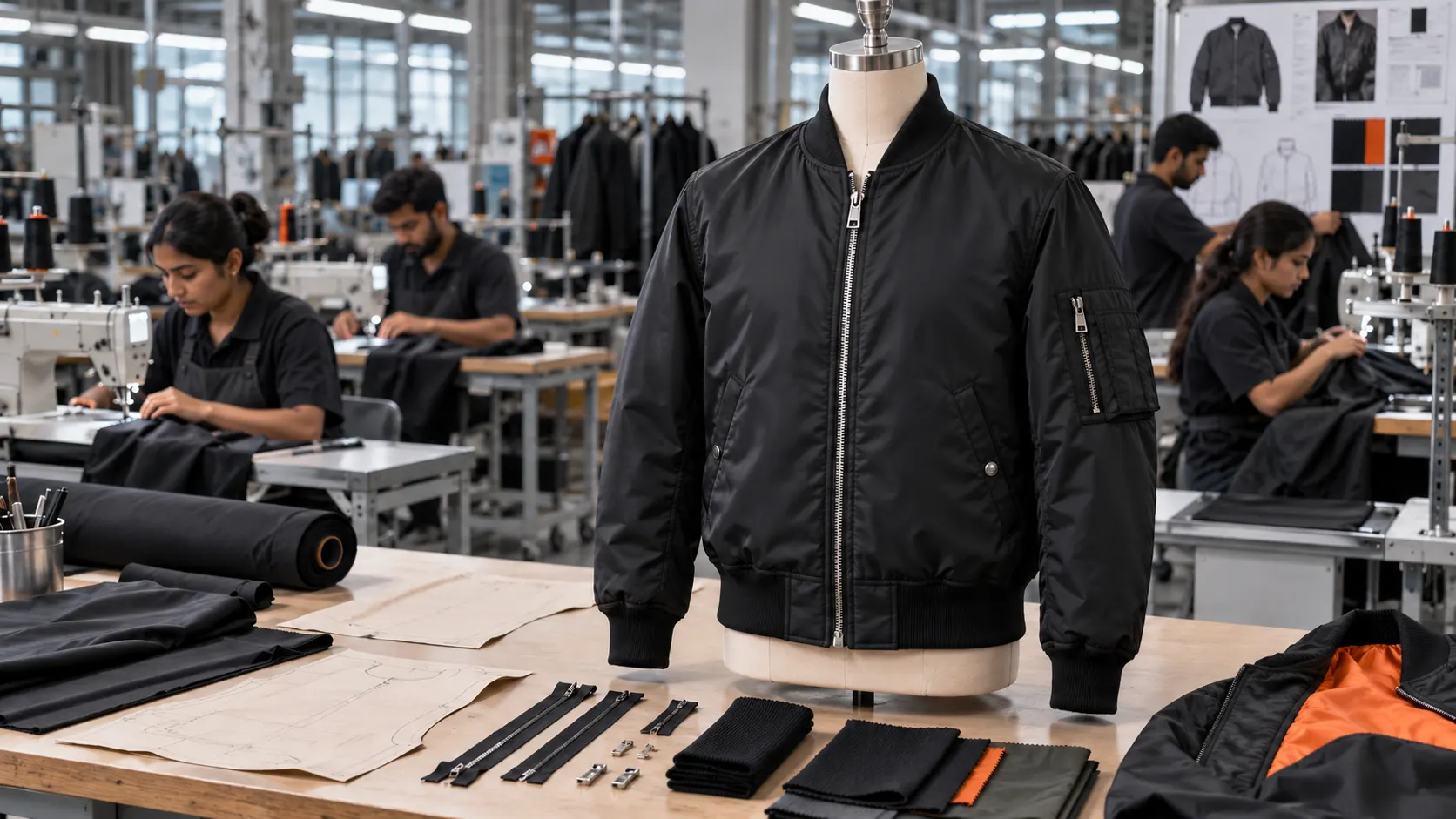
Develop custom bomber jackets for your clothing brand with control over the silhouette, shell fabric, lining, insulation, ribbing, pockets, zippers, decoration, labels and packaging. Stitch Expo supports product development, sampling and bulk private-label bomber jacket manufacturing for streetwear, fashion, teamwear and branded collections.
Private-Label Production
Custom Bomber Jacket Manufacturing for Clothing Brands
Stitch Expo manufactures custom bomber jackets for brands that need more control than a standard blank or ready-made jacket provides. A custom programme can define the garment's measurements, fit, shell fabric, lining, insulation, rib specification, pocket construction, zipper type, artwork, labels and final packaging around an approved product specification.
Development can start from a tech pack, technical sketches, measurement chart, reference garment or a combination of these. The objective is to translate the brand's design direction into a repeatable pattern and production specification that can be sampled, reviewed and approved before bulk manufacturing.
Bomber jackets are particularly sensitive to proportion. Body length, shoulder position, sleeve volume, rib tension and waistband height can dramatically change the silhouette. For that reason, a bomber should be developed as a complete outerwear system rather than treated as a basic shell with a zipper.
What Is a Bomber Jacket?
A bomber jacket is a short outerwear style historically associated with flight jackets and later adapted into fashion, streetwear, sports, workwear and lifestyle collections. Modern bomber jackets vary widely, but many retain recognizable features such as a short body, front zipper, ribbed or structured collar, ribbed cuffs, ribbed waistband and side pockets.
The category is broader than one fixed pattern. A lightweight nylon MA-1-inspired jacket behaves very differently from an oversized padded streetwear bomber, a cropped satin fashion style or a heavyweight wool construction. Fabric, insulation, silhouette and trim choices all change how the garment should be engineered.
For a clothing brand, “bomber jacket” should therefore be treated as a product family. The actual specification still needs to define proportions, materials, construction and end use.
Product Development
Types of Custom Bomber Jackets
Different constructions suit different seasons, price points and brand aesthetics. These are common directions that can be developed around your specification.
Classic MA-1 Style
Flight-inspired proportions with rib collar, cuffs, waistband, technical shell and optional sleeve utility pocket.
Lightweight Bomber
Reduced bulk with a light woven shell and simple lining for transitional seasons or teamwear.
Padded / Quilted Bomber
Insulated construction for colder collections with synthetic fill or quilted internal layers.
Oversized Streetwear Bomber
Wider body, dropped shoulder and increased sleeve volume for a deliberate contemporary silhouette.
Cropped Bomber
Shorter body proportions developed carefully around waistband, pocket and sleeve balance.
Satin Fashion Bomber
Smooth lustrous shell suited to fashion collections, embroidery and statement branding.
Reversible Bomber
Two wearable faces requiring careful pocket, zipper, seam and label planning.
Leather-Style Bomber
Leather or suitable alternative shell construction for premium fashion and lifestyle outerwear.
Material Selection
Fabrics for Custom Bomber Jackets
The shell fabric strongly influences appearance, weight, drape, durability and seasonal use. Fabric should not be selected only by GSM; weave, coating, surface finish, wind resistance, structure and intended climate can be equally important.
- Nylon and nylon-look woven shells
- Polyester woven fabrics
- Polyester twill
- Cotton twill
- Satin and satin-look fabrics
- Wool and suitable wool blends
- Fleece or knit bomber constructions
- Leather or synthetic leather where suitable
- Coated technical fabrics for selected designs
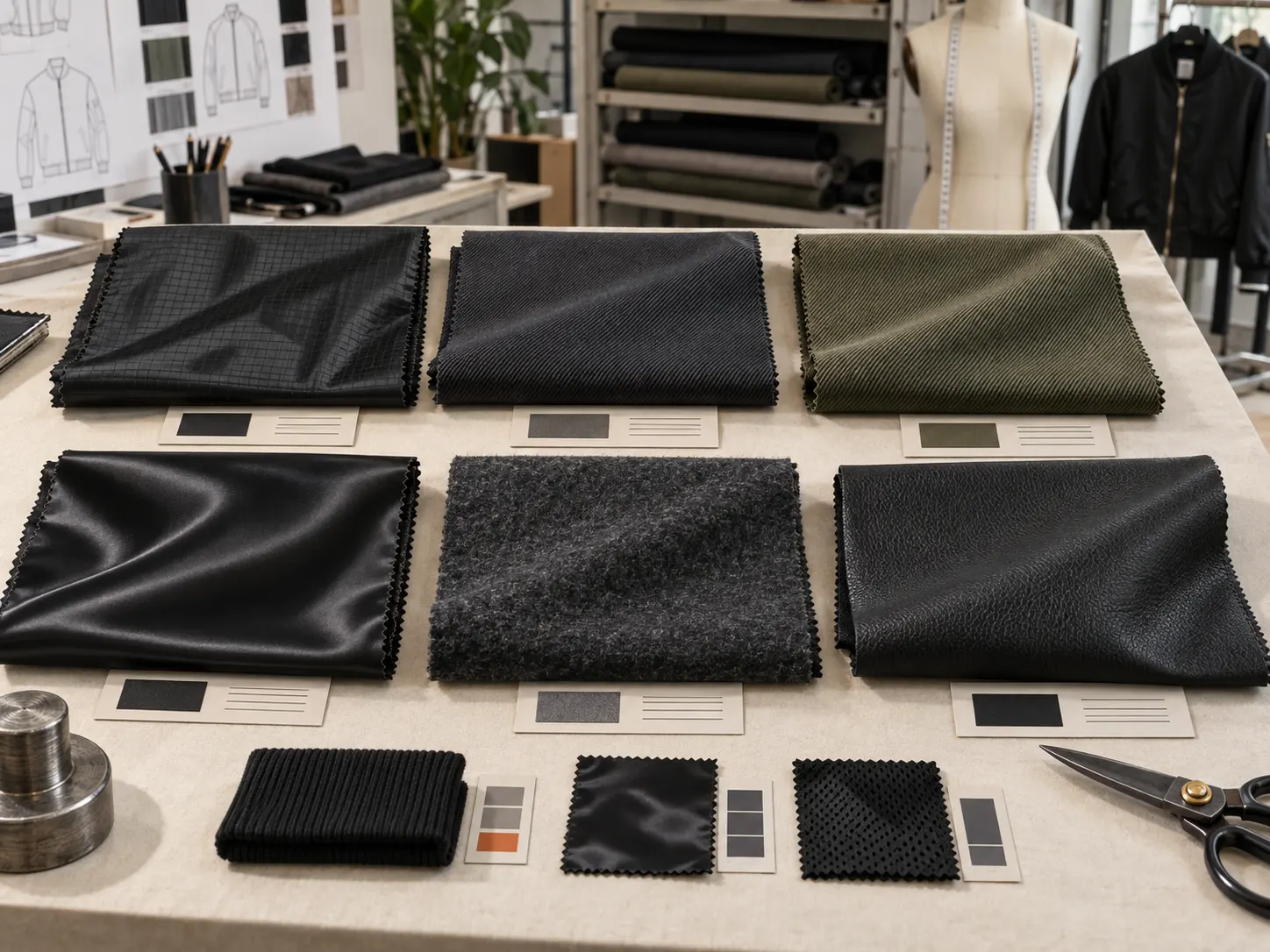
| Fabric | Character | Typical Direction | Development Considerations |
|---|---|---|---|
| Nylon | Lightweight, smooth, technical | MA-1 and streetwear | Finish, coating, sheen and lining compatibility |
| Polyester | Versatile and stable | Fashion, uniforms, lightweight bombers | Weave, hand feel, coating and print suitability |
| Cotton Twill | Natural and structured | Casual/workwear-inspired bomber | Shrinkage, wash finish and rib balance |
| Satin | Smooth and lustrous | Fashion and embroidered bombers | Snagging, artwork, seam handling and lining |
| Wool Blend | Warm and structured | Premium fashion outerwear | Weight, interlining and seam bulk |
Interior Construction
Bomber Jacket Lining & Insulation Options
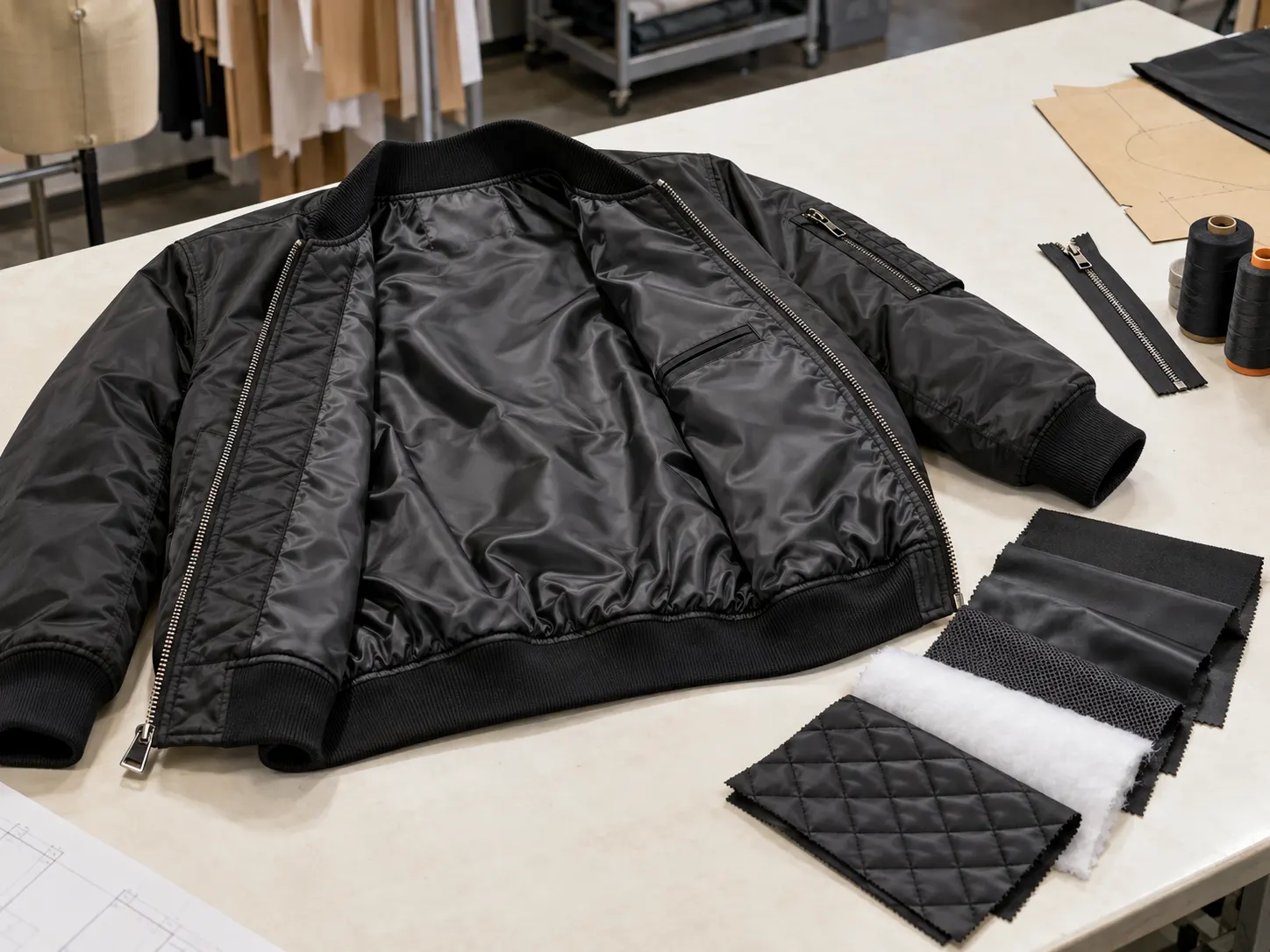
The internal construction determines comfort, warmth and the way the jacket hangs. A lightweight bomber may use a simple lining with no insulation, while a winter bomber may require padding and a quilted lining system.
- Polyester lining
- Satin-style lining
- Mesh lining for selected lightweight jackets
- Quilted lining
- Lightweight synthetic padding
- Heavier insulation for colder-weather products
- Uninsulated constructions
Signature Construction
Custom Ribbed Collar, Cuffs & Waistband
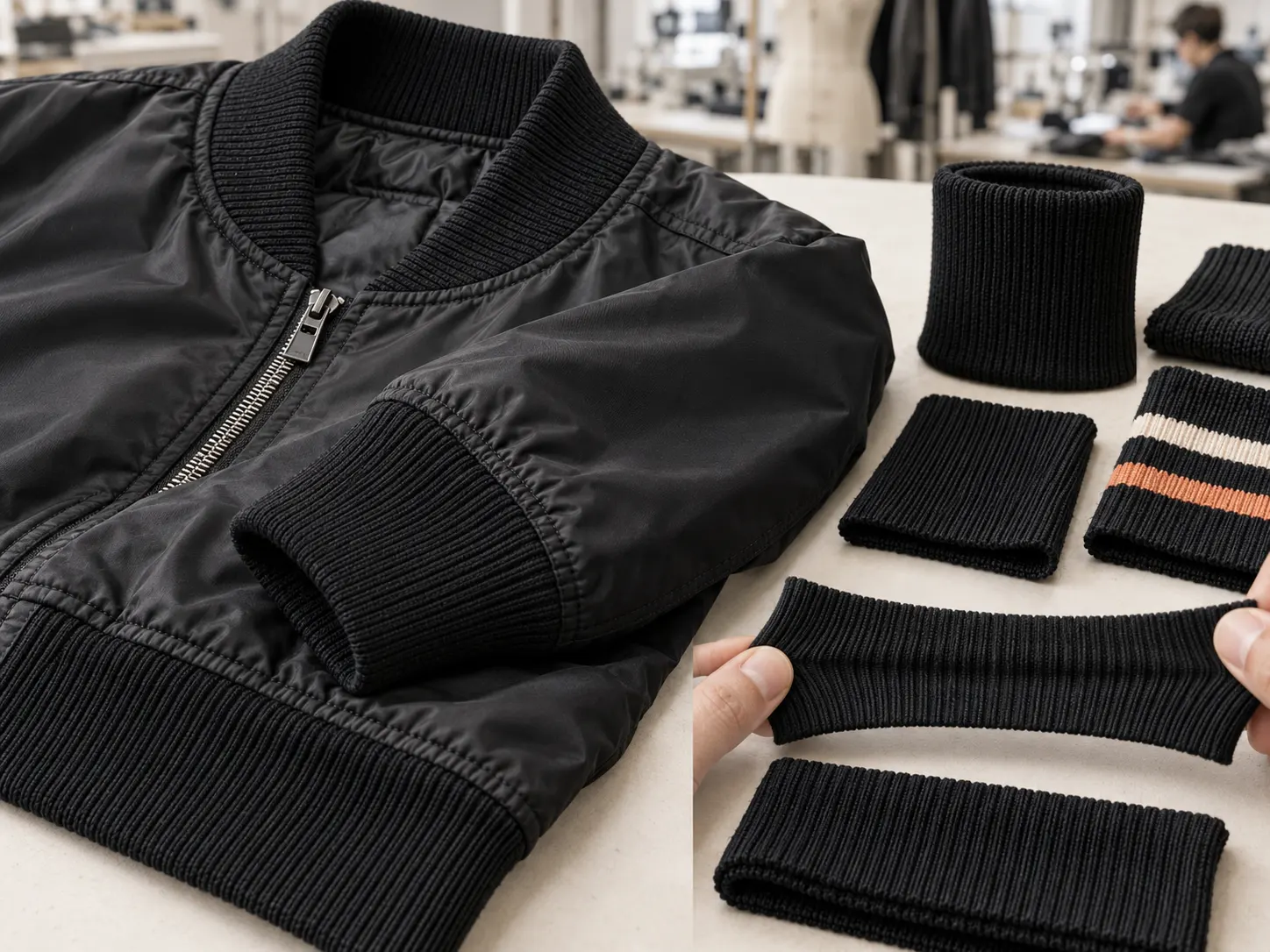
Rib trim is one of the defining elements of many bomber jackets. Its stretch, recovery and dimensions affect the neckline, sleeve opening and hem silhouette.
A waistband with too much tension can cause unwanted blousing, while weak recovery can leave the hem loose. Cuffs should remain comfortable while recovering enough to hold their intended shape.
- Solid-colour rib
- Contrast rib
- Striped rib constructions
- Custom collar height
- Custom cuff width
- Custom waistband height
- Matching or contrast yarn colours
- Stretch and recovery matched to the garment
Functional Details
Bomber Jacket Zippers, Pockets & Hardware
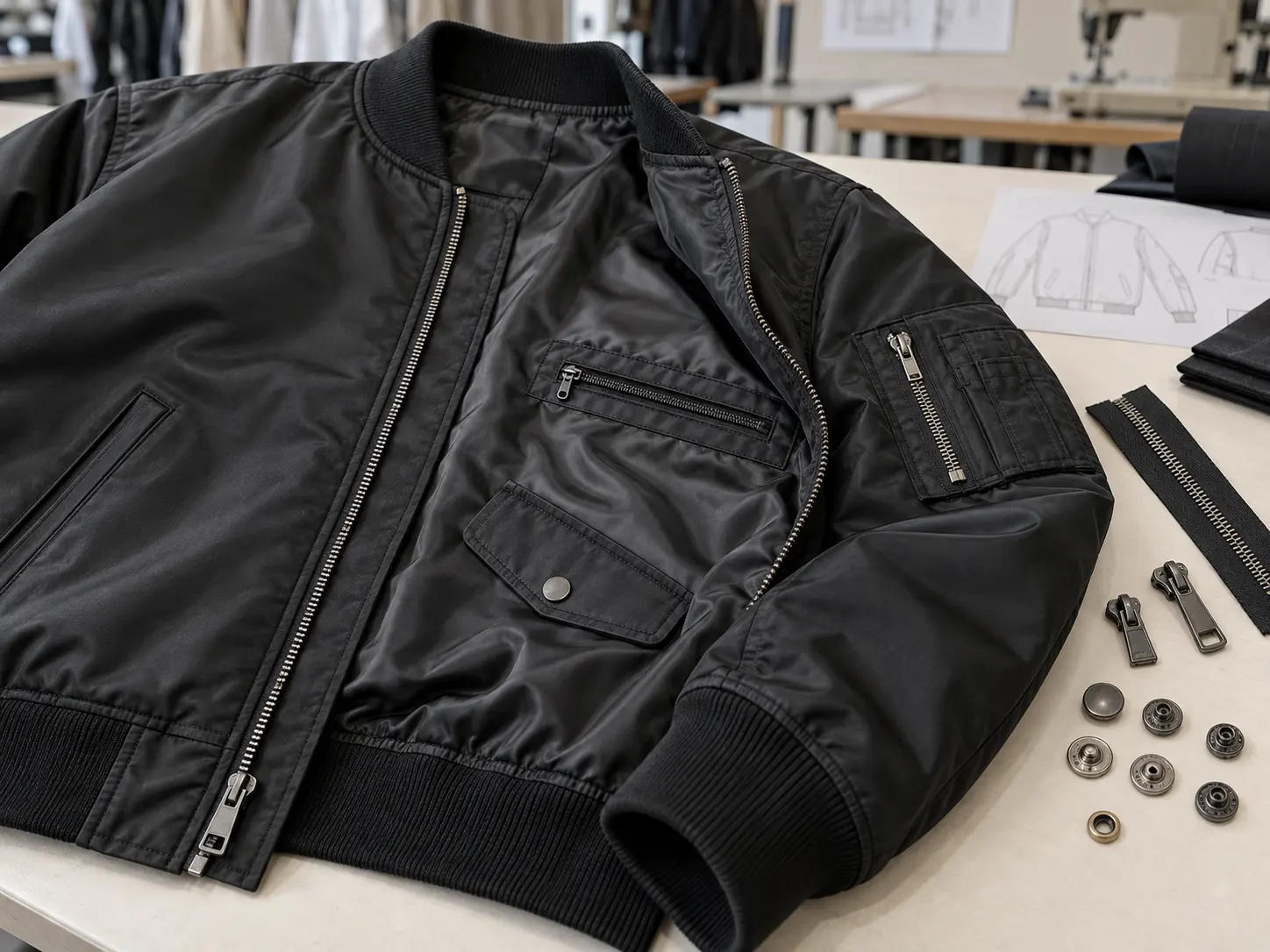
Zippers, pockets and hardware influence both function and perceived quality. Their selection should be coordinated with shell thickness, lining, garment weight and the desired look.
Front Zippers
Metal, molded or coil constructions can be selected according to weight and design.
Custom Pullers
Selected programmes can incorporate custom pullers where tooling and quantities are suitable.
Welt / Slash Pockets
Classic side-pocket constructions can include snaps, zippers or clean welt finishes.
Sleeve Utility Pocket
MA-1-inspired products may include sleeve zipper pockets and pen compartments.
Internal Pockets
Internal storage can be built into the lining system according to construction.
Snaps & Hardware
Hardware should be checked for secure attachment, finish and compatibility with the fabric.
Pattern Development
Developing the Right Bomber Jacket Fit
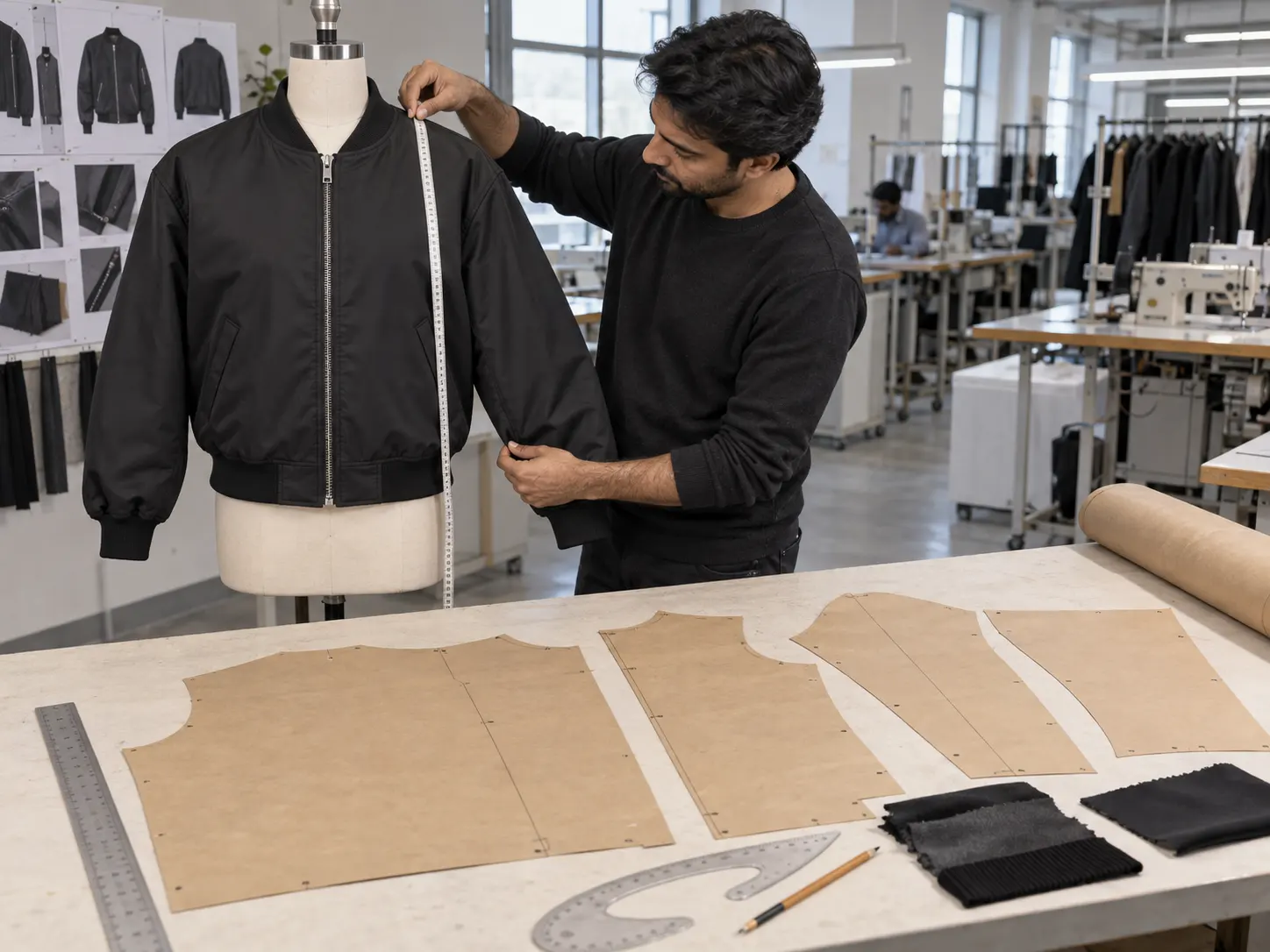
Fit is one of the biggest differences between a generic jacket and a deliberately developed bomber. The pattern should reflect the target customer, expected layering, shell thickness and styling direction.
Regular Fit
Balanced body and sleeve volume for a traditional everyday silhouette.
Relaxed Fit
Additional ease through the chest and sleeve without becoming heavily oversized.
Oversized Fit
Wider body, dropped shoulder, larger sleeves and intentionally exaggerated proportions.
Measurements that affect bomber proportions
- Chest width
- Body length
- Shoulder width or drop
- Sleeve length
- Bicep and sleeve volume
- Armhole depth
- Bottom opening before rib tension
- Cuff opening
- Collar height
- Pocket position
The approved base-size pattern can then be graded for the required size range. Read more about pattern making in clothing manufacturing.
Technical Construction
Anatomy of a Bomber Jacket
A useful bomber-jacket specification separates the garment into individual construction zones. This makes communication clearer between the designer, pattern maker, sample room, trim supplier, decoration team and sewing line.
The shell forms the visible exterior. The lining finishes the inside and can conceal internal seam allowances, pocket bags and selected decoration backing. Insulation, when used, sits between these layers. Rib trim controls the neckline, cuffs and hem, while zippers, snaps and pockets provide functional details that must be positioned against the final pattern.
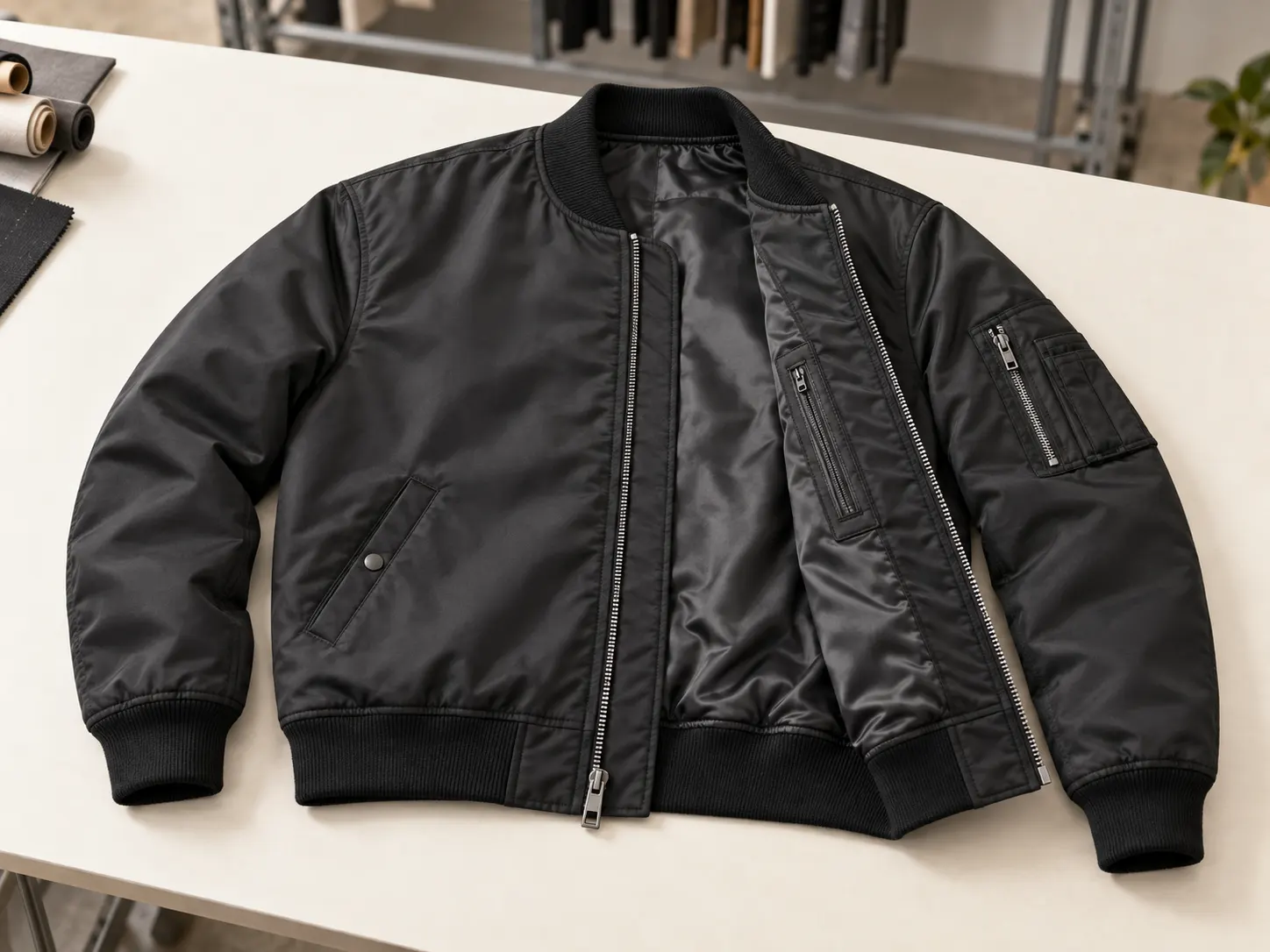
- Shell: the main exterior fabric and visible garment surface.
- Lining: the internal finishing layer that affects comfort and appearance.
- Insulation: optional padding or warmth layer between shell and lining.
- Front zipper: the main closure and an important visual hardware component.
- Rib collar: a common bomber neckline treatment.
- Rib cuffs: control the wrist opening and contribute to sleeve shape.
- Rib waistband: finishes the hem and influences the amount of blousing.
- Side pockets: commonly welt, slash, zipper or snap constructions.
- Sleeve utility pocket: optional MA-1-inspired feature.
- Internal pockets: developed around the lining construction.
- Brand labels: typically positioned at the back neck and inside seam areas.
Cold-Weather Development
Custom Winter Bomber Jackets
For colder-season collections, a bomber jacket can be developed with additional insulation, heavier shell fabrics, quilted lining and construction details intended to reduce drafts. However, adding warmth changes more than the internal feel. Padding increases seam bulk, changes the way sleeves bend and can alter the finished silhouette.
A winter bomber therefore needs enough pattern allowance for the insulation without becoming excessively oversized. Collar, cuff and waistband rib should also be selected with the intended cold-weather use in mind. A jacket designed for layering over a sweatshirt needs more internal room than a bomber intended to sit over a lightweight T-shirt.
Brands should define the intended wearing conditions as clearly as possible. Instead of simply requesting a “warm bomber,” specify whether the product is for mild winter, cold urban weather, travel, outdoor teamwear or fashion use. That information helps determine whether the product needs lightweight padding, a quilted system, heavier fill or simply a denser shell and lining combination.
Before Sampling
Key Decisions Before Developing a Bomber Jacket
Many sample revisions can be avoided by resolving the main product decisions before the first pattern is created. These choices form the technical brief for the sample room.
Target Silhouette
Define whether the jacket should be regular, relaxed, oversized, cropped or another proportion. A visual reference is useful, but final measurements should still be specified.
Season & Climate
Confirm whether the bomber is lightweight, transitional or winter-focused so shell, lining and insulation can be selected appropriately.
Shell Character
Decide whether the exterior should feel technical, matte, shiny, crisp, soft, structured, washed or premium.
Interior Construction
Choose whether the jacket is uninsulated, lined, padded or quilted and determine whether internal pockets are required.
Branding Method
Plan embroidery, patches, transfers or printing early because decoration can influence panel construction and lining sequence.
Trim Quality
Specify zipper finish, puller style, snap colour, rib construction and label quality so the sample reflects the intended retail standard.
Custom Branding
Custom Bomber Jacket Embroidery, Printing & Patches
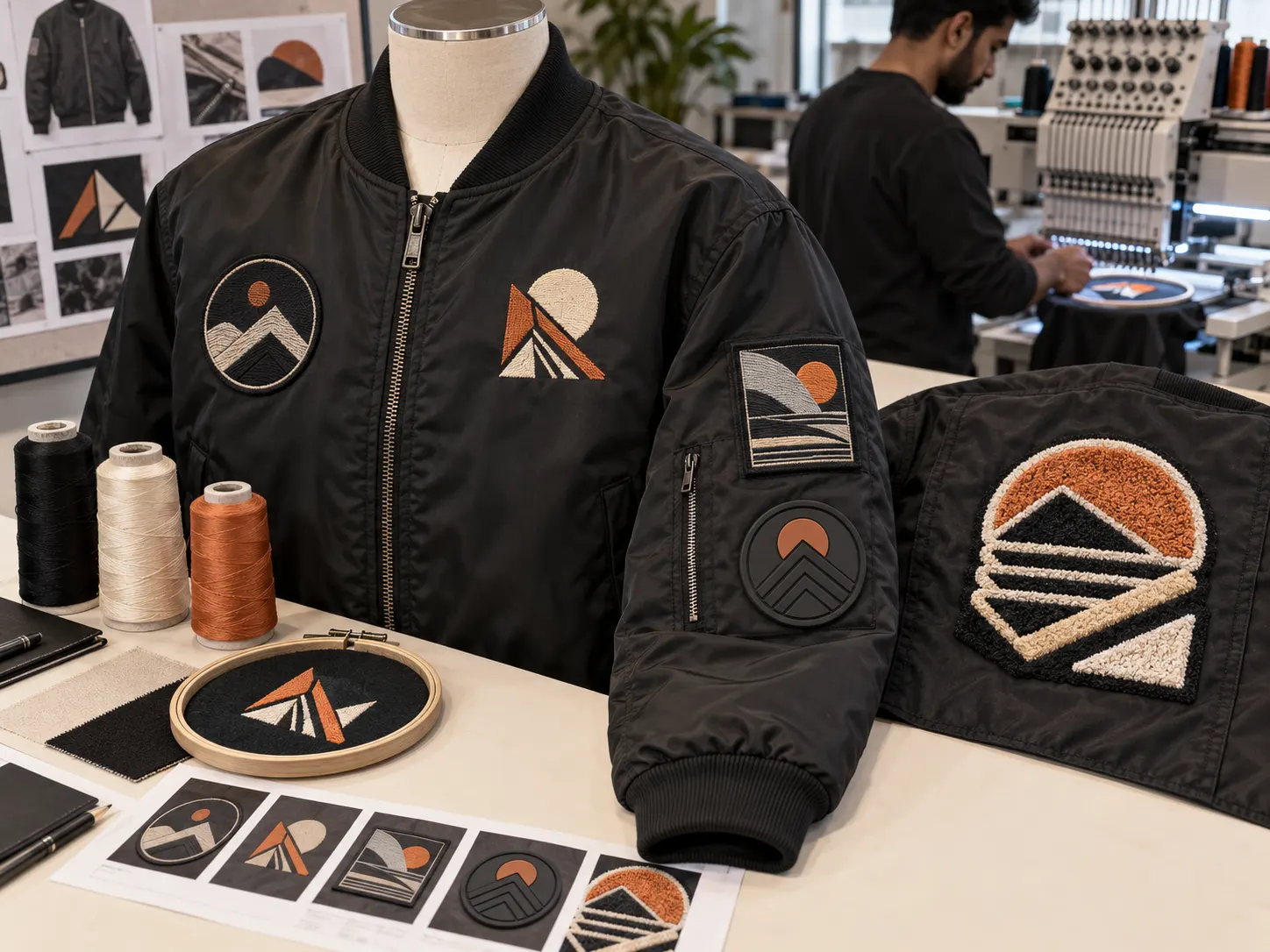
Bomber jackets provide large surfaces for branding, but the artwork method should be planned around the shell, lining, insulation, pockets and seam positions. Decoration completed before final assembly can often produce a cleaner internal finish than adding artwork after a lined jacket is fully closed.
- Flat embroidery
- 3D puff embroidery where suitable
- Chenille patches
- Embroidered patches
- Woven patches
- Appliqué
- Screen printing
- DTF or transfer methods where compatible
- Sublimated components on suitable polyester materials
- Silicone or rubber patches
- Reflective details
Private Label
Private Label Bomber Jacket Manufacturing
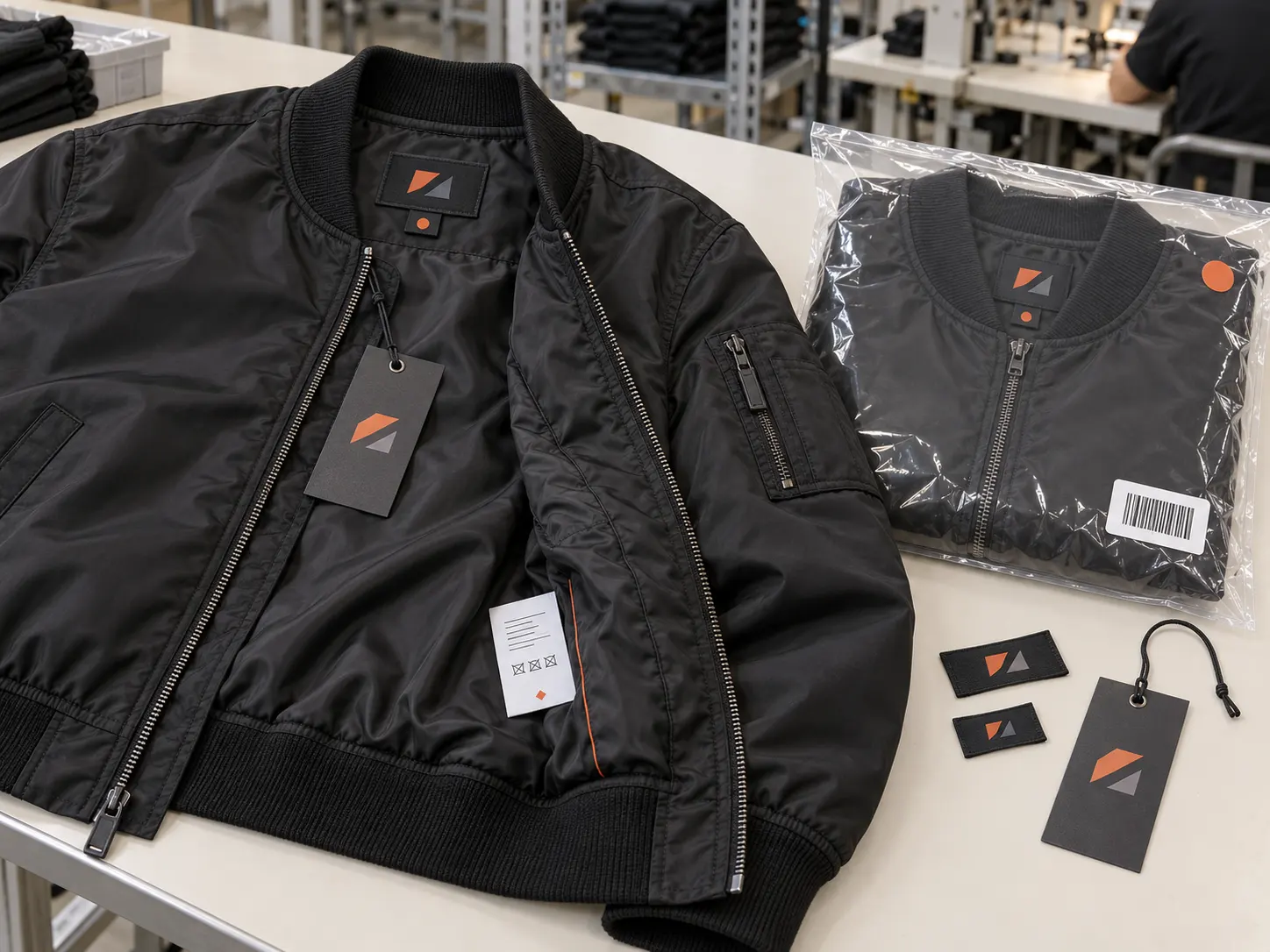
A custom bomber can be developed as a complete private-label product, including the permanent labels and final presentation required by the brand.
- Woven main neck labels
- Separate size labels
- Care and composition labels
- Custom hang tags
- Custom patches and logo tabs
- Selected zipper or trim branding
- Size stickers and SKU identification
- Protective garment packaging
- Carton preparation
See our complete guide to custom clothing labels and packaging.
From Design to Delivery
Custom Bomber Jacket Manufacturing Process
Bomber production follows the broader clothing manufacturing workflow but adds outerwear-specific decisions around shell, lining, insulation, hardware and rib trims.
Design & Product Requirements
Review sketches, references, target fit, market, colours, quantity and performance expectations.
Tech Pack & Specifications
Confirm measurements, construction, artwork, labels, trims and product notes.
Fabric & Trim Sourcing
Select shell, lining, insulation, rib, zippers, snaps and required hardware.
Pattern Development
Create the base-size pattern around the intended silhouette and material behaviour.
Sample Development
Cut and sew a physical sample so fit and construction can be evaluated.
Fit & Construction Review
Check measurements, sleeve volume, body length, rib tension, pockets and internal finishing.
Corrections & Approval
Translate approved feedback into the controlled pattern and specification.
Grading & Marker
Develop required sizes and prepare cutting layouts.
Inspection & Cutting
Inspect fabric, spread it correctly and cut shell, lining and related components.
Decoration
Apply embroidery, patches, printing or other artwork at the correct production stage.
Sewing & Assembly
Assemble shell, pockets, sleeves, zipper, lining, rib and hardware.
Finishing & QC
Trim, clean and inspect measurements, workmanship, function and appearance.
Labels & Packaging
Apply final branding, identify sizes and prepare garments for carton packing.
Shipment
Verify carton quantities and prepare the approved order for dispatch.
Final Inspection
Bomber Jacket Quality Control
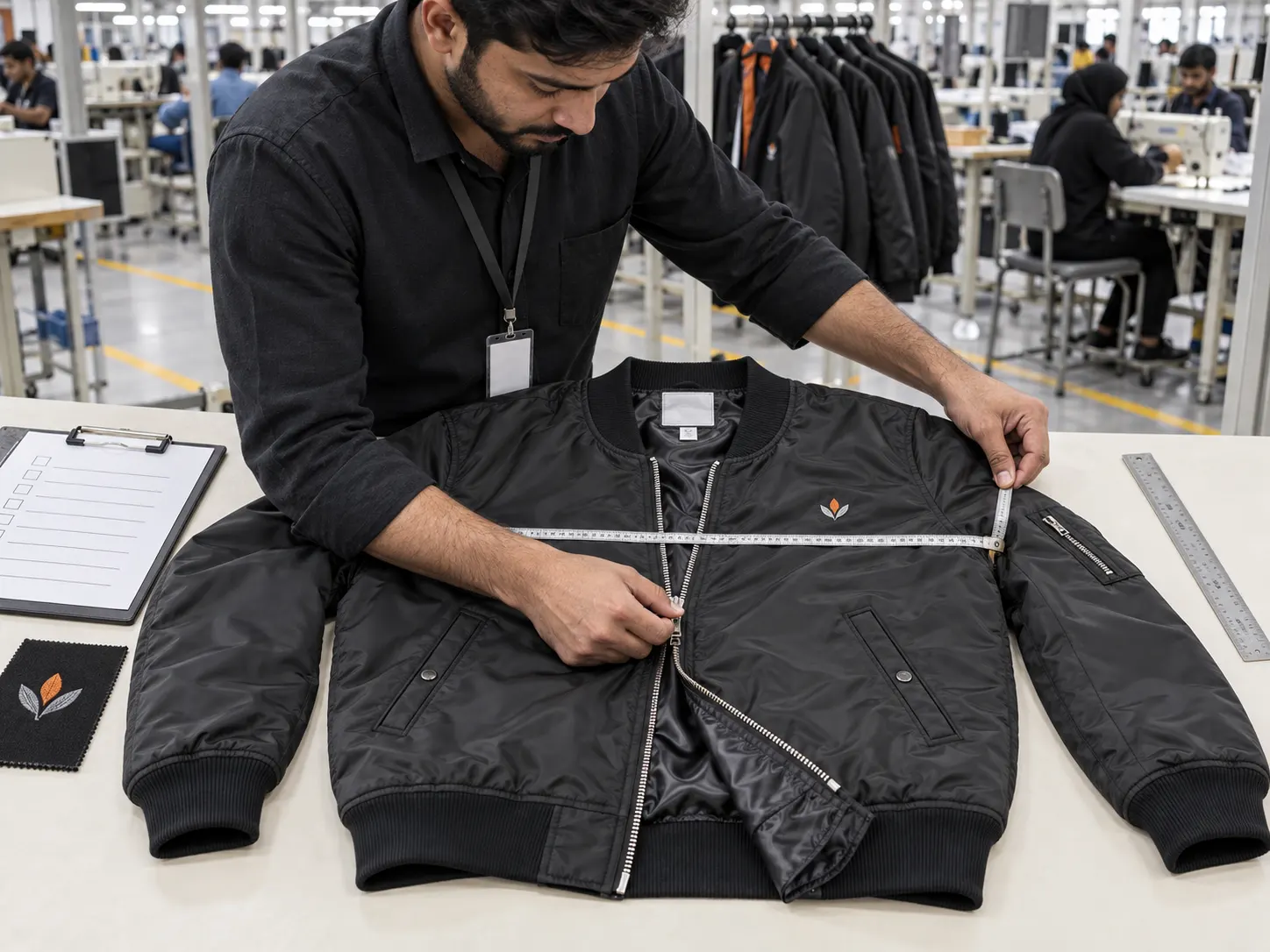
Outerwear combines multiple materials and components, so final QC should evaluate both appearance and function against the approved specification.
- Finished chest, body length and sleeve measurements
- Shoulder position and garment balance
- Rib collar shape, cuff recovery and waistband tension
- Front zipper operation and alignment
- Pocket position, symmetry and function
- Shell and lining workmanship
- Seam appearance and thread trimming
- Artwork size and placement
- Patch and embroidery attachment
- Hardware security
- Colour and shade consistency
- Correct labels and sizes
- Clean final appearance
- Packaging and carton assortment
What Do You Need to Manufacture a Custom Bomber Jacket?
You can approach development with a complete tech pack or with a strong combination of reference images, measurements and written product requirements. Clear inputs make quoting and development more accurate.
- Front and back design or reference images
- Target fit: regular, relaxed, oversized or cropped
- Base-size measurement chart where available
- Shell fabric preference
- Lining and insulation requirements
- Rib colour and stripe details
- Zipper, snap and hardware preferences
- Pocket details
- Artwork files and placement dimensions
- Label and hang-tag requirements
- Colourways
- Size range and quantity
- Packaging requirements
- Destination and target delivery timing
Production Planning
MOQ, Bomber Jacket Samples & Bulk Production
Custom bomber jackets often contain more components than basic cut-and-sew products, so exact minimums and timing can depend on shell fabric, custom rib, lining, insulation, hardware, colours and decoration.
Typical MOQ
Stitch Expo commonly works around 20–30 pieces per design for custom apparel projects, subject to materials, trims and the specific bomber construction.
Sample Development
Typical sample development can be around 7–11 working days after specifications and materials are ready, with complex products requiring additional time.
Bulk Production
Typical bulk manufacturing can be around 12–20 working days for suitable programmes, while larger or highly customised outerwear orders may require longer.
B2B Manufacturing
Bomber Jacket Manufacturing for Different Brand Types
The same bomber silhouette can serve very different markets. Development should reflect how the brand intends to sell and position the product rather than using a one-size-fits-all specification.
Streetwear Brands
Often focus on oversized proportions, heavyweight trims, back artwork, patches, garment branding and limited seasonal drops.
Fashion Labels
May prioritise unusual fabric, cropped shapes, custom lining, premium hardware and carefully controlled finishing.
Sports & Team Projects
Frequently need consistent colour, logo placement, size range, individual identification and practical durability.
Retail & Wholesale
Require repeatable sizing, packing consistency, barcode or SKU control and stable product specifications across bulk quantities.
Merchandise Collections
Can combine recognizable brand artwork with manageable production quantities and event or launch deadlines.
Startup Clothing Brands
Benefit from resolving fit, fabric and branding through sampling before increasing order volume.
International Orders
Custom Bomber Jacket Manufacturing for Global Clothing Brands
Stitch Expo works with custom apparel projects for brands in markets including the USA, United Kingdom, Canada, Europe, Australia and other international destinations. For overseas production, the technical specification and approval process are especially important because they reduce ambiguity before bulk manufacturing starts.
Brands should confirm the final destination early because labeling, packing, carton requirements and delivery planning can differ between markets. When a launch date is fixed, development time, sample review, bulk production and shipping should be planned together rather than treating shipping as the final isolated step.
For seasonal winter products, early development is particularly valuable. Fabric and trim sourcing, sample revisions and international delivery can all affect when inventory arrives. Building the bomber programme before peak seasonal demand gives more time to approve the product properly.
Questions Answered
Custom Bomber Jacket Manufacturer FAQs
Do you manufacture fully custom bomber jackets?
Yes. Bomber jackets can be developed around the brand's specifications, including fit, shell, lining, insulation, ribbing, pockets, zippers, decoration, labels and packaging.
What is the MOQ for custom bomber jackets?
Stitch Expo commonly works around 20–30 pieces per design for custom apparel, but exact MOQ can vary with fabric, colours, custom rib, trims, hardware and decoration.
Can I order a bomber jacket sample first?
Yes. Sampling is recommended so the fit, construction, fabric, lining, trims and branding can be reviewed before bulk production.
What fabrics can be used?
Depending on the design, bomber jackets can use nylon, polyester, twill, cotton twill, satin, wool blends, fleece, leather or suitable alternative materials.
Can you make MA-1 style bomber jackets?
Yes. MA-1-inspired products can be developed with technical woven shells, ribbed collar, cuffs and waistband, front zipper, side pockets and optional sleeve utility-pocket details.
Can you make oversized bomber jackets?
Yes. Oversized bombers should be patterned deliberately around shoulder drop, body width, sleeve volume, body length and rib tension.
Can bomber jackets have custom lining?
Yes. Lining options may include polyester, satin-style materials, mesh for selected lightweight products or quilted constructions.
Can you add winter insulation?
Yes. Padded or quilted constructions can be developed. The desired warmth, bulk and climate should be specified.
Can you embroider logos or add patches?
Yes. Flat embroidery, selected puff embroidery, chenille, appliqué, embroidered patches, woven patches and other suitable methods can be reviewed.
Do you provide private-label labels and hang tags?
Yes. Private-label programmes can include woven neck labels, size labels, care labels, hang tags, product identification and packaging.
How long does a sample take?
Typical custom apparel samples can take around 7–11 working days once specifications and materials are ready, although complex bomber construction can take longer.
How long does bulk production take?
Typical bulk apparel production can be around 12–20 working days for suitable orders, while larger quantities or specialised trims may need more time.
Can I send my own tech pack?
Yes. A complete tech pack is one of the best ways to communicate measurements, materials, construction, artwork, labels and packaging.
Can you develop from reference images?
Reference images can communicate the direction, but the final garment still needs its own measurements, pattern, materials and specifications.
Do you ship internationally?
Yes. Stitch Expo works with international apparel projects and can arrange shipment according to the order, destination and agreed delivery method.
Develop Your Custom Bomber Jacket With Stitch Expo
Share your tech pack, reference images, target fit, fabric direction, branding, size range and quantity. We can review the project and help turn your bomber jacket concept into a production-ready garment.