Stitch Expo Quality Guide
Quality Control in Apparel Manufacturing
Explore garment measurements, workmanship checks, tolerances, finishing controls and final inspection throughout clothing production.
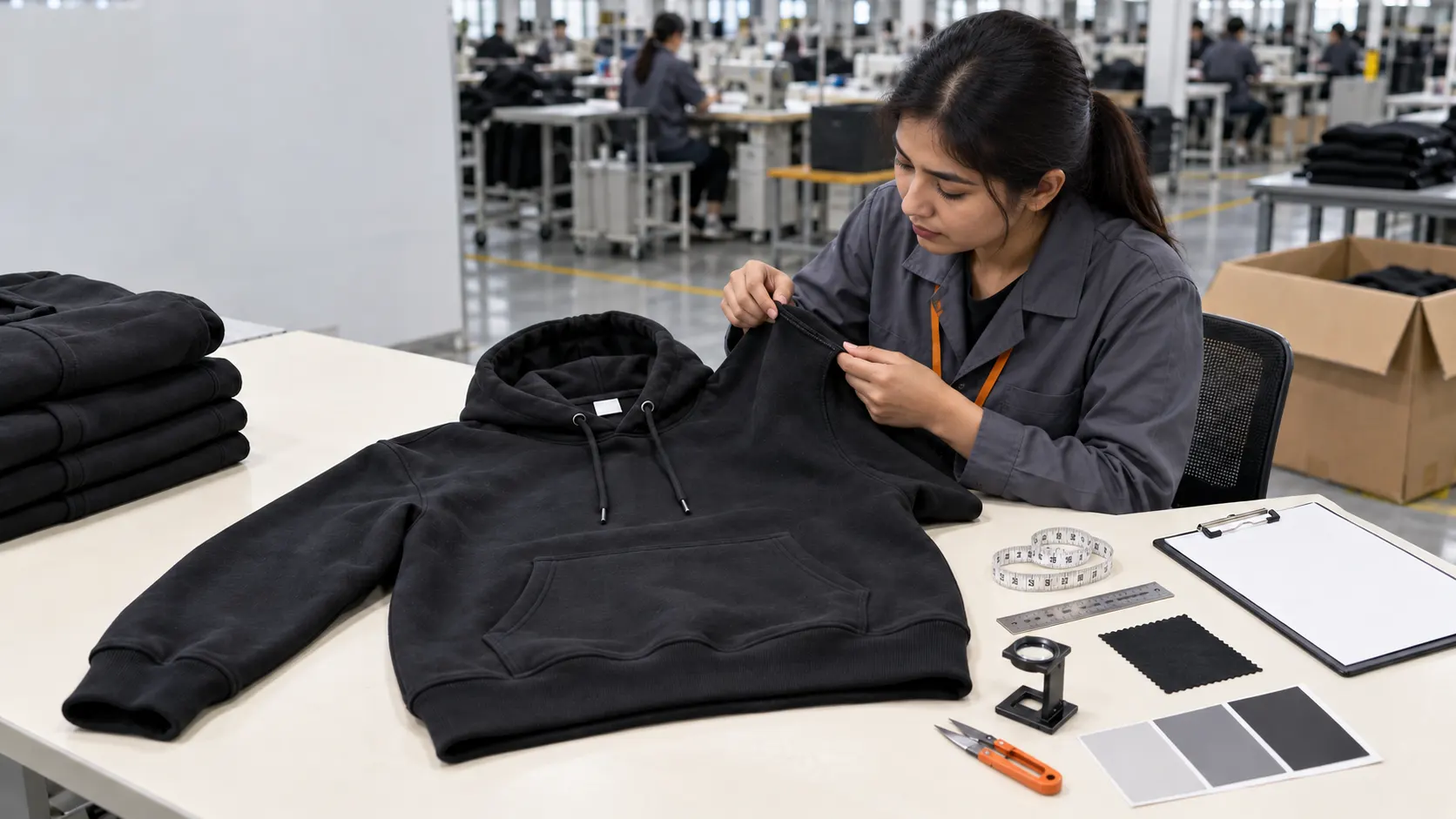
Effective quality control begins before bulk production and continues through material inspection, cutting, sewing, finishing, packing and final shipment inspection.
What Is Quality Control in Apparel Manufacturing?
Quality control in apparel manufacturing is the system of inspections, measurements, tests and corrective actions used to verify that garments conform to approved specifications. It covers incoming materials, patterns, cutting, sewing, decoration, finishing, packaging and completed goods.
Quality assurance and quality control are related but not identical. Quality assurance focuses on planning reliable processes that prevent problems. Quality control focuses on checking actual materials and products, identifying nonconformities and deciding what action is required.
Quality-Control Stages in Garment Production
Final inspection alone cannot reliably correct problems created earlier. Strong control uses checkpoints throughout development and manufacturing.
Pre-production
Review tech pack, approved sample, patterns, fabric, trims, artwork, tests and production instructions.
Incoming materials
Check fabric, trims, labels, colour, quantity, defects and relevant test results before use.
Cutting
Verify marker revision, grain direction, component shape, notches, shade control and bundles.
Inline sewing
Inspect construction at production operations so defects can be corrected close to their source.
Finishing
Check trimming, pressing, cleaning, labels, appearance, folding and packaging preparation.
Final inspection
Evaluate completed and packed goods against the agreed inspection plan before shipment release.
What Defines an Acceptable Garment?
Inspectors need controlled references. Without them, quality decisions become subjective and inconsistent.
- Approved tech pack and bill of materials
- Sealed or approved pre-production sample
- Measurement specification and stated tolerances
- Approved fabric, colour and trim standards
- Artwork size, colour and placement approvals
- Construction and stitch requirements
- Wash, performance or compliance requirements
- Folding, labeling and packaging instructions
- Agreed defect classification and inspection plan
Garment Measurement Inspection
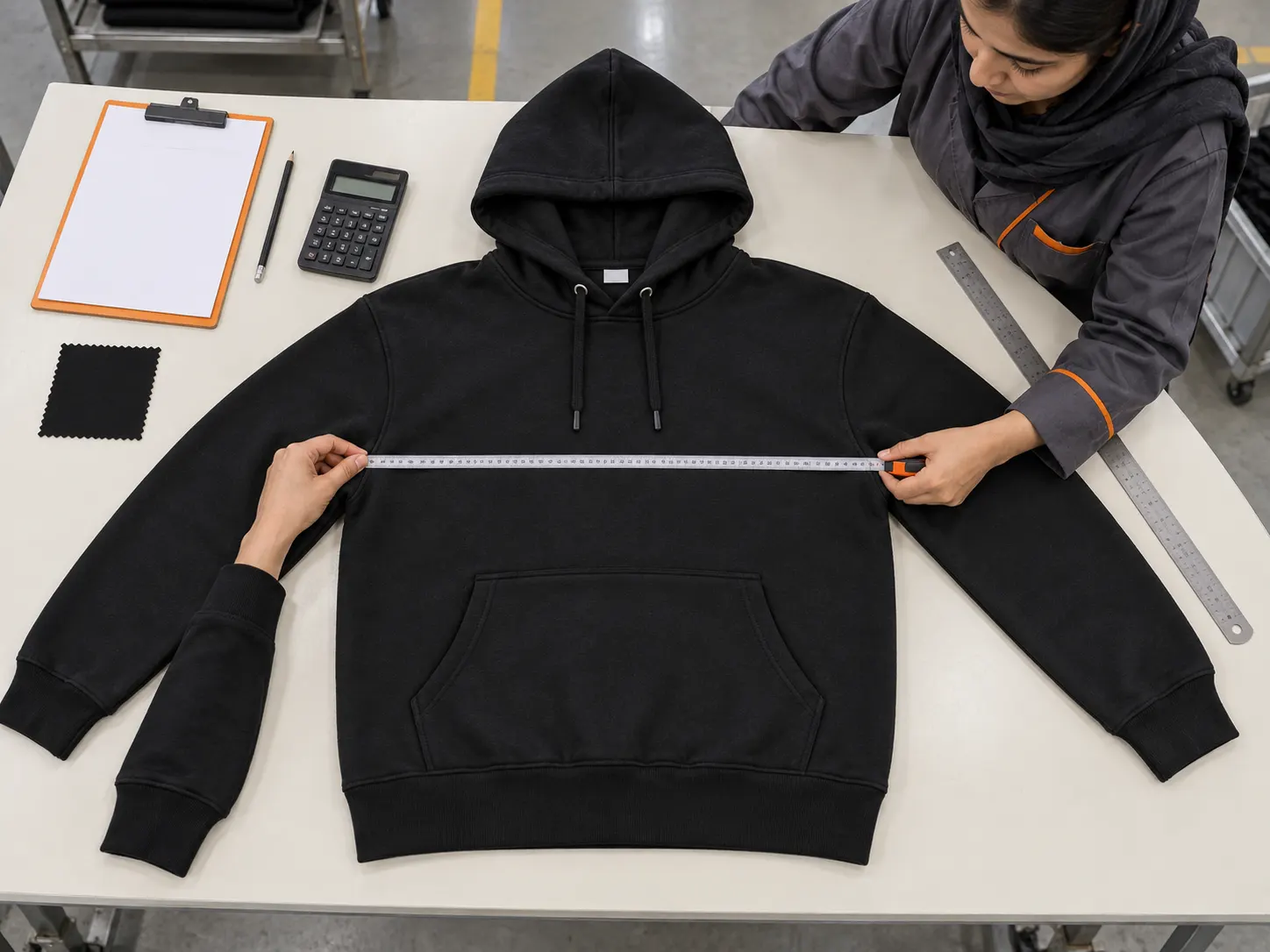
Finished garment measurements are checked at defined points of measurement, often called POMs. The garment should be prepared and positioned according to the brand's approved measuring method.
Typical Measurement Controls
- Use a flat, stable measuring surface
- Identify the correct size and style
- Follow the approved measuring diagram
- Close zippers or fastenings when instructed
- Position the garment without unwanted stretching
- Use a suitable calibrated measuring tool
- Record actual results rather than rounding selectively
- Compare each result with the specification and tolerance
Understanding Garment Measurement Tolerances
A tolerance is the permitted variation above or below a specified measurement. If a chest width is specified as 60 cm with a tolerance of ±1 cm, a measured result from 59 cm to 61 cm falls within that stated tolerance.
Tolerances should be defined by point of measurement, product type, fabric behaviour, construction and brand requirements. They should not be invented by the inspector after production.
| Term | Meaning | Example |
|---|---|---|
| Specification | The required target measurement | Chest width: 60 cm |
| Tolerance | The permitted deviation from the target | ±1 cm |
| Actual | The measurement recorded during inspection | 60.6 cm |
| Result | Whether the actual value is within the approved range | Pass: within 59–61 cm |
Workmanship Inspection
Workmanship inspection evaluates how accurately and consistently the garment has been constructed. Requirements differ by product, so inspection must follow the approved sample and construction details.
| Area | What inspectors check |
|---|---|
| Seams | Correct seam type, secure joining, alignment, smoothness and absence of open seams |
| Stitching | Consistent appearance, correct operation, balanced tension, no skipped or broken stitches |
| Symmetry | Balanced left and right sides, matching lengths and aligned design features |
| Pockets | Position, size, shape, reinforcement, matching and secure attachment |
| Zippers and fasteners | Correct type, smooth function, placement, security and surrounding appearance |
| Rib and elastic | Correct dimensions, recovery, distribution, joining and absence of twisting |
| Printing and embroidery | Artwork, colour, size, placement, registration, surface quality and security |
| Labels and trims | Correct content, position, orientation, size, colour and attachment |
Garment Defect Classification
Inspection plans commonly classify defects by severity. The buyer and manufacturer should agree definitions that are appropriate for the product, market and safety risk.
Critical defect
A condition that may create a safety, legal or serious compliance risk. Critical-defect policies are normally very strict.
Major defect
A defect likely to affect use, durability, appearance, saleability or compliance with an important requirement.
Minor defect
A smaller departure from the standard that does not usually make the garment unusable but reduces overall quality.
What AQL means
AQL is used with a defined sampling plan to determine sample size and acceptance or rejection numbers for an inspection lot. It should not be described simply as “the percentage of defective garments allowed.” The result depends on the selected standard, lot size, inspection level, AQL value and sampling plan.
Finishing and Packaging Quality Checks
Finishing prepares garments for presentation and shipment. Inspectors should verify both appearance and order-specific packing requirements.
- Loose threads trimmed without damaging seams
- Garment free from oil, dirt, marks and avoidable odour
- Pressing appropriate for the fabric and design
- No scorching, shine, glazing or unwanted creases
- Buttons, snaps, zippers and drawcords functioning correctly
- Correct main, size, care and country-of-origin labels
- Correct hangtags, barcodes and price tickets where required
- Correct folding method and garment presentation
- Correct polybag, warning text and ventilation where required
- Correct size ratio, carton assortment, markings and quantity
Packaging and labeling requirements vary by destination and customer. Legal information must be confirmed for the actual market rather than copied from another order.
Final Random Inspection Before Shipment
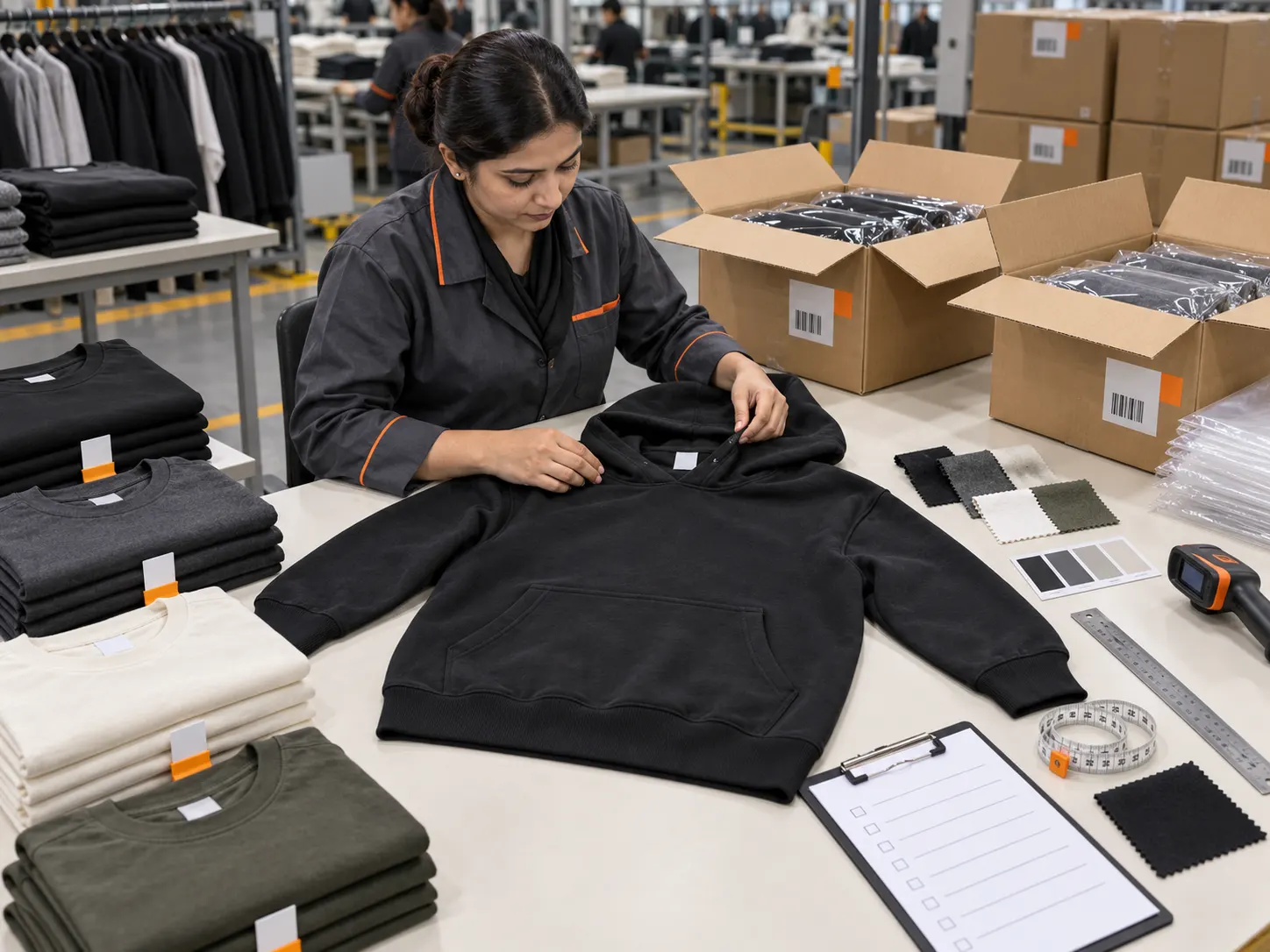
A final random inspection evaluates completed goods when the order is sufficiently finished and available for checking. The inspection scope should be agreed in advance.
Typical Final Checks
- Order quantity and carton count
- Random sample selection
- Style, colour and size assortment
- Visual workmanship and appearance
- Finished garment measurements
- Functional checks
- Artwork, labels and trims
- Packing, barcodes and carton markings
- Applicable onsite tests
- Defect totals and inspection result
Apparel Quality-Control Process
Define requirements
Confirm specifications, tolerances, samples, testing, defect classifications and packing instructions.
Approve materials and development samples
Verify fabric, trims, colours, artwork, fit and construction before bulk production.
Hold a pre-production review
Align production and QC teams on the approved revision and known risks.
Inspect production inputs
Check materials, patterns, markers and cutting before assembly.
Perform inline inspections
Find and correct recurring problems while garments are being sewn and decorated.
Check finishing and measurements
Review completed garments before packing so repairable issues can be corrected.
Conduct final inspection
Inspect the agreed sample against the established plan and document findings.
Resolve nonconformities
Repair, segregate, replace, recut or reinspect as appropriate; identify root causes for repeated defects.
Authorize shipment
Release the order only after required approvals, records and corrective actions are complete.
Common Apparel Quality Problems
| Problem | Possible cause | Recommended control |
|---|---|---|
| Measurements out of tolerance | Pattern, cutting, sewing, pressing, shrinkage or measuring inconsistency | Trace the source; do not only remeasure finished pieces |
| Twisted seams | Grain distortion, cutting, feeding or material behaviour | Control spreading, grain and sewing operation |
| Uneven stitching | Machine setting, handling, guide or operator inconsistency | Correct operation and inspect inline |
| Shade variation | Mixed fabric lots or poor component control | Separate lots and maintain numbering or bundling |
| Artwork misplaced | Incorrect template, alignment or size reference | Use approved placement guides and first-piece approval |
| Poor pressing | Incorrect heat, pressure, moisture or technique | Set fabric-specific finishing parameters |
| Wrong labels or packing | Material mixing or unclear instructions | Use approved pack references and line clearance |
Questions Answered
Apparel Quality-Control FAQs
What is quality control in apparel manufacturing?
It is the system of inspections, measurements, tests and corrective actions used to verify that garments meet approved material, construction, measurement, appearance and packing requirements.
What is the difference between QA and QC?
Quality assurance plans processes intended to prevent defects. Quality control evaluates actual materials, production and finished products against requirements.
What is an inline garment inspection?
An inline inspection checks garments while production is running. It helps identify recurring problems near their source before the full order is completed.
What is a garment measurement tolerance?
It is the permitted variation above or below a specified point of measurement. Tolerances should be defined in the approved measurement specification.
Does being within tolerance guarantee good fit?
No. Individual measurements can be within tolerance while balance, shape, symmetry or fabric behaviour still causes a poor fit.
What are critical, major and minor defects?
They are severity classifications. Critical defects may involve safety or legal risk, major defects materially affect use or saleability, and minor defects are smaller departures from the standard.
What does AQL mean in garment inspection?
AQL is a parameter used within a defined acceptance-sampling plan. Together with lot size and inspection level, it helps determine the sample size and acceptance or rejection numbers.
Is final inspection enough to control quality?
No. Final inspection can identify problems but may be too late to correct systemic defects efficiently. Control should begin with materials and pre-production and continue through manufacturing.
How are garments measured during inspection?
Inspectors place garments according to the approved method, measure defined points with suitable tools and compare actual results with specifications and tolerances.
What happens when an inspection fails?
The response depends on the problem and agreement. Goods may be segregated, repaired, replaced, recut or reinspected, and repeated defects should receive root-cause corrective action.
Quality From Development to Delivery
Manufacture Custom Apparel With Stitch Expo
Stitch Expo supports clothing brands through product development, sampling, material selection, controlled production, custom decoration, quality checks and bulk apparel manufacturing.