Sweaters & Jumpers
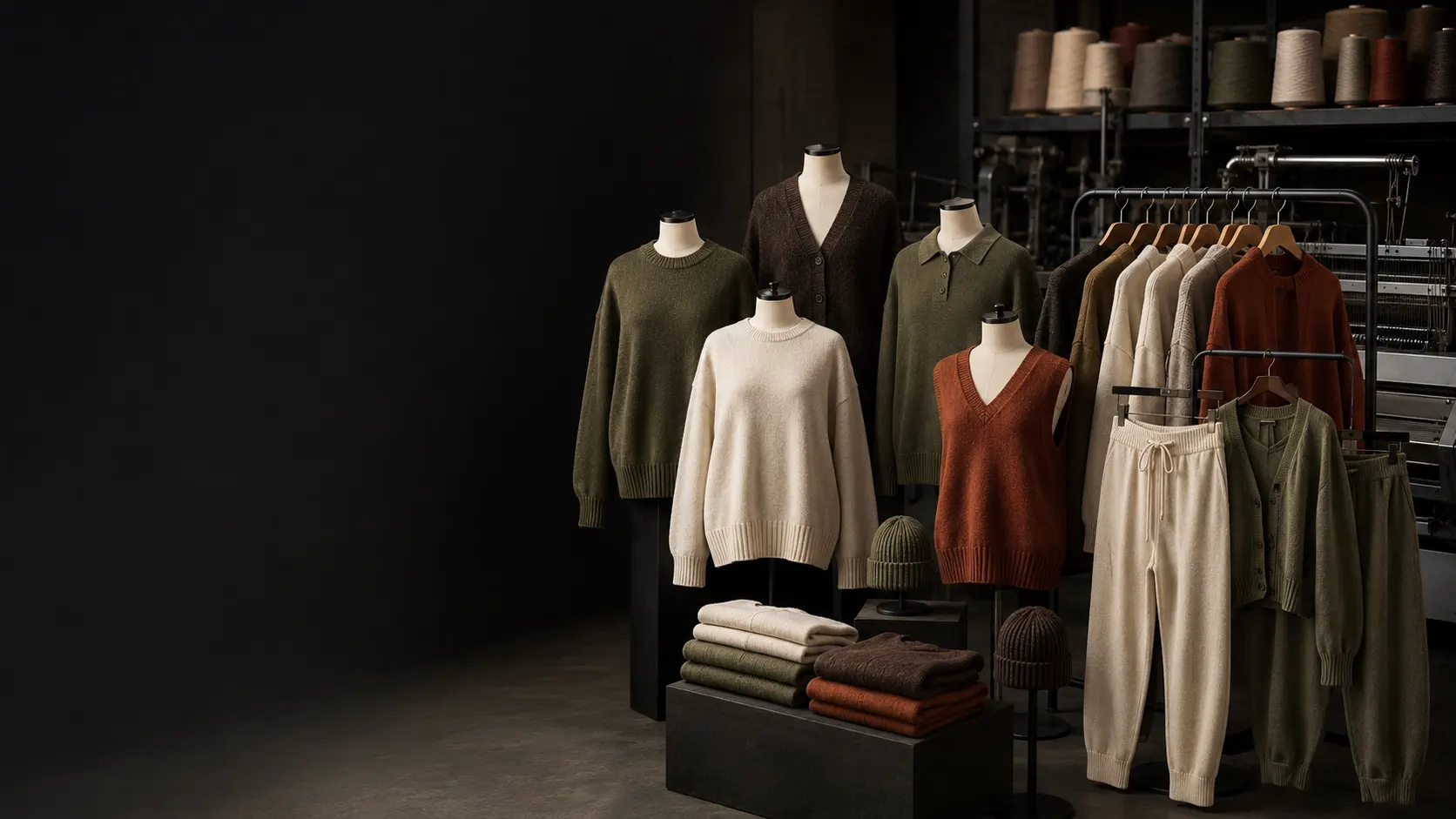
Crew-neck, V-neck, roll-neck, quarter-zip, oversized, fitted and textured knitted sweater concepts.

CUSTOM KNITTED PRODUCT DEVELOPMENT
Stitch Expo is a private label knitwear manufacturer helping brands develop custom sweaters, cardigans, knitted polos, vests, trousers, coordinated sets, beanies, scarves and socks around their own designs, yarn preferences, measurements and branding.
KNITWEAR BUILT AROUND YOUR SPECIFICATION
Custom knitwear is developed differently from a standard cut-and-sew garment. Yarn composition, count, gauge, stitch structure, panel shape, tension, linking, washing and finishing all influence the garment’s appearance, weight, stretch and final measurements.
You can provide a tech pack, measurement chart, artwork, Pantone references and yarn direction, or begin with sketches and reference garments. Our team reviews the design, intended season, silhouette, quantity, branding and target requirements before proposing the next development step.
Services can include material sourcing, pattern and knit programming, prototype development, jacquard or intarsia artwork preparation, private-label trims, bulk manufacturing, inspection, packing and international dispatch.
KNITTED PRODUCT CATEGORIES
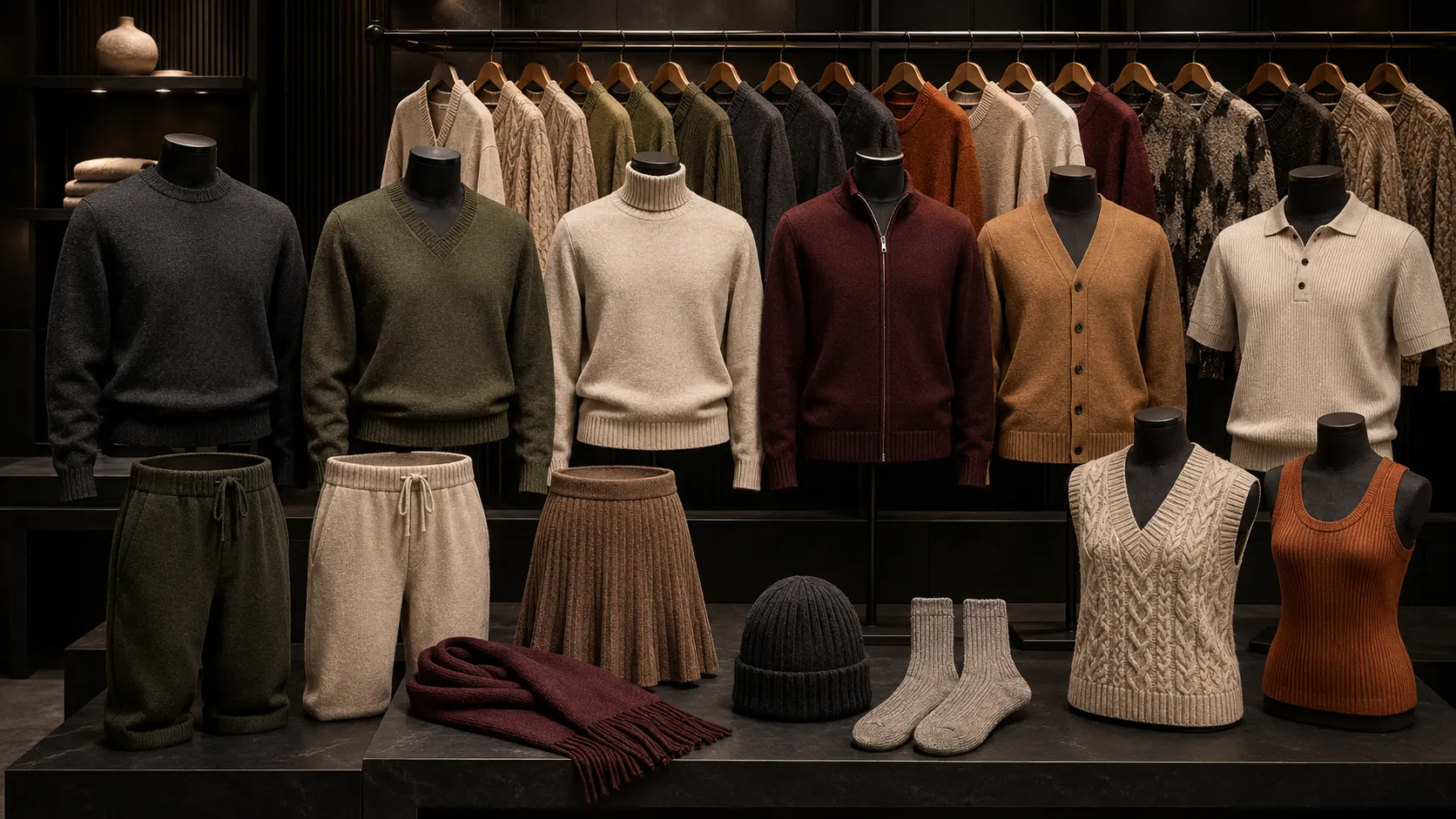
Create individual styles or a coordinated knitwear collection with consistent yarns, colours, trims and brand presentation.
Crew-neck, V-neck, roll-neck, quarter-zip, oversized, fitted and textured knitted sweater concepts.
Button-front, zip-front, cropped, longline, shawl-collar and relaxed cardigan silhouettes.
Short- and long-sleeve polos with engineered collars, plackets, rib trims, stripes or jacquard details.
Classic sweater vests, cropped tanks, rib-knit tops and contemporary layered pieces.
Knitted trousers, shorts, skirts and coordinated tops developed as matching collections.
Beanies, scarves, socks and selected knitted accessories with custom colours, structures and labels.
YARN & MATERIAL PLANNING
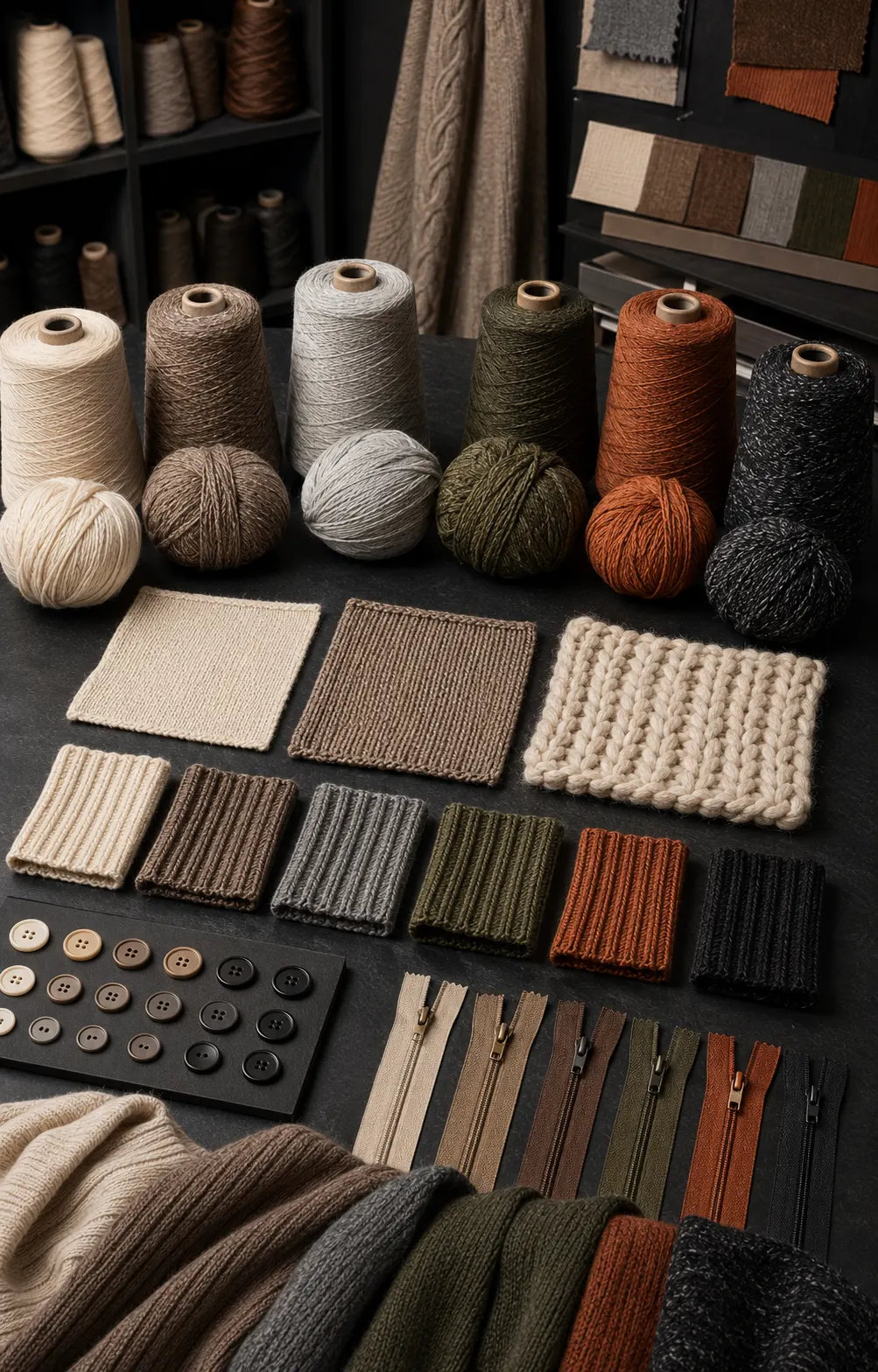
The correct yarn is not selected by fibre name alone. Composition, count, twist, ply, softness, strength, colour availability, pilling behaviour, care requirements and price must be considered together.
Useful for breathable knitwear with a natural hand feel, subject to yarn count, structure and required season.
Selected for warmth and premium winter knitwear when suitable sourcing and care requirements are confirmed.
Can be reviewed for finer premium styles subject to availability, specification and requested documentation.
A versatile option for sweaters, beanies and accessories with broad colour and weight possibilities.
Often considered for smooth drape and softer fashion knitwear, depending on stability and construction.
Can be explored subject to supplier availability, performance requirements and material verification.
| Product Direction | Factors to Review | Possible Applications |
|---|---|---|
| Fine, lightweight knit | Fine yarn count, higher gauge, stability and drape | Polos, fine sweaters and fitted tops |
| Midweight everyday knit | Comfort, structure, stitch definition and recovery | Cardigans, crews, vests and sets |
| Heavy or chunky knit | Lower gauge, yarn bulk, panel weight and seam strength | Oversized sweaters, winter cardigans and scarves |
| Performance or easy-care blend | Fibre combination, stretch, recovery, pilling and laundering | Travel sets, lifestyle knitwear and accessories |
These are development guidelines, not fixed material specifications. Final yarn suitability must be confirmed through the selected yarn, knit structure, sample and required testing.
KNIT STRUCTURES & DESIGN EFFECTS
The design, artwork, gauge and yarn must be evaluated together before confirming a technique.
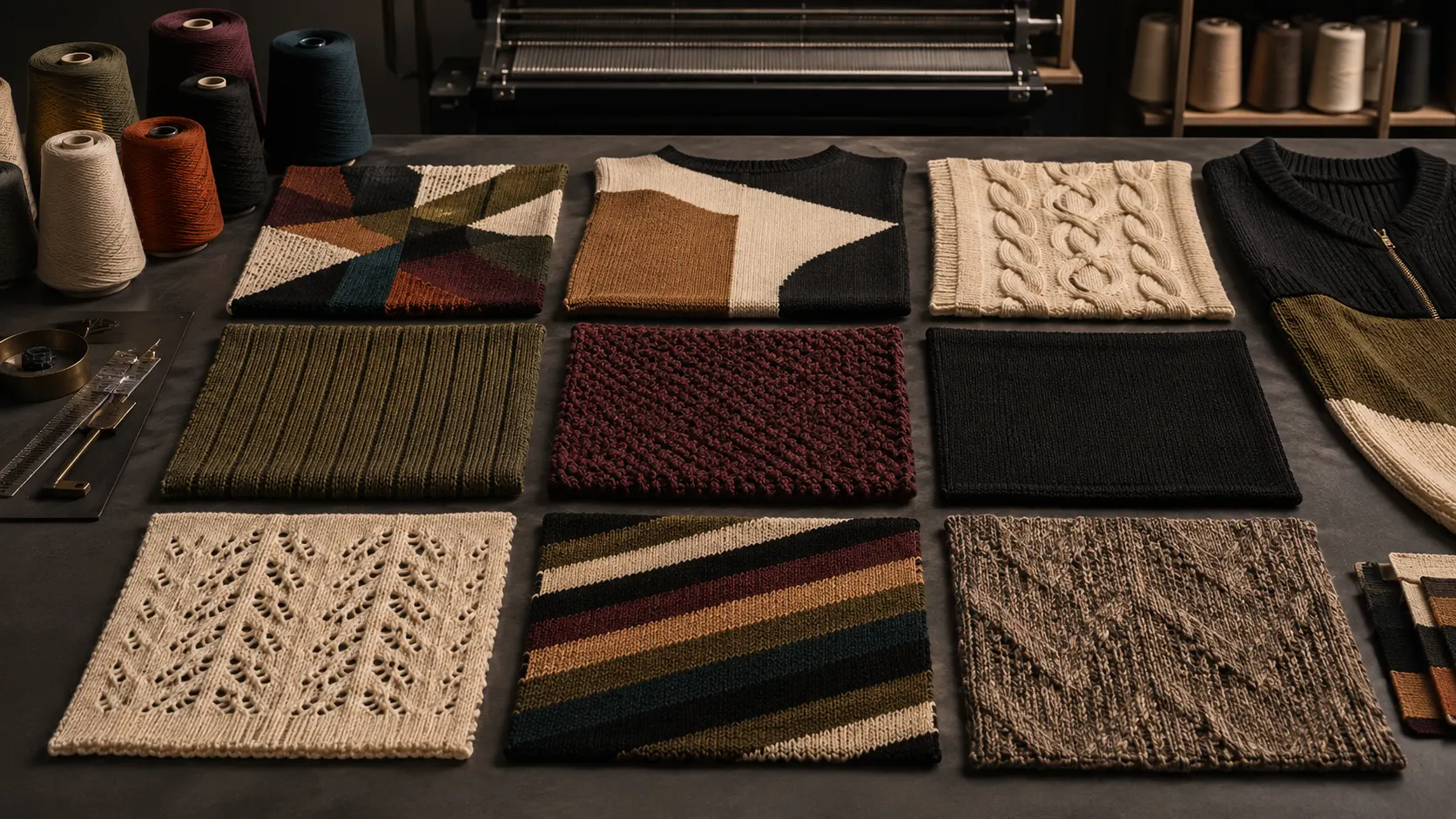
Knitted patterns, motifs and repeating artwork integrated into the fabric structure.
Defined colour areas and larger artwork created with separate yarn sections.
Cables, ribs, moss stitch and structured surfaces for depth and tactile interest.
Planned stripe widths and placements knitted into panels, cuffs, hems or collars.
Decorative open-knit structures for compatible fashion and warm-weather designs.
Structures selected for stretch, stability, shape and garment appearance.
Additional branding applied after reviewing knit stability, backing and placement.
Washing, brushing or other finishes assessed according to yarn and required result.
GARMENT ENGINEERING
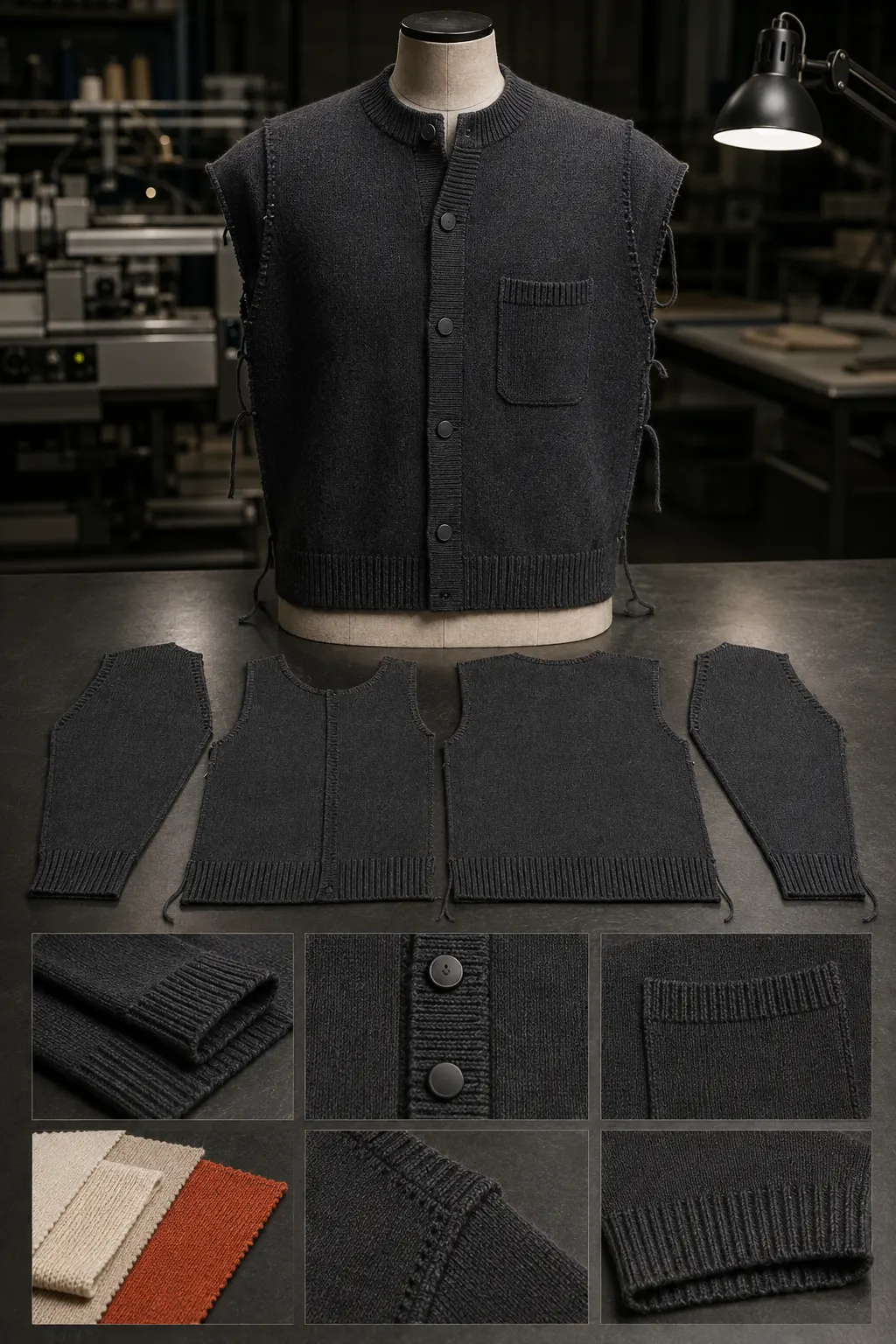
Gauge describes knitting-machine needle density and influences the scale and character of the knit. A lower gauge generally creates a coarser or chunkier structure, while a higher gauge can produce a finer surface. The result also depends on yarn count, ply, stitch type and machine setup.
Fully fashioned garments use shaped knitted panels, reducing unnecessary cutting and allowing the silhouette to be engineered during knitting. Panels are assembled through linking or another approved construction method.
PRIVATE-LABEL PRESENTATION
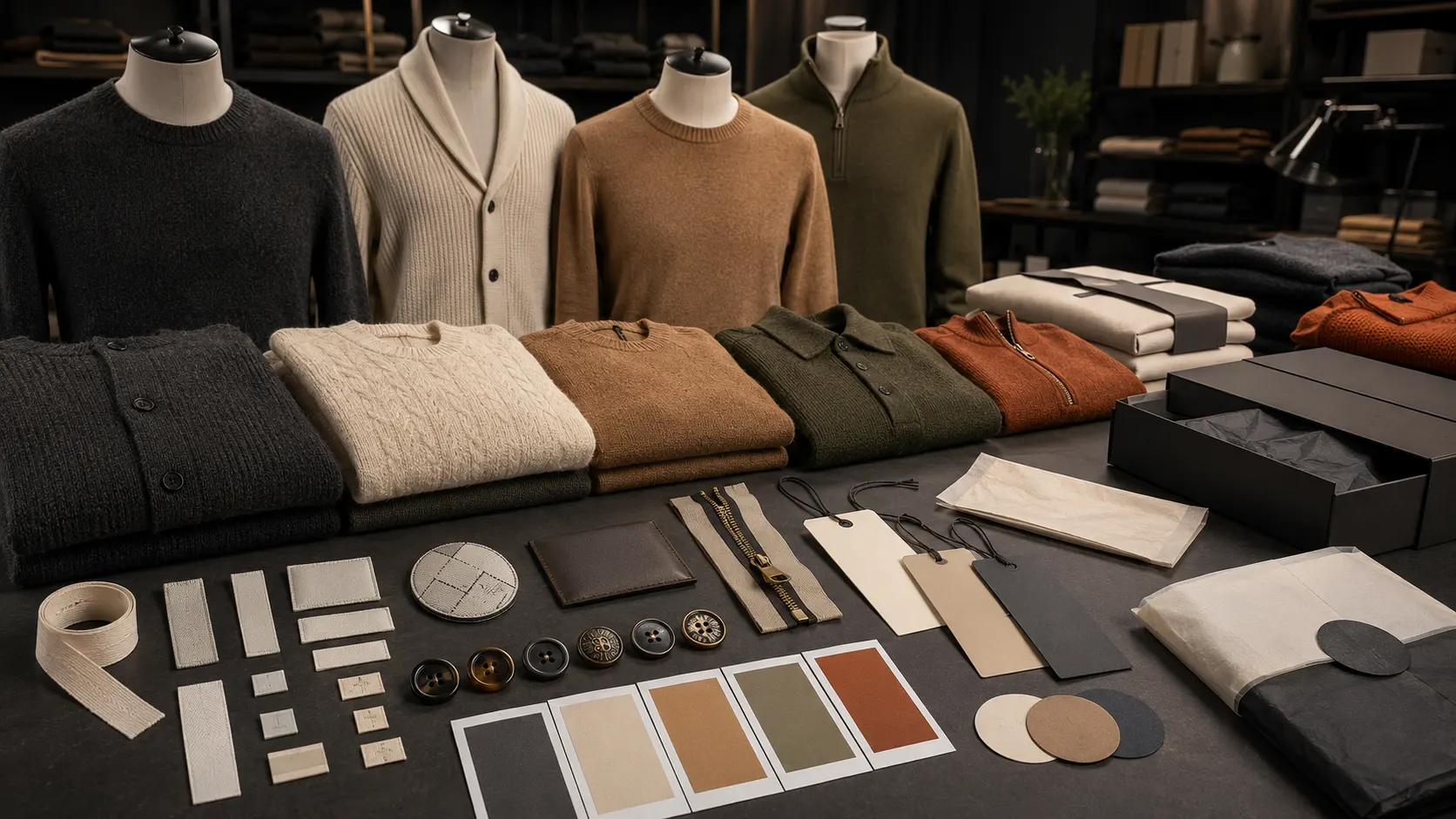
Yarn colours can be reviewed against supplied references, subject to yarn availability and minimum requirements.
Selected metal, resin, horn-effect or custom trim directions can be considered for compatible designs.
Woven labels, size labels, care labels, embroidered badges and selected neck-branding options.
Hang tags, stickers, folding instructions, bags and retail packaging developed around the approved specification.
KNITWEAR MANUFACTURING PROCESS
Production should begin only after the relevant yarn, measurements, structure, colours, trims and sample have been approved.
Share designs, measurements, quantities, colours, destination and required timing.
Composition, count, gauge, knit technique, weight direction and trims are reviewed.
Pricing is prepared around the confirmed construction and commercial scope.
Panels or artwork are prepared and a development sample is manufactured.
Measurements, hand feel, colours, structure, detailing and finishing are reviewed.
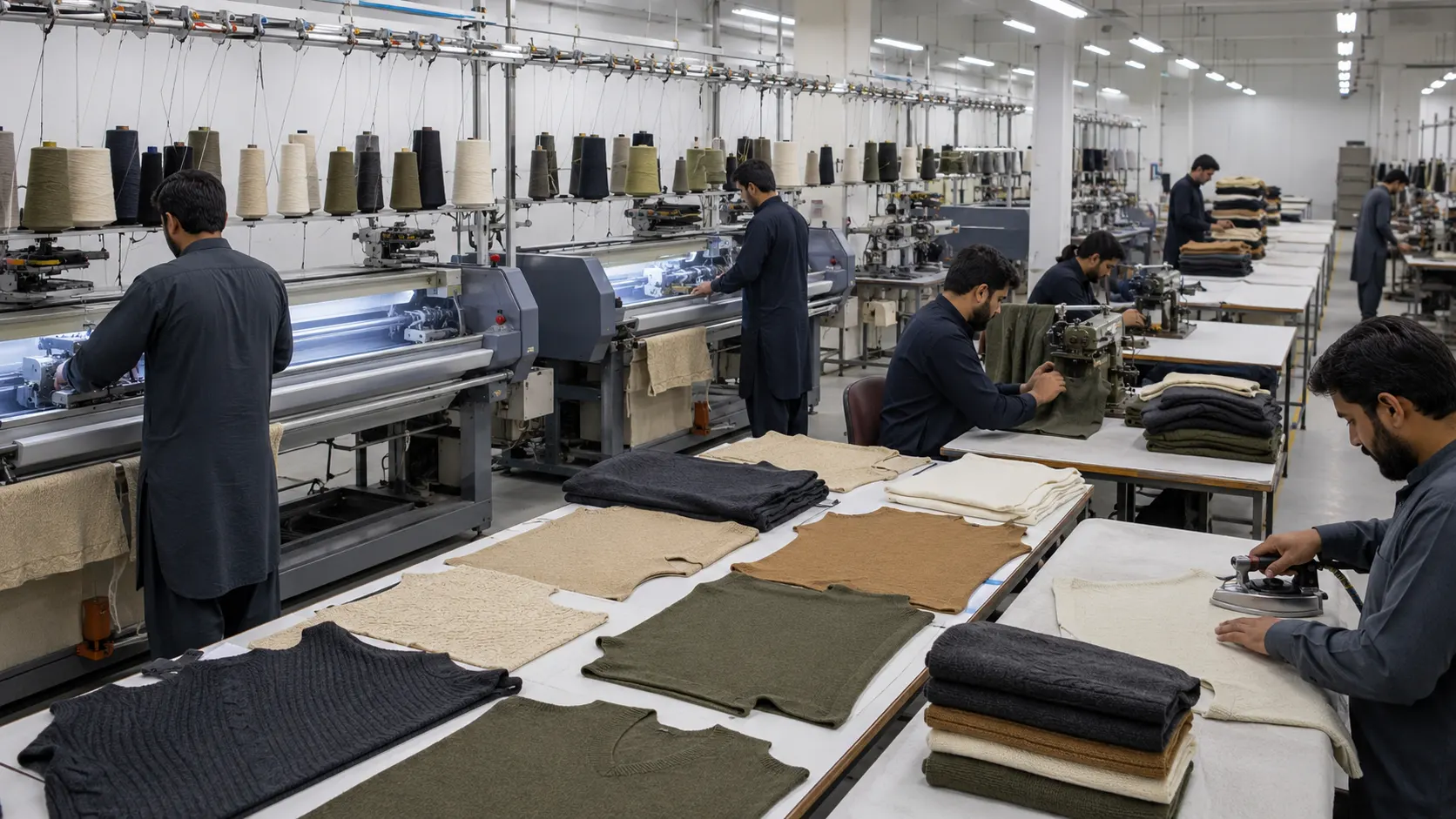
Approved yarns and settings are followed during panel and component production.
Panels are assembled, trims attached, garments washed, set and finished.
Finished pieces are checked, packed and prepared for the agreed delivery method.
QUALITY CONTROL
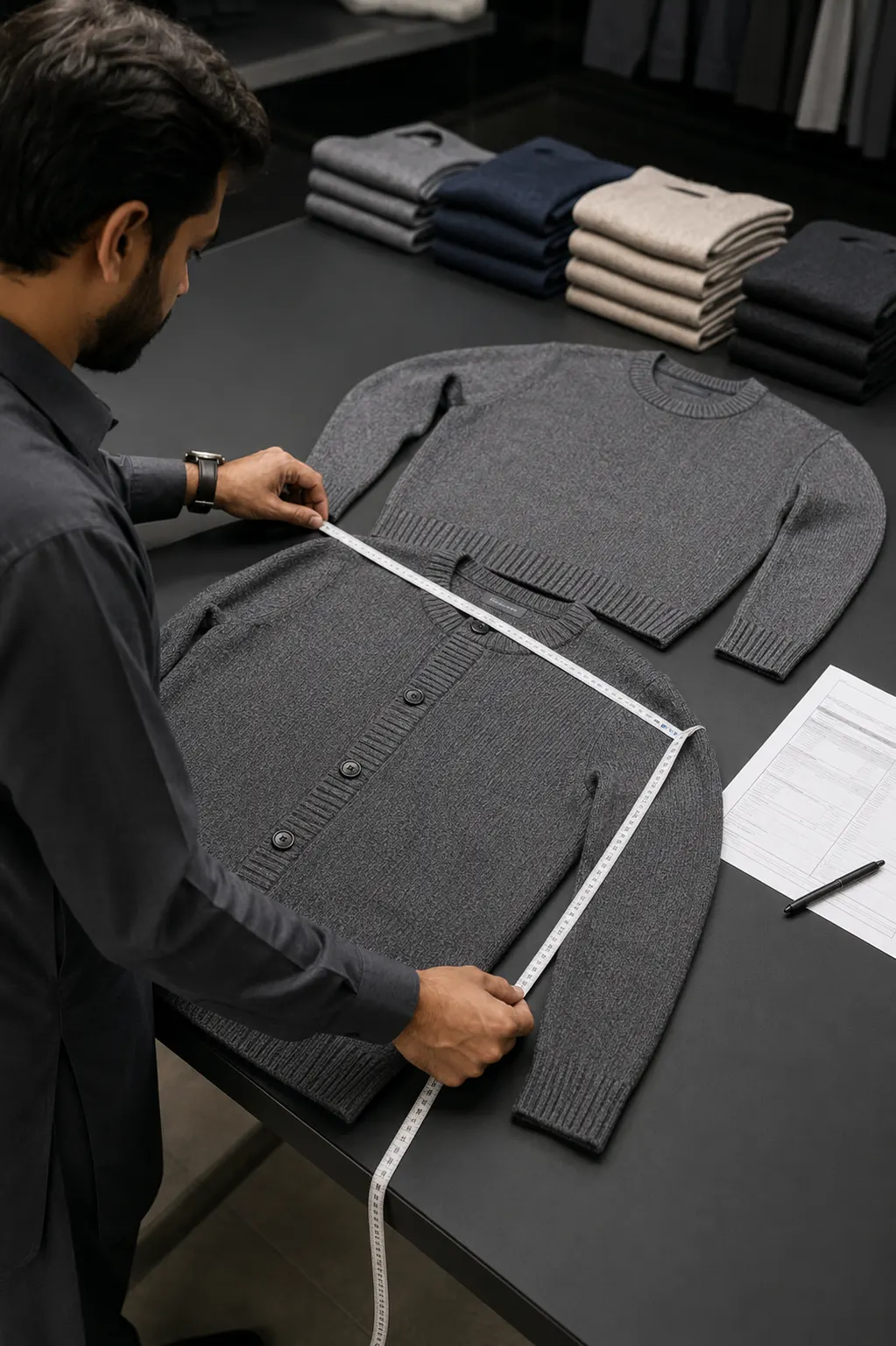
Inspection is based on the approved specification and production reference. Knitted garments can relax or change during washing and handling, so measurement setting and consistent finishing are important.
PLANNING A KNITWEAR ORDER
MOQ depends on yarn availability, colours, gauge, style complexity, trims and size breakdown. Submit the intended quantity for a project-specific review.
Sampling confirms yarn, knit structure, measurements, artwork, trims and finishing. Complex jacquard or intarsia may require additional preparation.
Provide your size chart or an approved fit direction. Knitwear tolerances and measurement methods should be agreed before production.
Timing depends on yarn sourcing, colour development, programming, sample approval, capacity and order complexity. Confirm dates before planning a launch.
KNITWEAR MANUFACTURING FAQs
Yes. Send the tech pack, measurements, artwork, yarn or composition direction, colours, quantities and destination. The specification will be reviewed before sample and pricing confirmation.
Both integrate colour into the knitted structure, but they use different yarn-control methods. Jacquard is useful for repeating or multi-colour patterns, while intarsia is commonly used for defined colour blocks and larger motifs. Suitability depends on artwork, gauge, yarn and construction.
Gauge cannot be chosen correctly without the yarn and desired appearance. Chunkier sweaters generally use lower gauges, while fine knitwear generally uses higher gauges, but yarn count, ply and stitch structure also affect the result.
Colour references can be reviewed, but exact availability depends on stock yarn, dyeing requirements, fibre and minimum quantities. An approved physical yarn or knitted swatch is more reliable than screen colour alone.
Yes. Options can include woven labels, care and size labels, badges, hang tags, stickers, folding instructions, bags and other approved packaging.
International courier and freight options can be reviewed according to destination, shipment size, required timing and agreed commercial terms.
START YOUR KNITWEAR PROJECT
Send your design, product type, estimated quantity, sizes, yarn preference, colours, techniques, labels, packaging and destination. We will review the scope and advise you on the next practical step.